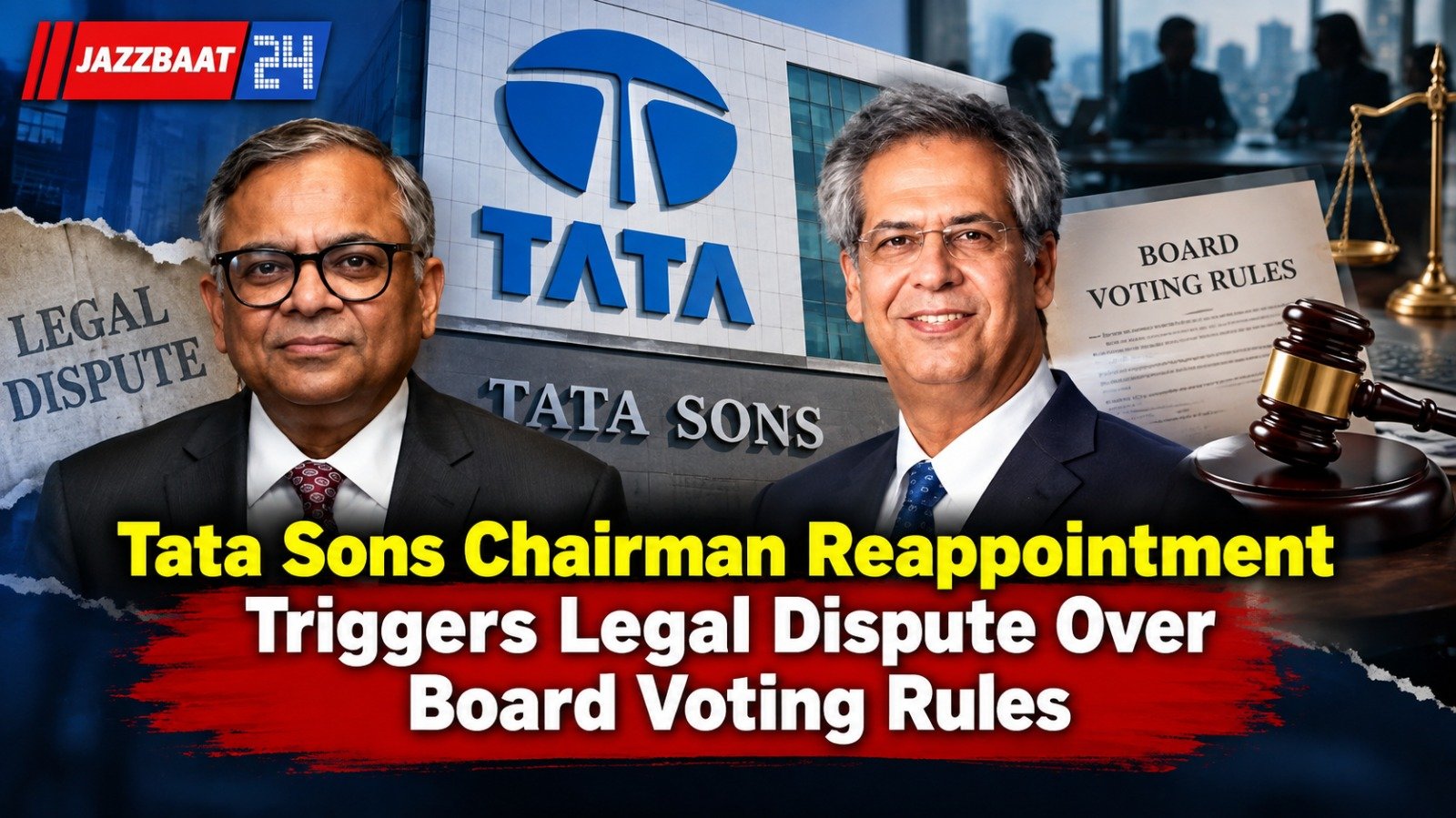
The reappointment of N Chandrasekaran as Tata Sons chairman for another five years has triggered a legal dispute over the interpretation of the company’s Articles of Association and the voting rights of Tata Trusts’ nominee directors.
The controversy centres on a September 17 board resolution that reappointed Chandrasekaran. Tata Trusts chairperson Noel Tata has challenged the validity of the resolution, while Tata Sons has defended the process, relying on provisions that allow a casting vote when there is an equality of votes.
The dispute has brought renewed attention to a 2021 Supreme Court judgment in the Cyrus Mistry case, which examined the special rights given to directors nominated by Tata Trusts.
At the centre of the current disagreement are Articles 104B, 118 and 121 of Tata Sons’ Articles of Association. Article 104B provides Tata Trusts with the right to nominate a specified proportion of directors, subject to conditions linked to their shareholding. Article 121 provides for affirmative voting rights for a majority of those Trust-nominated directors on matters requiring a board majority.
The Supreme Court examined these provisions in its 2021 judgment in Tata Consultancy Services Ltd versus Cyrus Investments Pvt Ltd. The court upheld the validity of the special voting arrangements, describing the affirmative voting right as a limited right governing how certain board decisions are taken.
However, the judgment dealt primarily with the removal of Cyrus Mistry and did not directly decide the legal procedure for reappointing an incumbent chairman.
Article 118, which deals with the appointment of the chairman, is another major point of disagreement. The Supreme Court had earlier considered the provision in the context of Mistry’s removal and held that the reference to following the “same process” for removal meant that the affirmative voting mechanism under Article 121 would apply.
Tata Trusts argue that Article 118 remains relevant to the chairmanship and that the affirmative support of the required Trust-nominated directors was necessary for Chandrasekaran’s reappointment. According to this interpretation, a split between the Trust nominees would mean that the required affirmative support had not been secured.
Tata Sons has adopted a different interpretation. Its legal position is that Article 118 concerns the appointment of a new chairman and does not necessarily govern the renewal of the term of an existing chairman. The company has also relied on the casting-vote provision in the Articles to support the validity of the September 17 resolution.
According to the account of the meeting, Noel Tata opposed Chandrasekaran’s reappointment, while fellow Trust nominee Venu Srinivasan supported it. Chandrasekaran recused himself from the discussion. Harish Manwani, who chaired the relevant part of the meeting, subsequently exercised a casting vote after the other directors supported the reappointment.
The Trusts have argued that a casting vote cannot overcome the separate affirmative-voting requirement under Article 121. Tata Sons’ position is that the casting-vote mechanism can resolve a deadlock arising from the split among the Trust nominees.
The 2021 Supreme Court judgment does not provide a direct answer to this specific question. While the court recognised the validity of the Trusts’ special voting rights, it did not examine whether a chairman’s casting vote could override the absence of the required affirmative votes in a reappointment of an incumbent chairman.
The present dispute is therefore focused on how different provisions of Tata Sons’ Articles of Association interact. Key issues include whether Article 118 applies to reappointment, how Article 121 operates when Trust nominees disagree, and whether the casting-vote provision can resolve such a situation.
The legal position may ultimately depend on the precise wording of the current Articles, the circumstances surrounding the 2022 and 2026 resolutions and the interpretation given to the relevant provisions. The 2021 Supreme Court judgment provides important background but does not itself settle the validity of the latest board resolution.



Reader Comments 0