
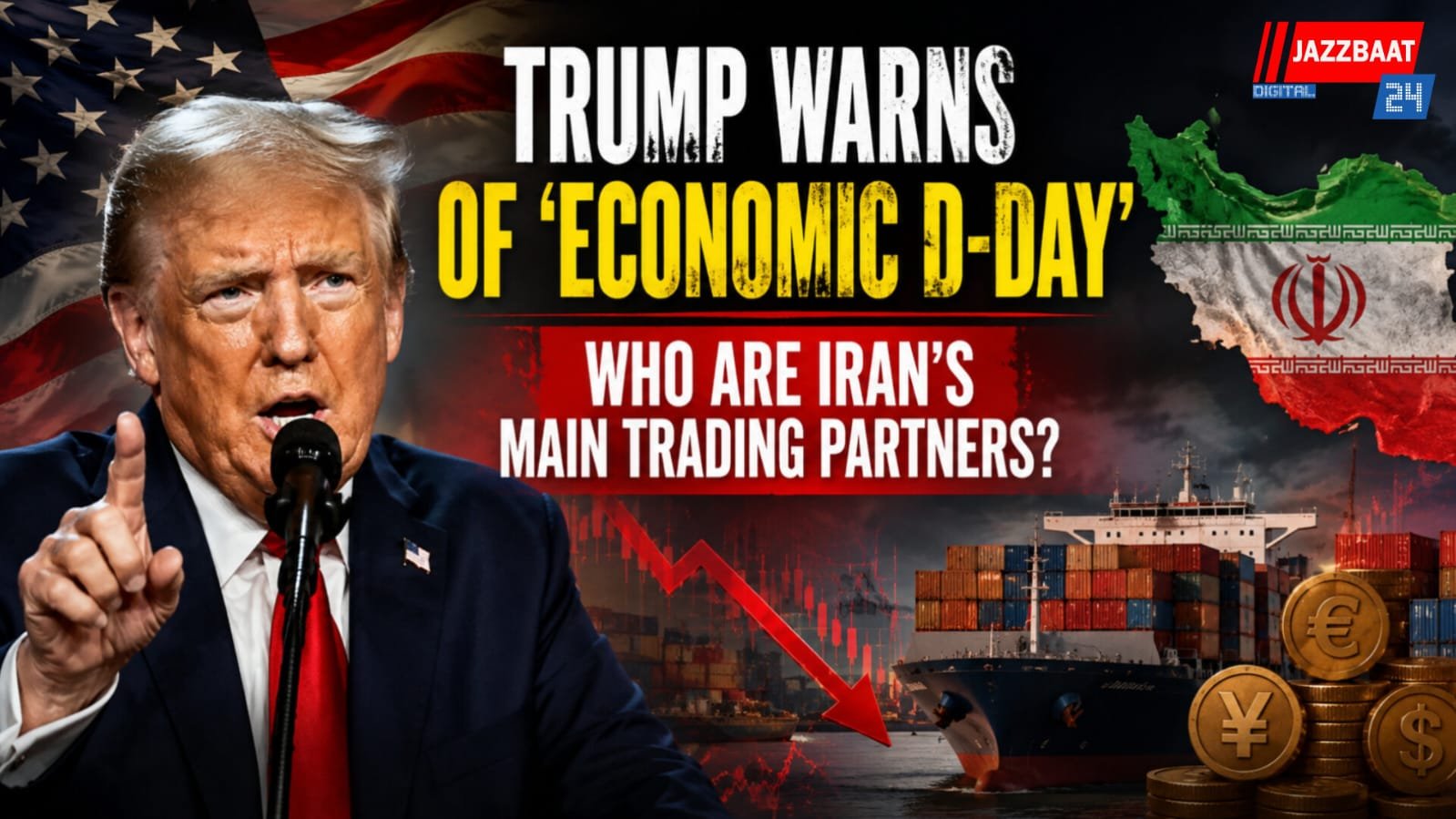
New Delhi: US President Donald Trump’s threat of an “economic D-Day” against Iran has put Tehran’s major trading partners under growing pressure, as Washington seeks to cut off the financial and commercial networks that keep the Iranian economy functioning.
US Treasury Secretary Scott Bessent on Monday announced a fresh round of sanctions under what the administration calls “Operation Economic Outcast”, warning countries, banks and businesses that continue to maintain economic ties with Iran that they could face US action. The latest measures target nearly 60 Iran-linked individuals, companies and vessels involved in areas including oil, shipping, cyber activity and Iran’s nuclear and missile programmes.
The biggest challenge for Washington is likely to be China, Iran’s largest trading partner and its most important buyer of crude oil. Chinese companies have continued to purchase Iranian oil despite years of US sanctions. Analysts say any serious attempt to cut Iran off economically would therefore require Washington to put pressure on Chinese firms and financial institutions.
China has already signalled that it will not simply accept unilateral US pressure. Beijing has said sanctions and economic coercion are not the solution and that it will take necessary steps to protect its legitimate interests. The Trump administration, meanwhile, has warned that no country is beyond the reach of US sanctions if it helps convert Iranian oil into revenue.
Turkey and the United Arab Emirates are also among Iran’s largest trading partners. The UAE has traditionally been an important commercial and financial hub for Iranian businesses, while Turkey maintains significant trade ties with Tehran.
However, the UAE recently announced a suspension of trade, commercial exchanges and financial transactions with Iran until further notice, following an Iranian missile attack on the Gulf country. Bessent said the move demonstrated that US pressure was already producing results.
India is another important buyer of Iranian oil, although its position has become more complicated because of US sanctions and changing energy arrangements. Any broader American sanctions campaign could create difficult choices for countries that depend on Iranian crude while also maintaining economic and strategic relations with Washington.
The US has so far stopped short of imposing secondary sanctions on major foreign financial institutions, partly because officials fear that an aggressive campaign could destabilise the wider global financial system. Bessent said countries were being given an opportunity to reduce their dealings with Iran before penalties are imposed.
Iran, already facing severe economic pressure, has responded defiantly. Its currency has fallen to record lows, while inflation and shortages have worsened during the nearly six-month conflict.
The confrontation also carries major global energy risks. The Strait of Hormuz, through which a significant share of the world's traded oil normally passes, remains at the centre of the dispute. Tehran has threatened further action against regional oil exports if the US economic campaign intensifies.
The coming weeks will show whether Washington can persuade Iran’s biggest trading partners to cut economic ties, or whether countries such as China will continue providing Tehran with a crucial economic lifeline.
Reader Comments 0