
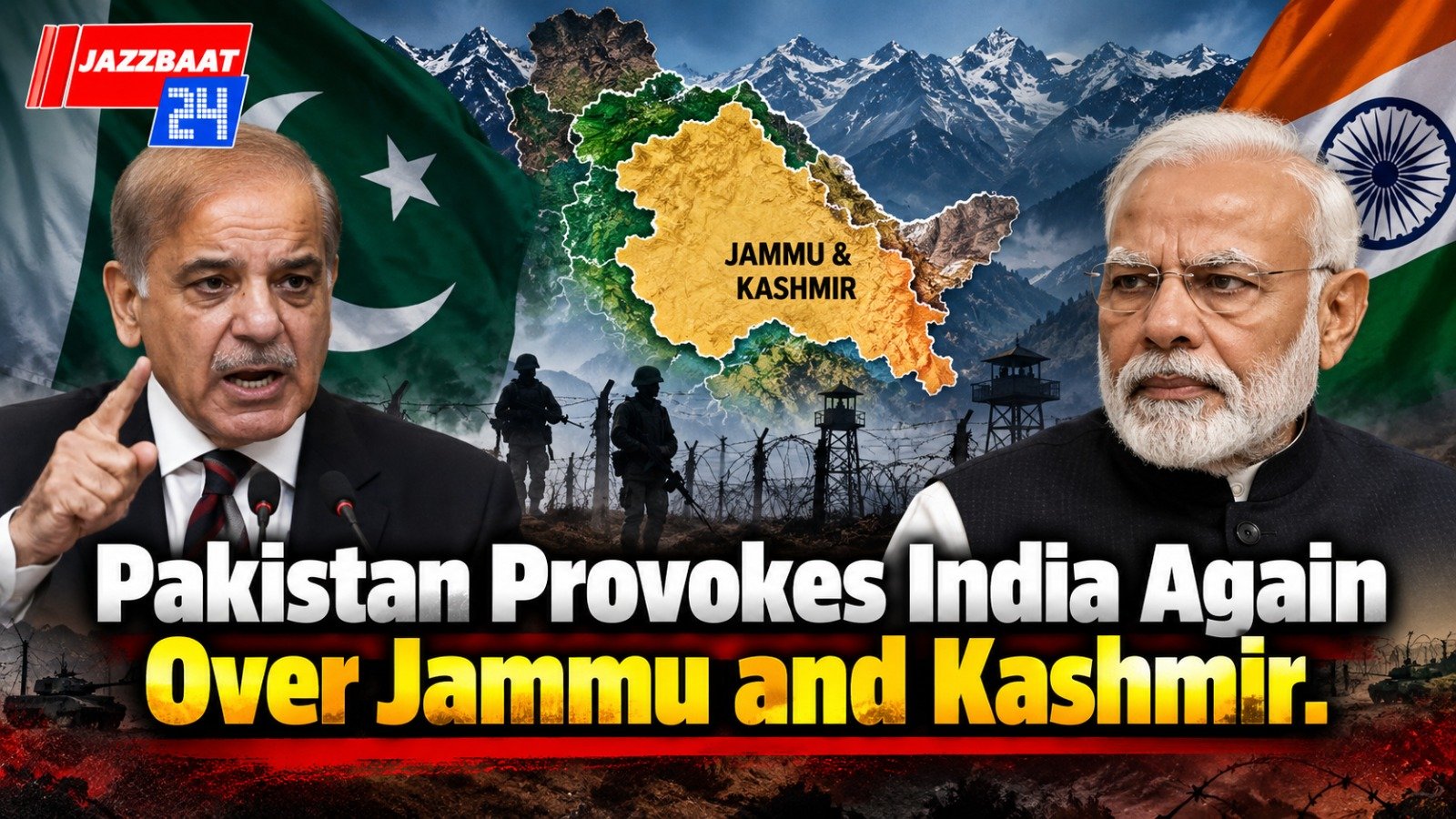
Pakistan on Monday reacted sharply to India’s recent remarks at the United Nations on world map representation, calling New Delhi’s position on Jammu and Kashmir “baseless” and once again raising the long-standing territorial dispute.
The response came a day after India’s Ministry of External Affairs clarified its position on a UN resolution concerning the representation of continental landmasses on world maps.
India had voted in favour of the resolution titled “Correct the Map: Rebalancing Global Cartographic Representation and Promoting Equitable Representation of the World's Regions, Particularly Africa”, which was adopted by the UN General Assembly on September 4.
Explaining India’s vote, MEA spokesperson Randhir Jaiswal said New Delhi supported the underlying principle of promoting equal-area cartographic representation. He made it clear, however, that the resolution did not endorse any particular world map or projection.
Jaiswal also stressed that India’s position on its sovereignty and territorial integrity remains “clear, consistent and non-negotiable”. He said the resolution was aimed at encouraging the use of equal-area map projections that accurately preserve the relative sizes of continental landmasses.
According to the Indian government, the UN resolution neither adopts nor authenticates a specific world map nor deals with political cartography, international boundaries, disputed territories or place names.
Pakistan’s Foreign Ministry nevertheless issued a strong statement on Monday. Spokesperson Sajjad Haider Khan rejected what he described as India’s claims regarding the status of Jammu and Kashmir.
Pakistan maintained that what it calls the disputed status of Jammu and Kashmir cannot be changed through India’s unilateral actions or claims of sovereignty. It also referred to the issue as an unresolved matter before the UN Security Council.
The Pakistani statement further argued that India’s official maps and claims of sovereignty do not determine the status of the territory.
The UN resolution was sponsored by Togo and received 164 votes in favour. Estonia, Georgia, Lithuania, Moldova, Serbia and Ukraine abstained, while the United States was the only country to vote against it.
India’s clarification was specifically aimed at separating its support for equal-area cartographic representation from questions relating to political boundaries and territorial disputes.
The latest exchange has once again brought the India-Pakistan disagreement over Jammu and Kashmir into focus, with both countries maintaining sharply contrasting positions on the issue.



Reader Comments 0