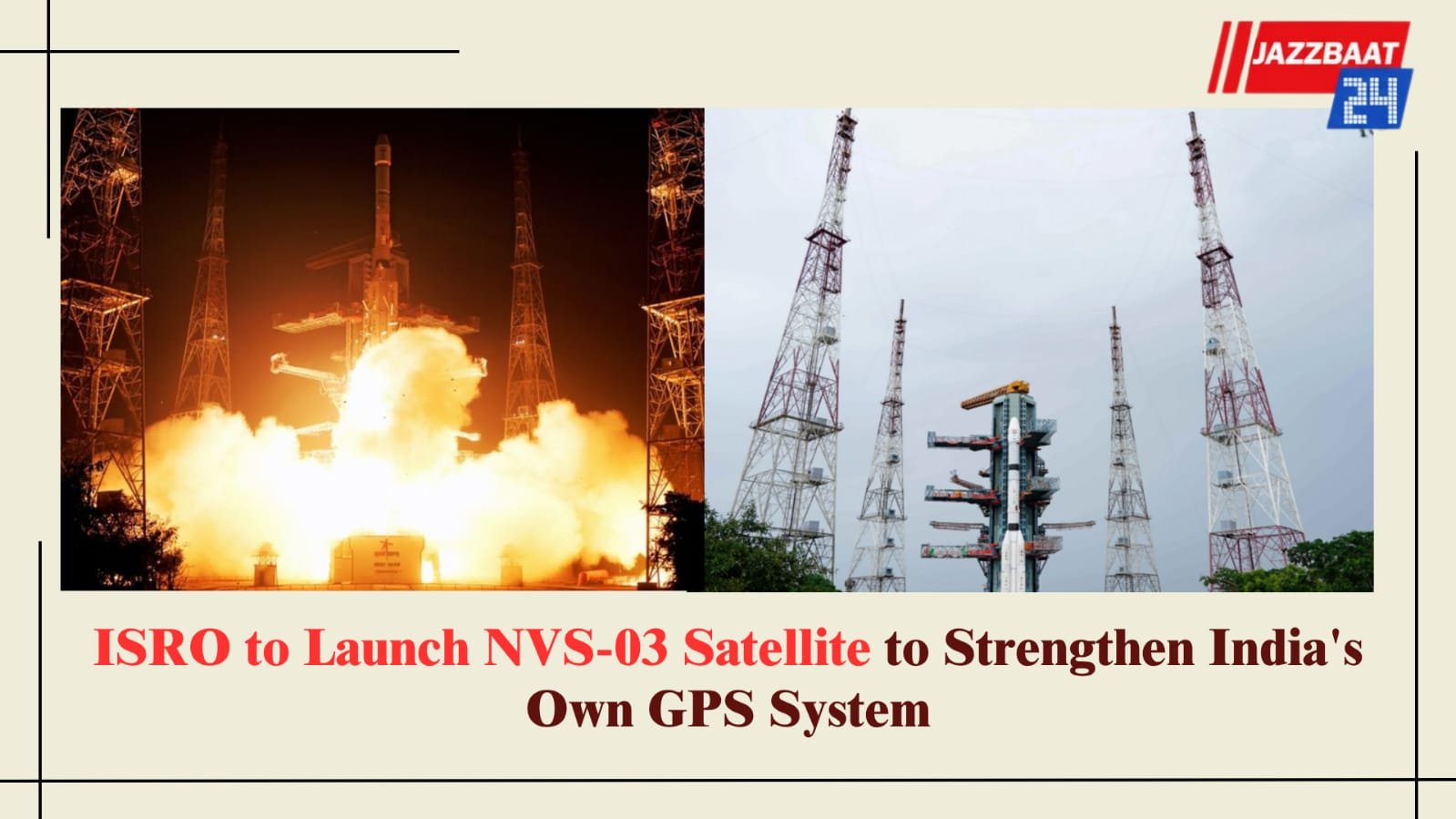
News Desk: The Indian Space Research Organisation (ISRO) is set to launch its next-generation navigation satellite, NVS-03, on Friday night, marking an important step towards strengthening India's independent satellite navigation system, NavIC.
The satellite will be carried by the GSLV-F18 rocket, scheduled to lift off at 11:51 pm from the second launch pad at the Satish Dhawan Space Centre in Sriharikota, Andhra Pradesh. The mission aims to place NVS-03 into Geosynchronous Transfer Orbit, from where it will move towards its designated position in space.
NavIC, short for Navigation with Indian Constellation, is India's indigenous alternative to global navigation systems such as the American GPS, Russian GLONASS, European Galileo and Chinese BeiDou. It provides positioning, navigation and timing services across India and an area extending approximately 1,500 kilometres beyond the country's borders.
The launch is particularly important because India's existing navigation satellite network has faced several technical challenges in recent years. Failures involving satellite components, especially atomic clocks, have affected the overall performance of the constellation. A reliable navigation network is essential for both civilian and strategic operations.
NVS-03 is expected to improve the reliability of NavIC. One of its key features is an indigenous atomic clock, developed in India. Atomic clocks play a crucial role in satellite navigation because extremely accurate timing is necessary to calculate the precise location of users on Earth. The development of this technology is an important milestone in India's efforts to reduce dependence on foreign equipment.
The satellite also carries the new L1 navigation signal, alongside the existing L5 and S-band signals. The addition of the L1 frequency could improve compatibility with commonly used navigation devices, including smartphones, vehicle navigation systems and other commercial receivers.
NavIC was conceived following the 1999 Kargil War, when India realised the strategic risks of depending on foreign satellite navigation systems. Since then, the country has been working towards developing an independent and reliable navigation network.
The system has applications across several sectors, including defence, aviation, shipping, road transportation, fisheries, disaster management and emergency services. It also provides restricted navigation services for authorised strategic and defence users.
The GSLV-F18 mission marks the 20th flight of India's Geosynchronous Satellite Launch Vehicle programme. The approximately 50-metre-tall rocket weighs around 420 tonnes at lift-off and uses a three-stage propulsion system, including an indigenous cryogenic upper stage.
NVS-03 is the third satellite in the second-generation NavIC series. Further satellites, including NVS-04 and NVS-05, are also planned to strengthen the constellation.
The successful deployment of NVS-03 would be another major step towards building a dependable, fully indigenous navigation system and strengthening India's technological and strategic independence.




Reader Comments 0