
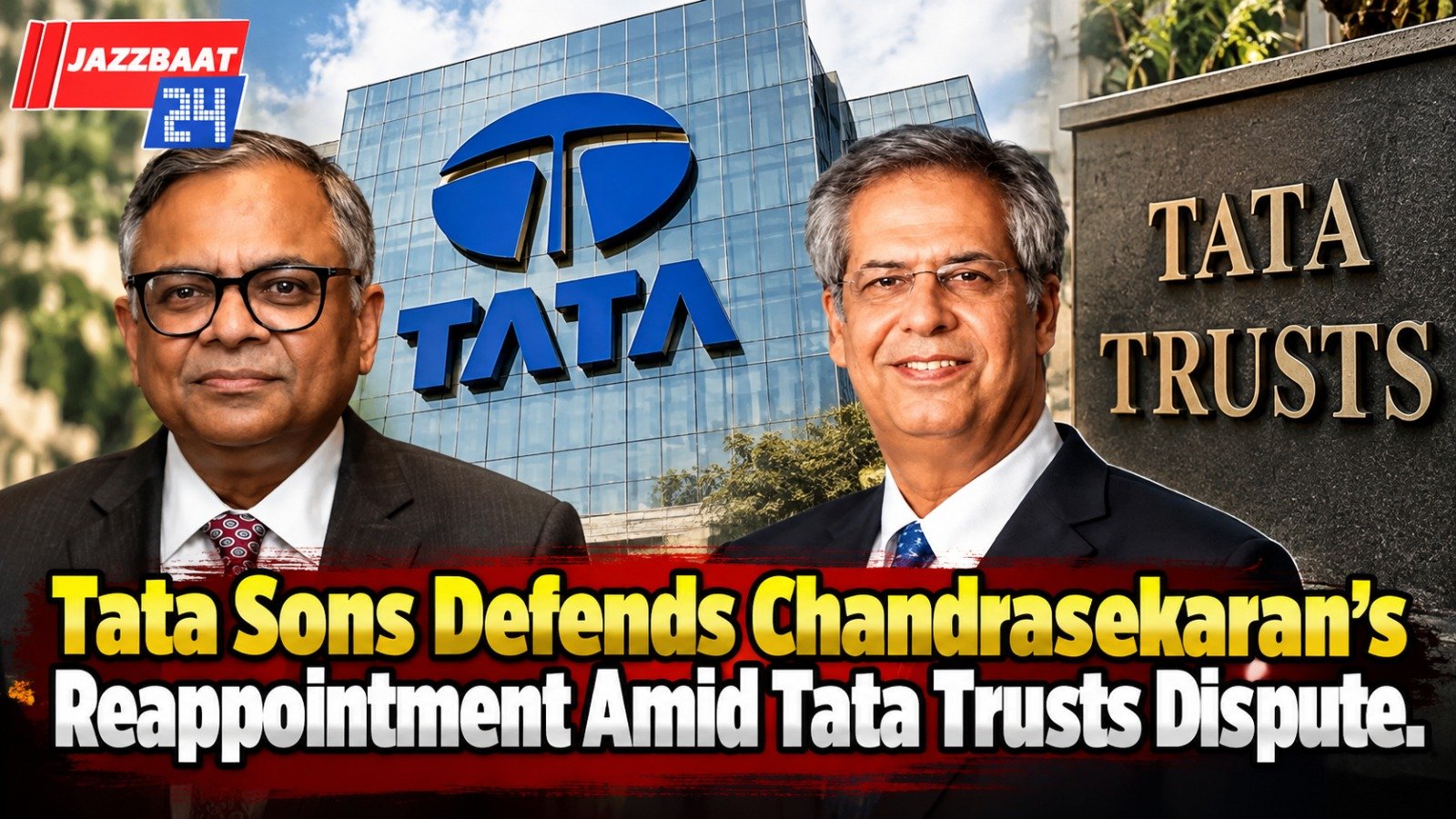
Tata Sons has defended its decision to reappoint N. Chandrasekaran as chairman for another five-year term, saying the board acted in accordance with applicable laws and the company’s rules.
The development comes amid a dispute with Tata Trusts chair Noel Tata, who has questioned the legality of the September 17 board decision. The disagreement has emerged as a rare instance of the Tata Sons board taking a position that differs from its main shareholder, Tata Trusts.
In a letter dated September 24 and addressed to Noel Tata, Tata Sons group company secretary Suprakash Mukhopadhyay said the company had obtained legal advice before the board meeting. According to the company, opinions were also subsequently obtained from former Chief Justice of India U.U. Lalit and former Supreme Court judge B.N. Srikrishna.
Tata Sons said its board had validly approved Chandrasekaran’s reappointment through a majority resolution. The company maintained that the voting process and the use of a casting vote were consistent with the provisions governing the board.
The dispute centres on Article 121 of the Tata Sons articles, which deals with voting procedures and the chairman’s casting vote.
At the September 17 board meeting, Tata Trusts nominees Noel Tata and Venu Srinivasan voted against Chandrasekaran’s reappointment. Harish Manwani, who was involved in the process, reportedly cast the deciding vote in favour of the reappointment.
Tata Trusts has challenged this interpretation of the voting process. According to Noel Tata’s position, the two trustees voted differently and therefore there was no tie that could trigger the chairman’s casting vote. Tata Trusts argued that the reappointment resolution was effectively invalid.
Tata Sons, however, has relied on legal opinions to support its interpretation. An opinion obtained from lawyer Sudipto Sarkar before the board meeting reportedly concluded that the procedure followed was consistent with Article 121.
Former Chief Justice U.U. Lalit and former Supreme Court judge B.N. Srikrishna also provided legal opinions supporting the board’s position, according to executives familiar with the matter.
Justice Srikrishna reportedly concluded that the action taken was consistent with the wording and intent of Article 121. Justice Lalit similarly held that the casting vote could be used after an equality of votes among directors appointed under the relevant provision.
The disagreement follows earlier correspondence between Noel Tata and Tata Sons. In letters dated September 18, Noel questioned the validity of Chandrasekaran’s reappointment and argued that the resolution could not be revived through a casting vote.
The issue has now developed into a significant corporate governance dispute involving Tata Sons and Tata Trusts, with the interpretation of the company's articles at the centre of the disagreement.
The two sides have presented different interpretations of the same provisions, and the legal opinions cited by Tata Sons are being used to support its position. Tata Trusts, meanwhile, has maintained its objection to the process.
As of September 25, Tata Sons and Tata Trusts had not publicly indicated that the dispute had been resolved. The reappointment of Chandrasekaran and the circumstances surrounding the board vote are therefore expected to remain under scrutiny as the two sides continue to consider their respective positions.


Reader Comments 0