
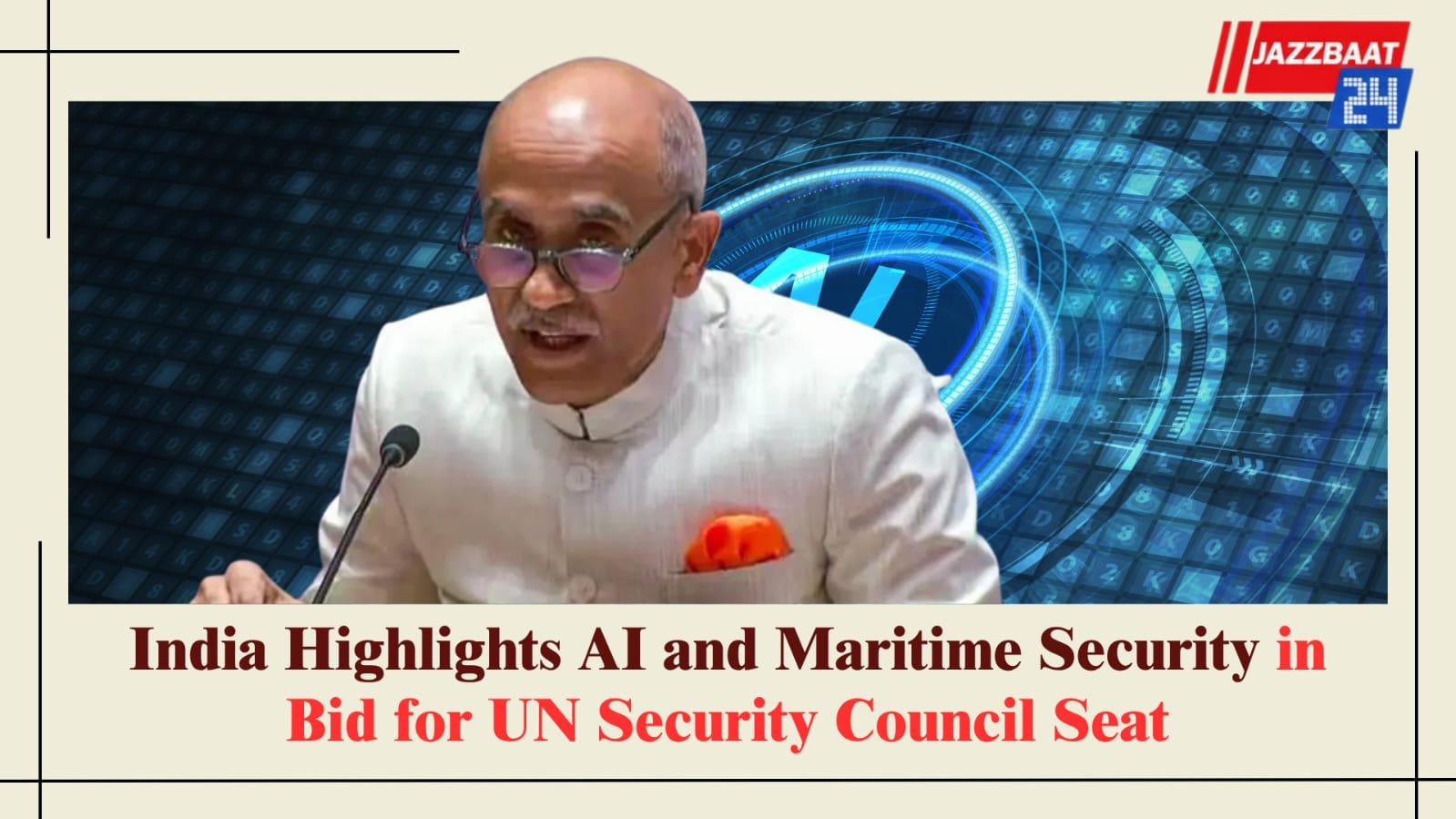
News Desk: India has placed artificial intelligence (AI) and maritime security at the centre of its campaign for a non-permanent seat on the United Nations Security Council for the 2028-29 term. India's Permanent Representative to the UN, Ambassador Harish Parvathaneni, said the country aims to promote the use of emerging technologies to strengthen maritime safety, protect international trade and improve global security.
Speaking during a high-level debate at the UN Security Council on emerging technologies and maritime security, Parvathaneni said technology should strengthen human security, expand opportunities and make international waters safer rather than create further divisions.
India is contesting for a non-permanent Security Council seat for a two-year term beginning in 2028. The election is scheduled for June next year, with India and Tajikistan competing for the Asia-Pacific Group's sole seat.
During his address, the Indian envoy highlighted growing threats to commercial shipping, particularly attacks on vessels and disruptions at important maritime routes. He warned that such incidents threaten the safety of sailors, interrupt global supply chains and increase economic uncertainty, especially for developing countries.
He also stressed the growing importance of artificial intelligence in monitoring maritime activities. AI-powered analysis of satellite images, radar information and vessel-tracking data can help identify suspicious movements, detect potential threats and improve maritime surveillance.
However, he cautioned that increasing digitalisation also creates new security risks. Ports, ships, communication networks and underwater infrastructure are increasingly vulnerable to cyberattacks. The growing use of autonomous maritime systems also raises concerns about accountability, responsibility and the possibility of unintended escalation.
India called for stronger international cooperation, proper safeguards and meaningful human oversight in the use of emerging technologies. Parvathaneni also emphasised that developing countries must have access to technology, training and institutional support so they can participate equally in global maritime governance.
He highlighted India's Information Fusion Centre-Indian Ocean Region (IFC-IOR), which facilitates information-sharing and cooperation among countries to strengthen maritime security.
The envoy said India's maritime approach is guided by the vision of SAGAR, meaning Security and Growth for All in the Region, which promotes cooperation and stability across the Indian Ocean.
The discussion comes amid growing concerns over security in critical shipping routes, particularly the Strait of Hormuz, where maritime incidents have raised fresh questions about the safety of international commercial vessels.
India's focus on AI and maritime security reflects its intention to contribute to discussions on global security, technological development and the protection of international trade as it prepares for its Security Council campaign.

Reader Comments 0