
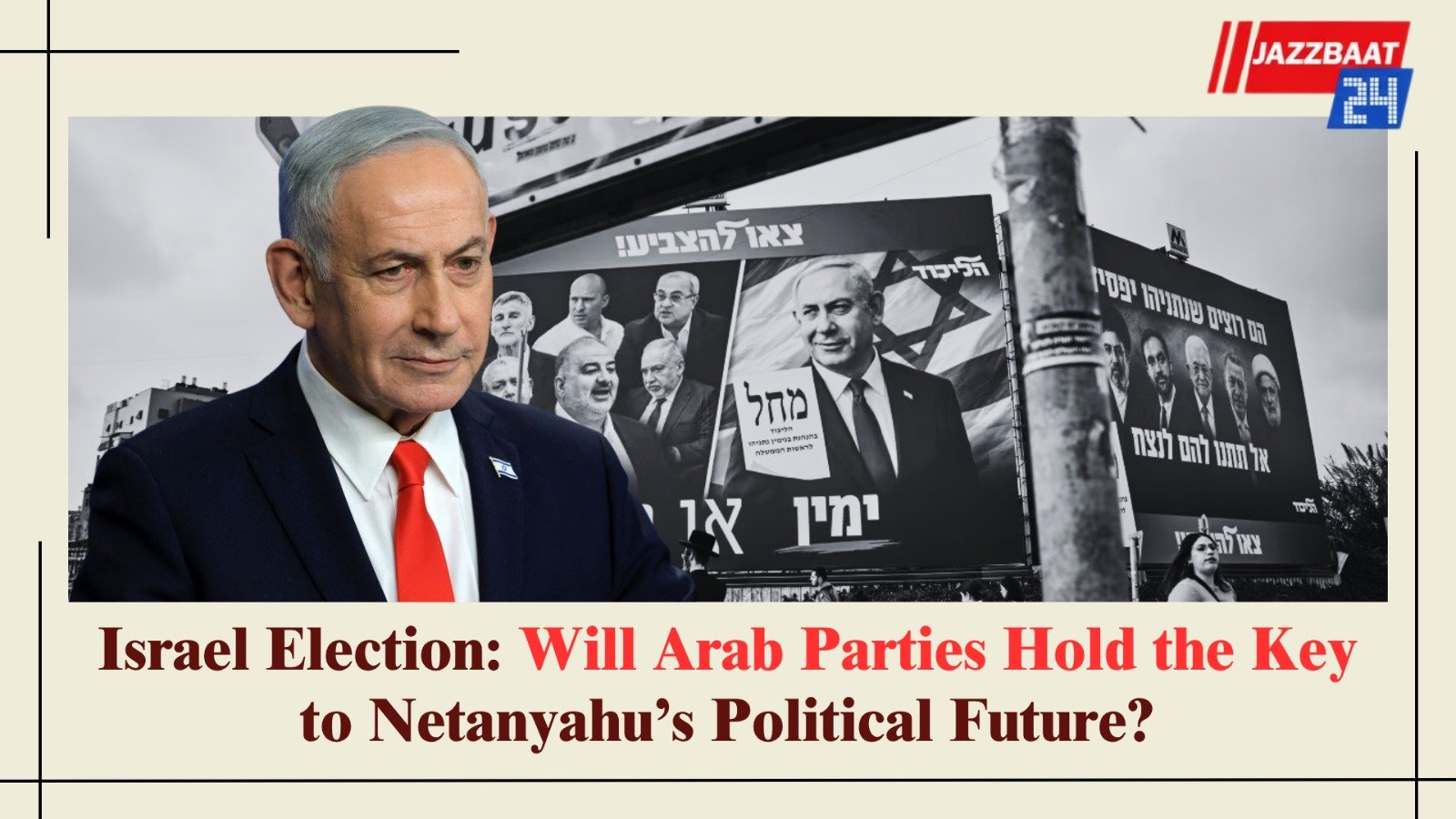
News Desk: Israel’s October 27 election could turn into a close contest in which Arab-led political parties play a decisive role in determining who forms the next government. While Benjamin Netanyahu and his opponents remain at the centre of the political battle, the final outcome may depend on whether either camp can secure enough seats to command a parliamentary majority.
Israel’s Knesset has 120 seats, and a party or coalition needs at least 61 to form a government. If neither of the main political blocs reaches that threshold, smaller parties could gain significant bargaining power during post-election negotiations.
Arab citizens make up around one-fifth of Israel’s population. Arab-led parties could therefore influence the final parliamentary arithmetic, depending on voter turnout and the number of seats they win.
Why Arab Parties Matter
Arab political representation in Israel is not unified. The United Arab List, also known as Ra’am, and other Arab-led parties have different priorities and approaches to working with Jewish-led political groups.
Their influence could extend beyond joining a governing coalition. A party may also support a government from outside the coalition, helping it secure parliamentary backing without taking ministerial positions.
This distinction could become crucial if Netanyahu’s rivals fall short of the 61 seats needed to form a government.
However, openly seeking support from Arab-led parties remains politically sensitive, particularly amid continuing security concerns and tensions surrounding the Israeli-Palestinian conflict.
The Impact of the Gaza War
The Hamas-led attacks of October 7, 2023, and the subsequent war in Gaza have deeply affected Israel’s political landscape. Security, relations with Palestinians and the future direction of the country remain major election issues.
Netanyahu’s coalition includes right-wing and religious parties, some of which strongly oppose concessions to the Palestinians. His opponents must therefore demonstrate that they can build an alternative government while managing their own internal disagreements.
Cooperation with Arab-led parties could help them secure a majority, but it may also trigger resistance among sections of their electorate.
The 2021 Precedent
There is a recent example of an Arab party influencing the formation of an Israeli government. In 2021, Ra’am, led by Mansour Abbas, joined the coalition formed by Naftali Bennett and Yair Lapid, helping bring an end to Netanyahu’s lengthy tenure as prime minister at that time.
Although that government did not last long, it demonstrated that Arab-led parties can play a significant role in coalition negotiations, particularly when election results produce no clear majority.
What Happens If There Is No Clear Majority?
The final outcome will depend on voter turnout, the performance of smaller parties and whether they cross Israel’s electoral threshold to enter parliament.
Arab voter turnout will be particularly important in determining how many seats Arab-led parties secure and how much influence they can exercise during negotiations.
Ultimately, the election may be fought between Netanyahu and his challengers, but the decisive negotiations could involve parties that the main political camps have approached cautiously.
The crucial question is whether either side can reach the 61-seat majority on its own or whether Arab-led parties will hold the balance of power in deciding Israel’s next government.

Reader Comments 0