
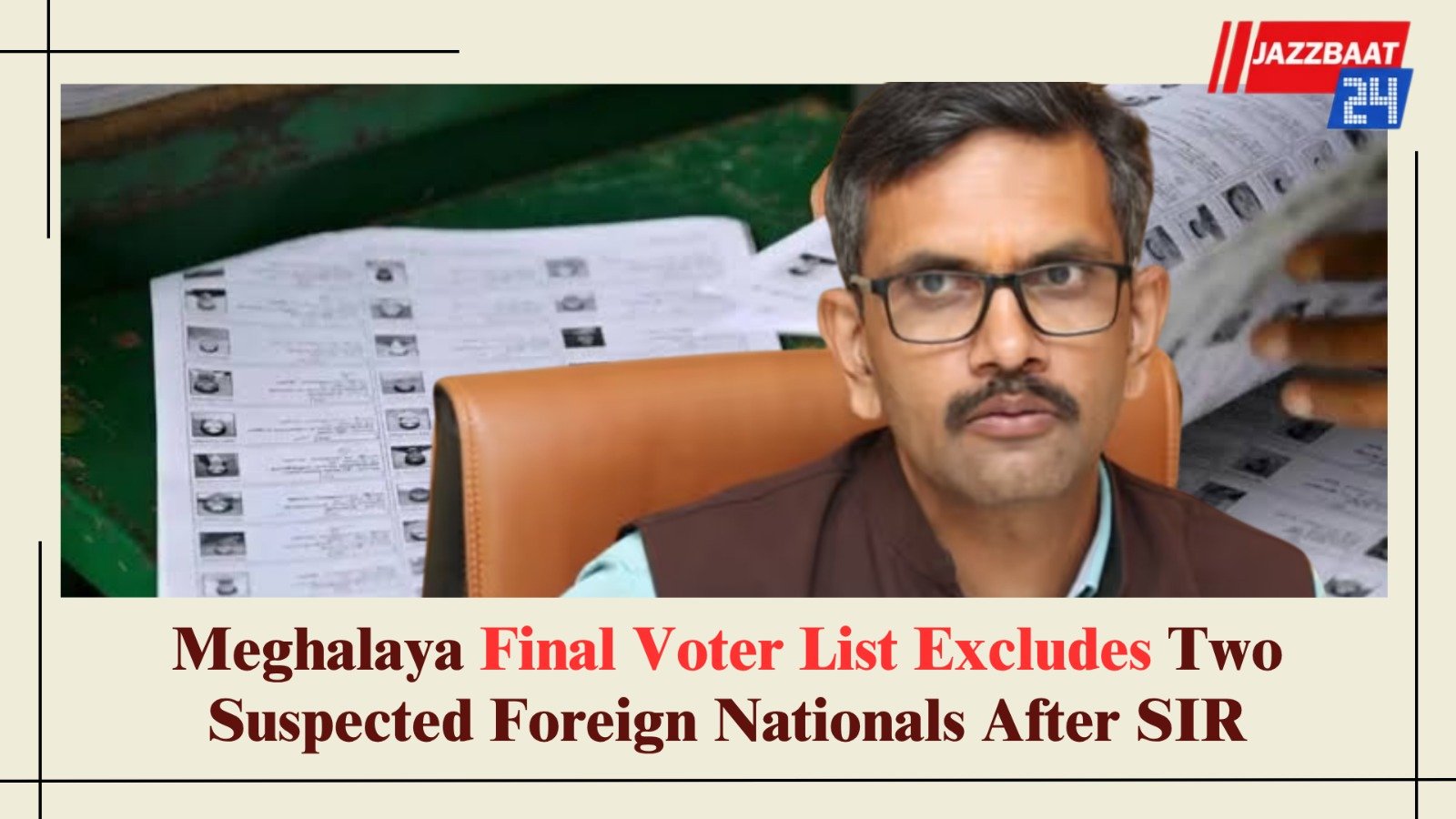
News Desk: Meghalaya has published its final electoral roll following the Special Intensive Revision (SIR), with two suspected foreign nationals excluded from the list after their cases were examined. The final roll contains approximately 2.18 million electors, marking a net increase of 14,720 voters compared with the draft list published on August 5, 2026.
The two men, both of Nepalese origin and married to Indian women, were found to be registered as voters in the Mawsynram constituency of East Khasi Hills district. Their names had been flagged during the revision process over questions concerning their citizenship eligibility.
Meghalaya Chief Electoral Officer BDR Tiwari confirmed that the two individuals had been excluded from the final electoral roll. The matter has also been referred to the appropriate authorities for further examination.
The exclusions represent a very small proportion of the deletions made during the revision exercise. A total of 187,126 names were removed from the electoral roll, with the majority of deletions attributed to deaths, migration, absence and duplicate entries.
According to the figures released during the process, 81,490 names were removed because the electors had died, while 45,011 were classified as absent. Another 42,532 entries were removed because voters had shifted their residence. Duplicate entries accounted for 6,701 deletions, while 4,668 names were removed for other reasons.
Before the revision began, Meghalaya's electoral roll contained approximately 2.35 million electors.
Notices Issued to More Than 6.5 Lakh Electors
During the SIR exercise, notices were issued to 651,735 electors. These included 222,786 voters whose records could not be mapped and 428,949 whose details showed logical discrepancies.
The authorities said hearings for the cases had been completed before the publication of the final list.
The treatment of logical discrepancies has become a significant issue in discussions surrounding electoral roll revisions, particularly in West Bengal. Unlike the process followed in Bihar, West Bengal's procedure includes adjudication for electors flagged under this category, potentially affecting their ability to vote until their eligibility is resolved.
Questions Over the Election Commission's Powers
The revision has also raised questions about the Election Commission of India's authority to examine citizenship claims.
Legal expert Swapnil Tripathi of the Vidhi Centre for Legal Policy said the commission does not have a general power to identify or declare individuals as foreign nationals. However, it can conduct a limited inquiry into citizenship eligibility while determining whether someone qualifies for registration as a voter.
The Supreme Court, in its May ruling concerning Bihar's SIR, said that cases in which the commission remains unsatisfied about citizenship should be referred to the competent central government authority for investigation.
The development in Meghalaya comes amid a wider national debate over electoral roll revisions, illegal immigration and voter eligibility. Political parties remain divided over the process, with the government stressing the need to remove ineligible entries and opposition leaders raising concerns about possible voter exclusion.


Reader Comments 0