
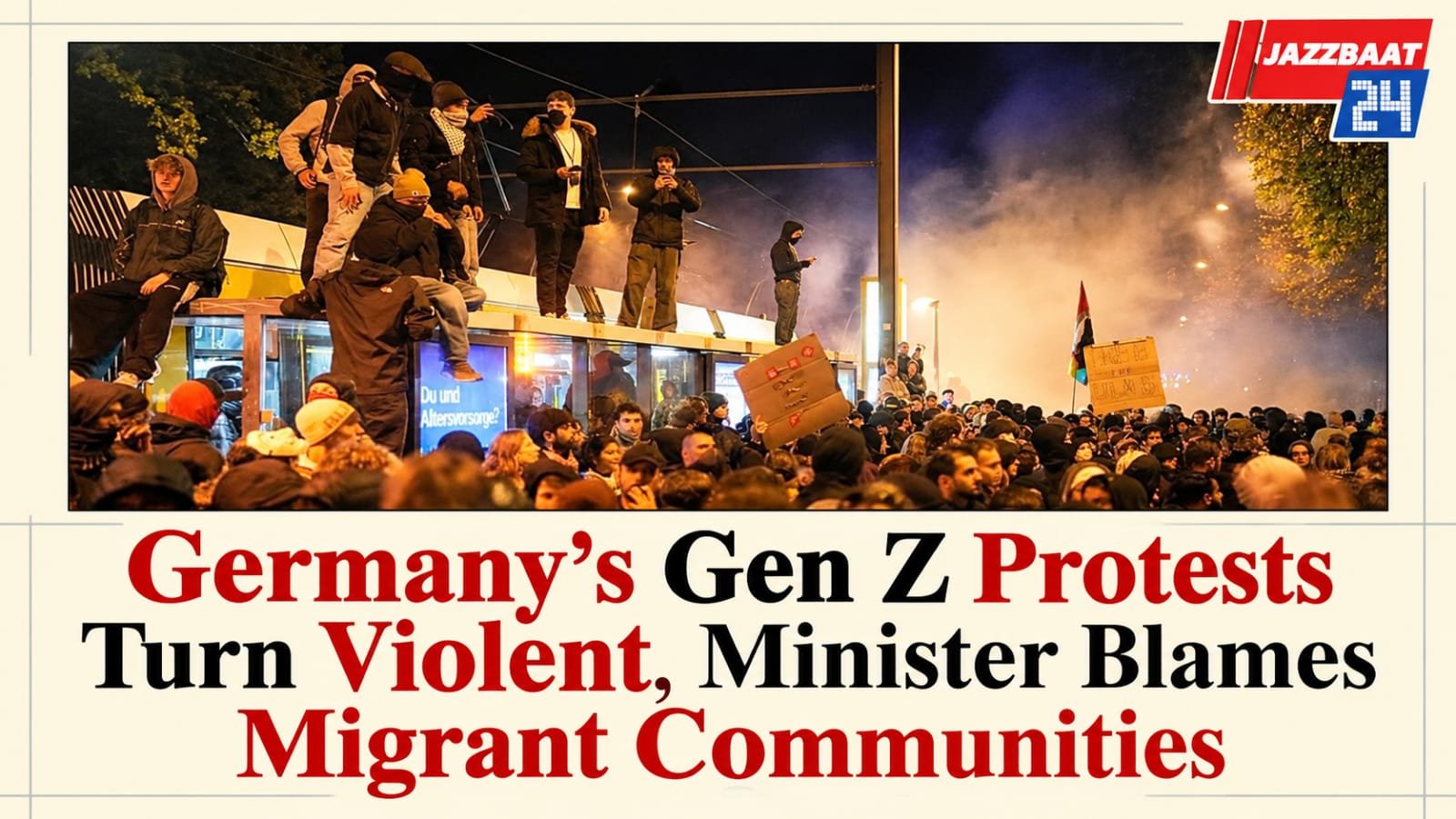
Berlin: Germany witnessed widespread youth-led protests on Saturday, November 1, as tens of thousands of young people took to the streets demanding greater attention to issues affecting their future. However, demonstrations in several major cities turned violent, triggering political criticism and a fresh debate over migration and public security.
The protests were organised by a youth movement called ‘GenZ regelt!’, which translates to ‘Gen Z has got this!’. The demonstrators raised concerns over the rising cost of living, education spending, government budget cuts and the need for greater investment in young people's future. The movement drew inspiration from similar youth-led demonstrations in France and Italy.
Although most participants demonstrated peacefully, violent incidents broke out on the sidelines in several German cities, including Frankfurt, Berlin, Cologne and Hamburg. In Frankfurt, masked individuals reportedly looted shops, while clashes between protesters and police escalated in other locations.
In some areas, police used water cannon to disperse groups of youths who allegedly hurled Molotov cocktails. The violence raised concerns among political leaders, who condemned the destruction of property and attacks on law enforcement personnel.
Hesse Minister-President Boris Rhein described the violent incidents as completely unacceptable. He stressed that such behaviour could not be justified under any circumstances.
Germany's Interior Minister Alexander Dobrindt also criticised the unrest. Speaking to a German newspaper, he blamed left-wing groups inclined towards violence and troublemakers from migrant communities for the disturbances. However, he suggested that the situation was less serious than the violent incidents witnessed in Paris.
The controversy has also triggered reactions across the political spectrum. The far-right Alternative for Germany (AfD) blamed left-wing extremism and uncontrolled migration for the violence.
Meanwhile, leaders of the left-wing and Green parties warned against allowing isolated incidents of vandalism to overshadow the demands of peaceful demonstrators. Die Linke leader Ines Schwerdtner argued that the concerns raised by young people would not disappear simply because some individuals resorted to violence. Green Party co-leader Franziska Brantner also condemned the clashes, saying they had damaged the legitimate cause of peaceful protesters.
Despite the violence, the youth movement has indicated that its campaign is far from over. ‘GenZ regelt!’ has announced plans for another round of demonstrations on November 14, describing the latest protests as only the beginning.
The developments have put Germany's political leadership under pressure to address both growing youth dissatisfaction and concerns over public order.



Reader Comments 0