
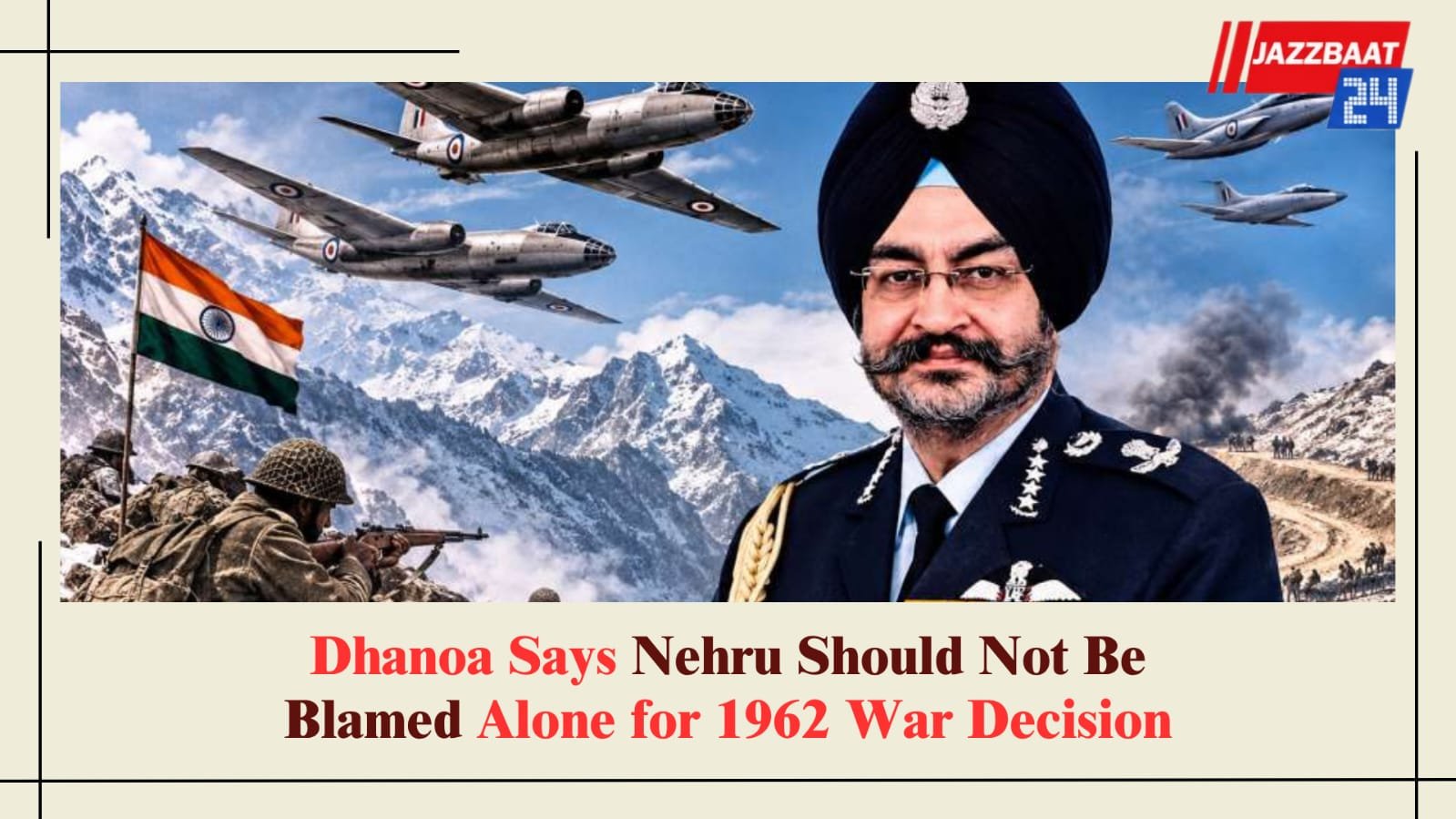
News Desk: Former Indian Air Force (IAF) Chief Air Chief Marshal (Retd) B.S. Dhanoa has said that former Prime Minister Jawaharlal Nehru should not be held solely responsible for the decision to keep the Indian Air Force out of offensive combat operations during the 1962 India-China war. According to Dhanoa, several military specialists had advised the government against using fighter aircraft in an offensive role during the conflict.
Speaking at the Indian Military Heritage Festival organised by the United Service Institution of India (USI) in New Delhi on October 30, Dhanoa highlighted the military assessments that influenced the decision. He argued that it would be unfair to blame Nehru alone when expert opinions at the time had recommended caution.
Dhanoa specifically referred to a note prepared by Group Captain H.C. Dewan, who had expressed reservations about deploying the IAF in the heavily forested and mountainous areas of the northeastern frontier. According to the assessment, air support in such terrain would have been difficult and might not have produced significant results against scattered Chinese infantry positions.
He also mentioned the advice given by the then US Ambassador to India, John Kenneth Galbraith. Galbraith reportedly questioned the effectiveness of India's air power, particularly considering the limitations of the aircraft and the potential consequences of an escalation with China.
The decision to keep the IAF's fighter aircraft away from offensive operations during the 1962 war has remained one of the most debated questions in India's military history. While the Indian Army faced serious challenges against Chinese forces, the Air Force was primarily used for transport, supply drops and logistical support.
The conflict began on October 20, 1962, and ended on November 21, when China announced a unilateral ceasefire. India's military setbacks during the war raised questions about the country's preparedness, intelligence assessments and strategic decision-making.
However, opinions on the decision to avoid offensive air operations remain divided. Several former military officials have argued that the IAF could have targeted Chinese supply lines and military positions, potentially changing the course of the conflict.
Former IAF Chief Air Chief Marshal A.Y. Tipnis had earlier criticised the decision, describing it as a major strategic mistake. Other military experts have also suggested that India's superior air capabilities could have played a significant role in the war.
Dhanoa's latest remarks have once again brought the historical debate into focus. His comments underline the importance of understanding the military advice and strategic calculations behind the decisions taken during the 1962 conflict, rather than placing responsibility on one individual alone.

Reader Comments 0