
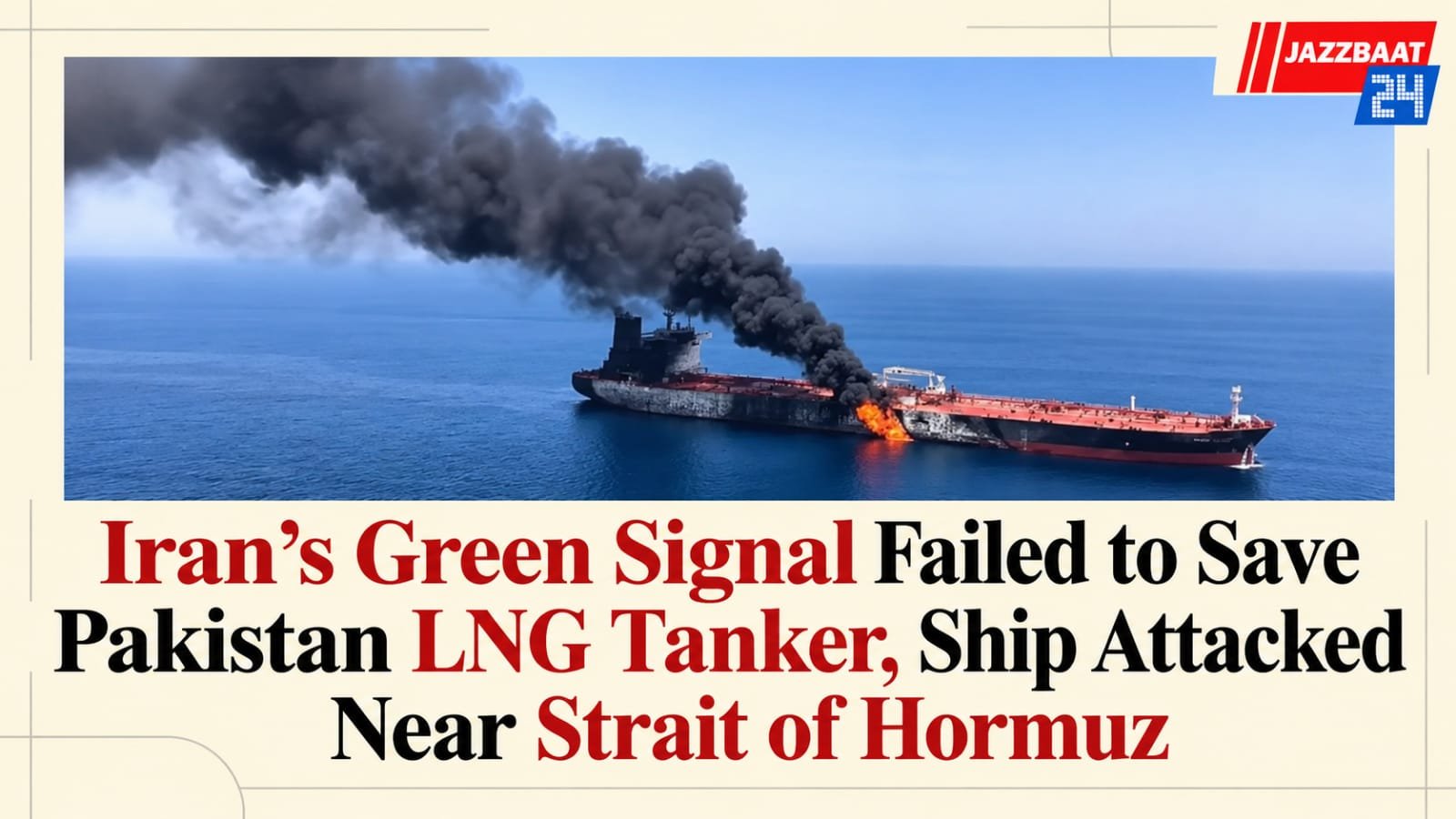
News Desk: A fresh attack on a liquefied natural gas (LNG) carrier near the strategically important Strait of Hormuz has raised concerns over maritime security in the Middle East. The vessel, carrying Qatari gas bound for Pakistan, reportedly came under fire just hours after Iran had cleared its passage through the sensitive waterway.
According to people familiar with the matter, Pakistan had negotiated with Iranian authorities to secure safe passage for the LNG carrier Al Mayeda. The Marshall Islands-flagged vessel was travelling towards the Strait of Hormuz with a cargo of LNG from Qatar when it was attacked on Friday.
Despite receiving an apparent green signal from Iran, the ship came under a projectile attack. Following the incident, the vessel changed course and turned back towards the Persian Gulf, according to ship-tracking data. It remains unclear who was responsible for the attack and what prompted the targeting of the carrier.
India's Shipping Minister Sarbananda Sonowal confirmed that the vessel had been targeted in a projectile attack. He said all 25 crew members aboard the ship were safe, including six Indian nationals. No further details about the nature of the attack were immediately available.
Meanwhile, Qatar has taken serious note of the incident. In a statement issued on Sunday, the Qatari Foreign Ministry said the country reserved the right to take all necessary measures under international law and the United Nations Charter to protect its assets, vessels and crew members. Authorities are investigating the incident and attempting to identify those responsible.
The attack comes at a particularly difficult time for Pakistan, which has been struggling with an energy shortage amid continuing instability in the Middle East. The country had reportedly been coordinating with Iran to ensure the safe passage of several Qatari LNG shipments over the past month. Earlier shipments had successfully crossed the waterway and reached the Gulf of Oman.
The latest incident could complicate those arrangements. If the LNG carrier fails to reach Pakistan, the country may have to purchase gas from the international spot market, where prices are reportedly more than three times higher than pre-war levels.
Meanwhile, LNG movement through the Strait of Hormuz remained significantly below normal levels in October, at around 30 per cent of pre-war volumes.
The incident highlights the continuing risks faced by commercial vessels navigating one of the world's most important energy routes, with potential consequences for global fuel supplies and energy prices.




Reader Comments 0