
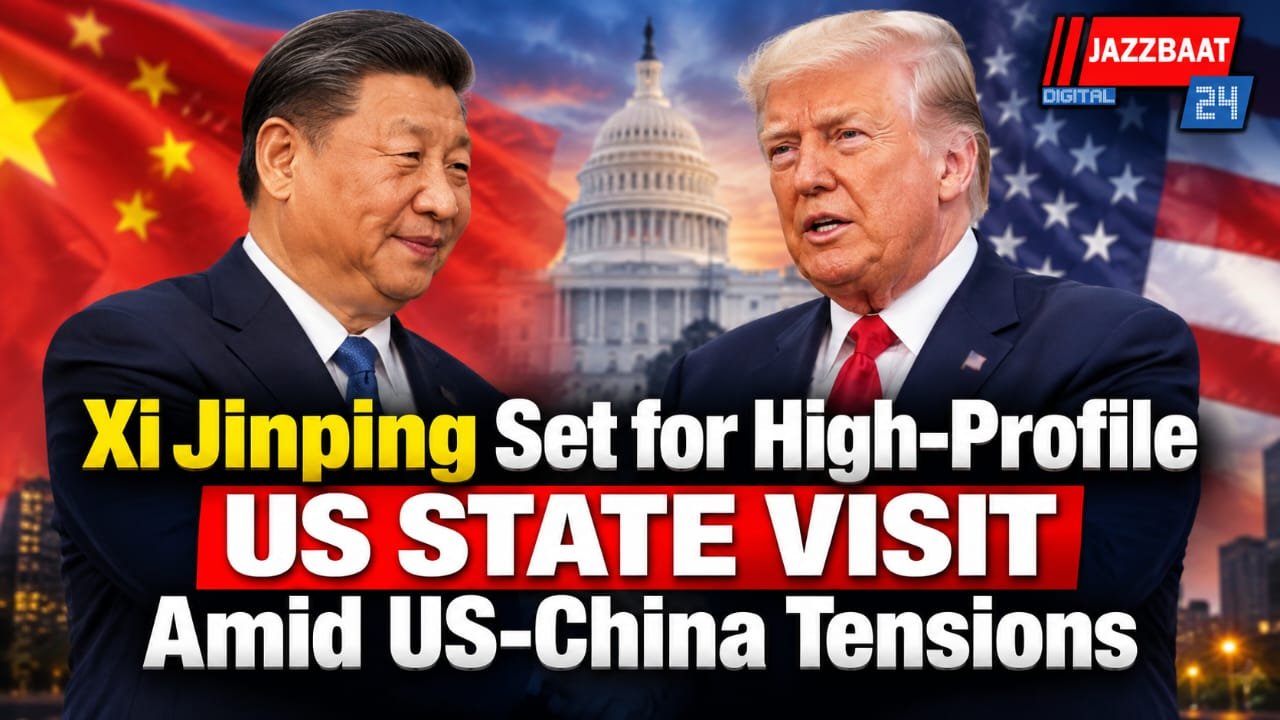
Chinese President Xi Jinping is set to receive a high-profile welcome in the United States as Washington and Beijing prepare for a closely watched state visit, with both sides placing significant attention on diplomatic protocol despite unresolved disputes over trade, technology and security.
According to a report, the two governments spent weeks negotiating the format of Xi’s visit before Washington agreed to Beijing’s request for a state visit. The arrangement includes formal ceremonial elements such as an honour guard, a 21-gun salute and a welcome ceremony on the White House South Lawn.
The visit is expected to reflect the diplomatic importance both countries attach to maintaining stability in their relationship. US President Donald Trump is seeking to maintain the momentum created by his meeting with Xi in Beijing earlier this year, including a tariff ceasefire that has helped prevent another escalation in the trade dispute.
For Xi, the visit also carries domestic significance. A high-profile reception in Washington could reinforce China’s image of itself as an equal major power in its relationship with the United States.
Despite the ceremonial focus, major disagreements remain unresolved. Washington and Beijing continue to compete over advanced technologies, particularly artificial intelligence and semiconductors, while also contesting broader geopolitical influence.
Trade discussions have produced some limited areas of cooperation. US officials said a bilateral “Board of Trade” is now operational and could help expand trade in less sensitive products. Areas such as agricultural goods, energy, consumer products and some medical equipment are being considered for greater commercial cooperation.
However, some of the most contentious issues are not expected to be part of the immediate discussions. US Trade Representative Jamieson Greer said semiconductor export controls were not on the agenda during preparatory talks.
Artificial intelligence is another major area of tension. Both countries have previously agreed to establish dialogue on AI, but progress has been limited. US Treasury Secretary Scott Bessent has discussed the possibility of creating a notification mechanism or hotline that could allow Washington and Beijing to alert each other about AI-related incidents that may pose national-security risks.
Beyond trade and technology, the two governments remain divided over several foreign-policy issues. Washington is seeking greater Chinese pressure on Iran, while Beijing is expected to continue urging the US to clarify its position on Taiwan and reconsider proposed arms sales to the island.
The state visit therefore combines diplomatic ceremony with a series of difficult strategic issues. While officials on both sides have signalled an interest in keeping communication open, major differences over technology, trade, Taiwan and national security remain unresolved.
The outcome of the visit will depend on whether the diplomatic engagement produces concrete agreements or primarily serves to stabilise relations between the world’s two largest economic powers.


Reader Comments 0