
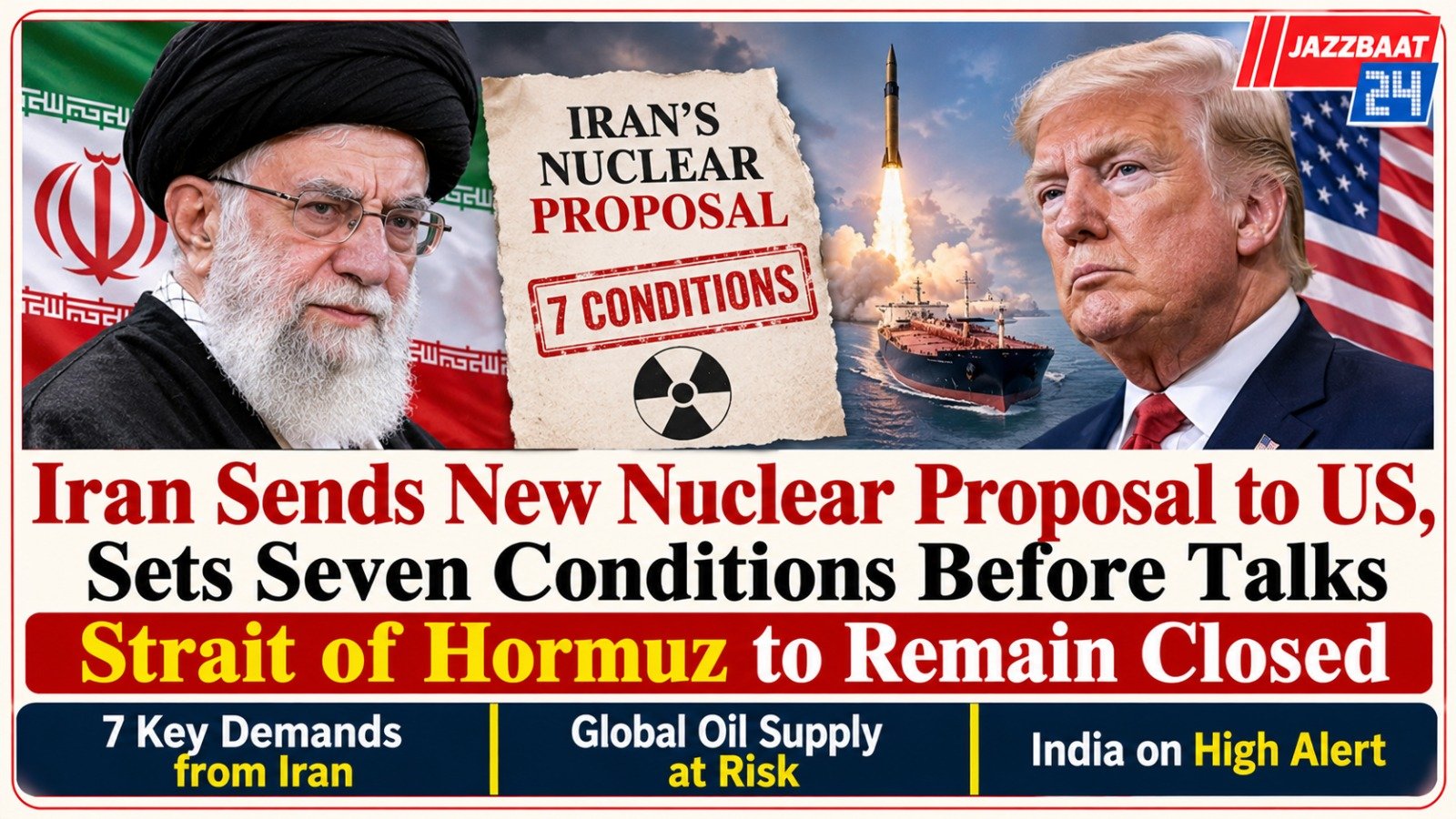
Tehran has sent a fresh nuclear proposal to the United States through Qatar, signalling a possible new diplomatic push to end the prolonged conflict between the two countries. However, Iran has made it clear that Washington must meet seven key conditions before formal negotiations can begin. Tehran has also warned that the strategically important Strait of Hormuz will remain closed until its demands are addressed.
The development comes amid continuing tensions in West Asia, with both countries maintaining tough positions over Iran's nuclear programme, economic sanctions and regional security.
According to a senior Iranian official, the new nuclear proposal was delivered to Washington through Qatar on Thursday. The US administration is reportedly examining the proposal, although its full contents have not been made public.
Iran's senior security official Mohsen Rezaei also reiterated Tehran's position during his visit to Russia. He reportedly said that Iran had presented seven conditions to the United States and would not move forward with negotiations or reopen the Strait of Hormuz until those demands were addressed.
What Are Iran's Seven Conditions?
Iran's demands reportedly cover economic, military and regional security issues.
The first major demand is the complete removal of US economic sanctions. Tehran wants restrictions affecting its oil exports, banking transactions and international investments to be lifted.
Second, Iran wants its financial assets frozen in foreign countries to be returned.
Third, Tehran is demanding compensation from the United States for the damage caused to its infrastructure and economy during the military conflict.
Fourth, Iran wants an immediate end to military attacks and a firm guarantee that Washington will not launch further strikes in the future.
Fifth, it wants an end to conflicts across West Asia, particularly the confrontation involving Israel and the Iran-backed Hezbollah group in Lebanon.
Sixth, Iran is seeking recognition of its sovereignty and security interests in the Strait of Hormuz.
Seventh, Tehran wants a new regional security framework involving West Asian countries instead of the existing US-led security arrangement.
However, the complete text of the nuclear proposal sent through Qatar has not been released. Therefore, these seven demands should not necessarily be considered the exact seven clauses of the latest proposal.
Why Is the Strait of Hormuz So Important?
The Strait of Hormuz is one of the world's most strategically important waterways. Connecting the Persian Gulf with the Gulf of Oman, it serves as a major route for international crude oil and liquefied natural gas shipments.
Nearly one-fifth of global oil consumption passes through this narrow waterway. Any disruption to shipping could affect international energy supplies, increase transportation costs and push crude oil prices higher.
Countries such as India, China, Japan and South Korea depend heavily on energy supplies transported through this route.
By keeping the Strait of Hormuz closed, Iran is attempting to increase pressure on Washington and strengthen its position in negotiations.
Trump's Position Remains Firm
US President Donald Trump has also maintained a tough stance on Iran's nuclear ambitions. Washington wants any negotiations to include clear commitments regarding uranium enrichment and preventing Iran from developing nuclear weapons.
Trump has indicated that Iran cannot take independent steps regarding its nuclear programme without US approval.
This creates a major disagreement between the two sides. While Washington wants nuclear commitments at the beginning of negotiations, Tehran insists that sanctions relief, the return of frozen assets and security guarantees must come first.
Qatar and Russia Play Key Diplomatic Roles
Qatar has emerged as an important intermediary between Washington and Tehran, facilitating the exchange of proposals.
Russia is also increasing diplomatic engagement with Iran. On Thursday, Mohsen Rezaei reportedly met Russian President Vladimir Putin in Moscow.
Both Russia and China have reasons to avoid a prolonged conflict in West Asia, as continued instability could disrupt international energy markets, trade and regional security.
Why Is India Watching Closely?
The growing tensions between Iran and the United States could have direct economic consequences for India.
India imports a significant portion of its crude oil requirements. Any disruption in the Strait of Hormuz could force Indian companies to look for alternative suppliers, potentially increasing shipping and insurance costs.
Higher international crude oil prices could also put pressure on India's import bill, trade balance and domestic fuel prices.
For now, Iran's latest proposal has opened another diplomatic possibility. But with Tehran insisting on seven conditions and Washington refusing to soften its position on the nuclear issue, a breakthrough remains uncertain. The next move by the Trump administration could prove crucial for the future of negotiations and stability across West Asia.


Reader Comments 0