
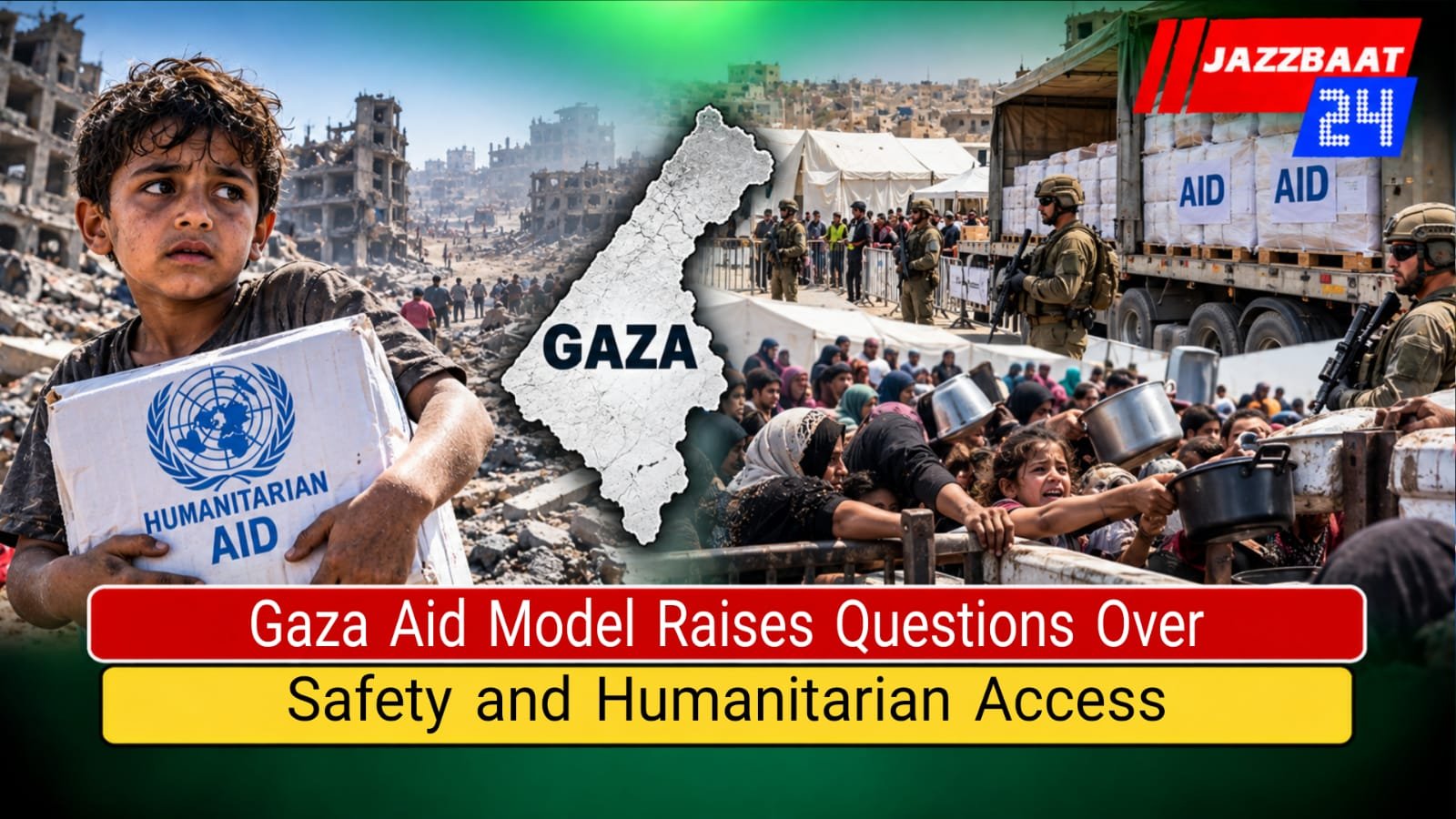
A six-month experiment in delivering humanitarian aid to Palestinians in Gaza has triggered fresh questions over the safety, independence and accessibility of relief operations in conflict zones.
The Gaza Humanitarian Foundation (GHF) operated a different model of aid distribution during 2025, replacing a much larger network of established humanitarian sites with only four heavily secured distribution centres. The foundation did not disclose its donors but received at least $30 million from the US government, according to the report.
Several established humanitarian organisations declined to cooperate with the foundation, citing concerns over transparency and independent oversight.
According to the foundation, it distributed around 187 million meals during its operation and demonstrated an alternative method of delivering assistance. The model has reportedly also influenced elements of US President Donald Trump’s Gaza peace plan.
However, research cited in the report argues that the approach raises significant humanitarian and legal concerns, particularly because aid distribution became closely connected with military security and private contractors.
From hundreds of sites to four
Before the GHF system was introduced, humanitarian assistance was reportedly distributed through more than 400 UN-coordinated locations across Gaza.
The foundation instead concentrated distribution at four locations. Three were situated in southern Gaza in areas described as military zones, while another was located in central Gaza City.
The locations created major challenges for civilians trying to access food. People living south of Wadi Gaza had to travel through areas where Israeli military forces and bases were present, while residents of northern Gaza faced long journeys to reach distribution points.
The report also highlighted concerns over unpredictable distribution schedules. In some instances, civilians reportedly received only a few minutes’ notice that a distribution centre was opening, while some sites operated for only short periods.
For people already facing hunger, displacement and insecurity, reaching food therefore became a potentially dangerous journey.
Role of private security contractors
The GHF model also relied heavily on private security companies. Safe Reach Solutions was involved in security logistics, while UG Solutions provided security at distribution sites and interacted directly with Palestinians.
The use of private security itself is not automatically incompatible with humanitarian operations. Private companies can provide protection for aid facilities, convoys and humanitarian workers.
However, the report argues that the distinction becomes more complicated when contractors become involved in activities such as crowd control, security screening, intelligence gathering or the use of force.
Reports cited in the research also alleged that contractors monitored individuals considered suspicious and shared information with Israeli military authorities. The reported use of facial-recognition surveillance further raised questions about where humanitarian assistance ends and security operations begin.
Safety concerns at aid points
Aid distribution sites also became locations where large crowds gathered. The report refers to incidents involving crowding, stampedes and shootings, with Palestinians reportedly killed or injured around aid distribution points and routes.
Israel has disputed some casualty figures and has maintained that live fire near humanitarian centres was prohibited except when there was an immediate threat to life.
The wider concern raised by the research is that humanitarian assistance should reduce the risks faced by civilians rather than require vulnerable people to repeatedly expose themselves to potentially dangerous conditions simply to obtain food.
Questions over responsibility
Another major issue is the use of private companies to deliver functions traditionally handled by governments or established humanitarian organisations.
The research argues that transferring responsibility for a function to private contractors does not necessarily remove the legal obligations of the authority responsible for the civilian population.
Under international humanitarian law, an occupying power has obligations towards protected civilians, including facilitating access to essential supplies and humanitarian relief.
The Gaza experience has therefore prompted a broader debate about whether privatised and militarised aid systems could become a model for future conflicts.
The central question is not only how much aid is delivered, but also whether civilians can safely reach it, whether assistance is distributed according to need and whether humanitarian operations remain independent from military and political objectives.
The experience in Gaza has consequently become a case study in the difficult balance between delivering emergency assistance and ensuring that humanitarian relief continues to protect civilian safety and dignity.

Reader Comments 0