
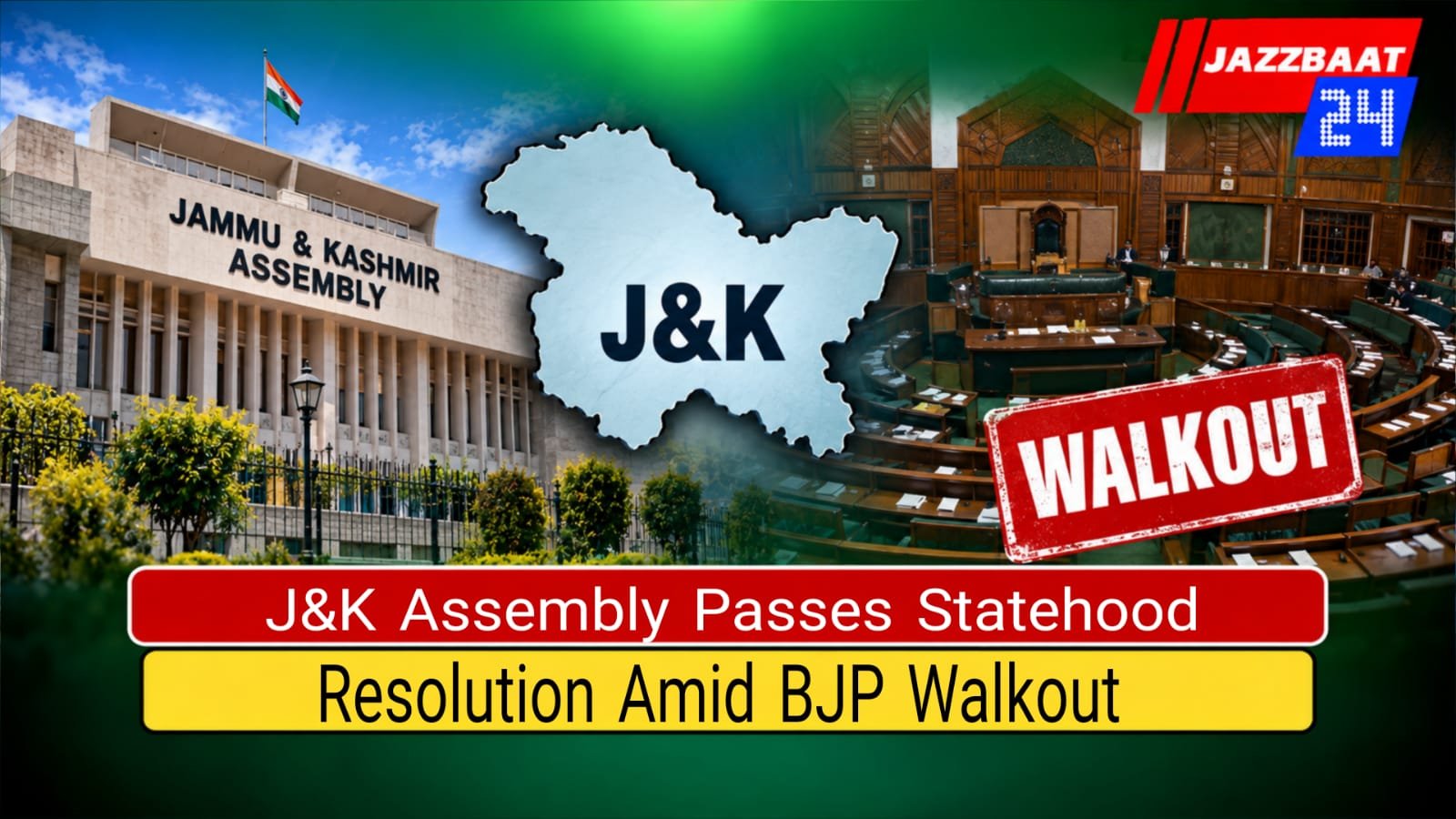
The Jammu and Kashmir Assembly on Monday passed a resolution seeking the restoration of statehood to the Union Territory, amid intense protests and a walkout by BJP legislators.
The resolution was moved by Chief Minister Omar Abdullah, who argued that restoring statehood was a matter of right for the people of Jammu and Kashmir rather than a concession from the Centre. He questioned the delay in restoring statehood and asked whether the process was being linked to the security situation in the region.
“If statehood is to be restored only after militancy ends,” Abdullah said, the decision would effectively depend on Pakistan rather than India. He also said that his government had been seeking restoration of statehood from the Centre for the past two years.
The debate in the Assembly was marked by repeated disruptions. BJP MLAs entered the well of the House and raised slogans demanding the removal of the Omar Abdullah government and Assembly Speaker Abdul Rahim Rather. The proceedings became disorderly, with reports of attempts to throw microphones and two BJP members being marshalled out of the House.
The BJP strongly objected to portions of the resolution, particularly references to the 2000 autonomy resolution. BJP legislators tore copies of the resolution during the protest and accused the government of bringing issues beyond the restoration of statehood into the discussion.
Leader of Opposition Sunil Sharma has criticised the wording of the resolution. He argued that references to autonomy could complicate the issue of statehood and alleged that the Omar Abdullah government was creating obstacles in the process.
Sharma said the BJP remained committed to restoring statehood to Jammu and Kashmir but maintained that it should happen at an appropriate time. He also referred to his meeting with Union Home Minister Amit Shah during the ongoing Assembly session.
The 2000 autonomy resolution has a significant political history in Jammu and Kashmir. On June 26, 2000, the then state Assembly passed a resolution seeking restoration of the region's pre-1953 constitutional position. That proposal was made during Farooq Abdullah's tenure as chief minister.
The inclusion of references to that resolution in the current statehood debate became one of the main points of disagreement between the ruling National Conference-led government and the BJP.
Several amendment proposals were also moved during the proceedings, including demands to mention Articles 370 and 35A. These proposals added to the political tension surrounding the resolution.
After the initial disruption, the Speaker adjourned the House for around half an hour. When proceedings resumed, BJP members again entered the well and raised slogans opposing what they described as attempts to weaken India's unity.
Omar Abdullah, meanwhile, maintained that the resolution was focused on restoring statehood and was not a demand for political advantage for his government or party. He said statehood was connected to the identity and aspirations of the people of Jammu and Kashmir.
The passage of the resolution marks another development in the continuing political debate over Jammu and Kashmir's constitutional and administrative status following its reorganisation as a Union Territory in 2019. The issue remains politically contested, with the ruling alliance and BJP differing over both the timing and the wording of the demand for statehood.
Reader Comments 0