
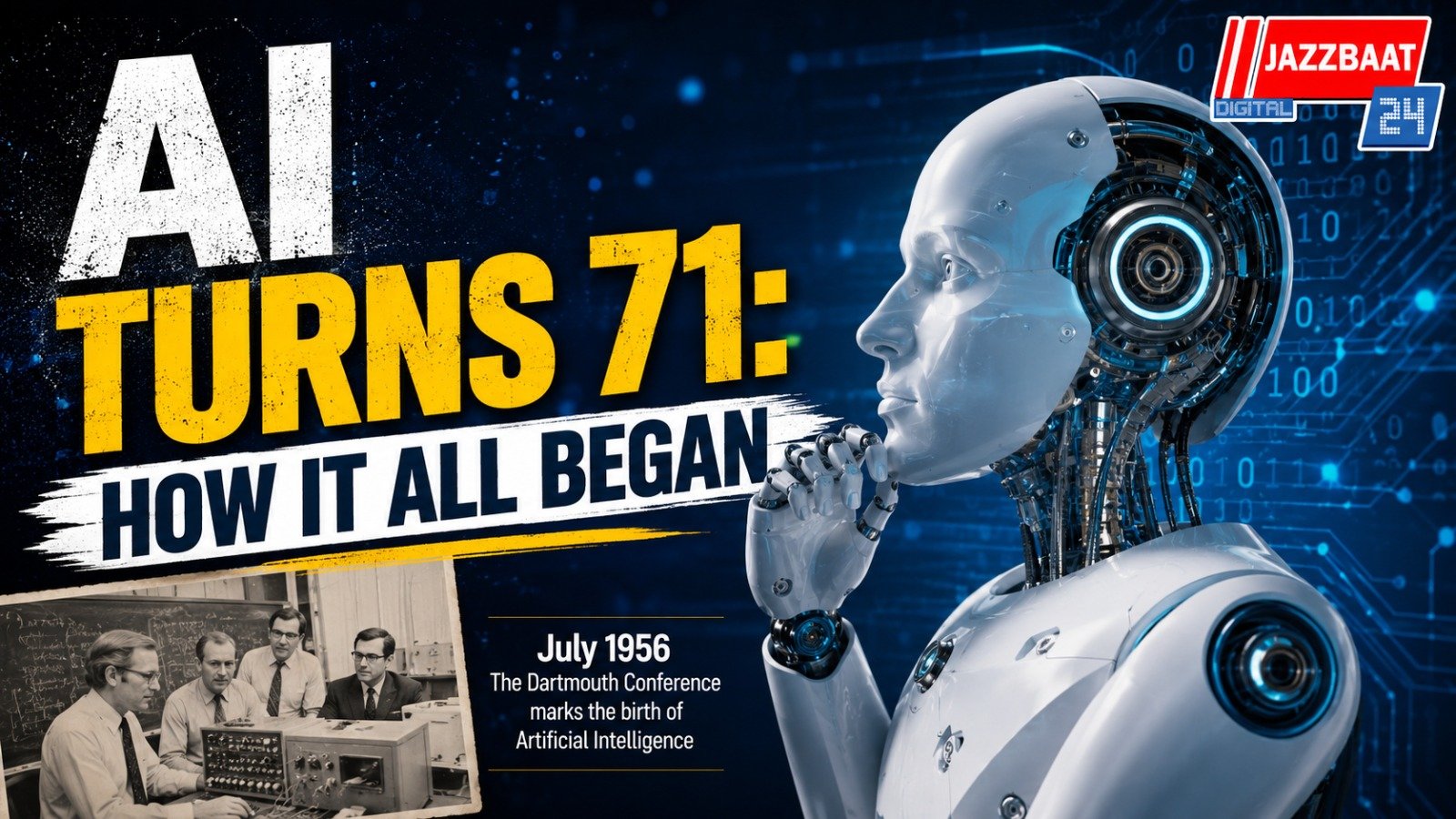
Artificial intelligence may feel like one of the defining technologies of the 2020s, but the phrase itself is more than seven decades old. On August 31, 1955, the term “artificial intelligence” appeared in a proposal for a research project that would eventually lay the foundation for the modern AI industry.
The proposal was prepared by four scientists John McCarthy, Marvin Minsky, Nathaniel Rochester and Claude Shannon for a summer research project at Dartmouth College in New Hampshire, United States. McCarthy, a mathematician at Dartmouth, is widely credited with coining the term.
The plan was surprisingly ambitious for its time. The researchers proposed a two-month study involving about 10 scientists and argued that human learning and intelligence could, in principle, be described precisely enough for machines to simulate them.
Their interests included areas that sound remarkably familiar today: teaching computers to use language, enabling machines to form concepts, solving problems normally handled by humans and developing systems capable of improving themselves. They also proposed studying neural networks, automatic computers and creativity.
The actual Dartmouth meeting took place in the summer of 1956 and is widely regarded as the event that established AI as a distinct field of scientific research. Scientists gathered in Hanover to explore whether machines could imitate aspects of human intelligence.
At the time, however, the technology was extremely limited. Computers were enormous machines with tiny amounts of computing power compared with today's smartphones. The researchers were not working with chatbots, image generators or systems capable of processing billions of pieces of information.
Yet the basic question they asked has remained central to AI for decades: can intelligence be represented in a form that a machine can understand and reproduce?
The field went through periods of excitement and disappointment. Early promises were followed by funding cuts and what became known as “AI winters”. But advances in computing power, large datasets and machine-learning techniques eventually transformed the field.
Today, AI systems can generate text and images, translate languages, assist doctors, write computer code and analyse enormous amounts of data. Generative AI has also pushed the technology into everyday life for millions of people.
The 71st anniversary is therefore more than a historical curiosity. It shows how an idea written in a 1955 research proposal eventually became one of the most influential technologies in the world while many of the questions its pioneers raised about machine intelligence are still being debated today.




Reader Comments 0