
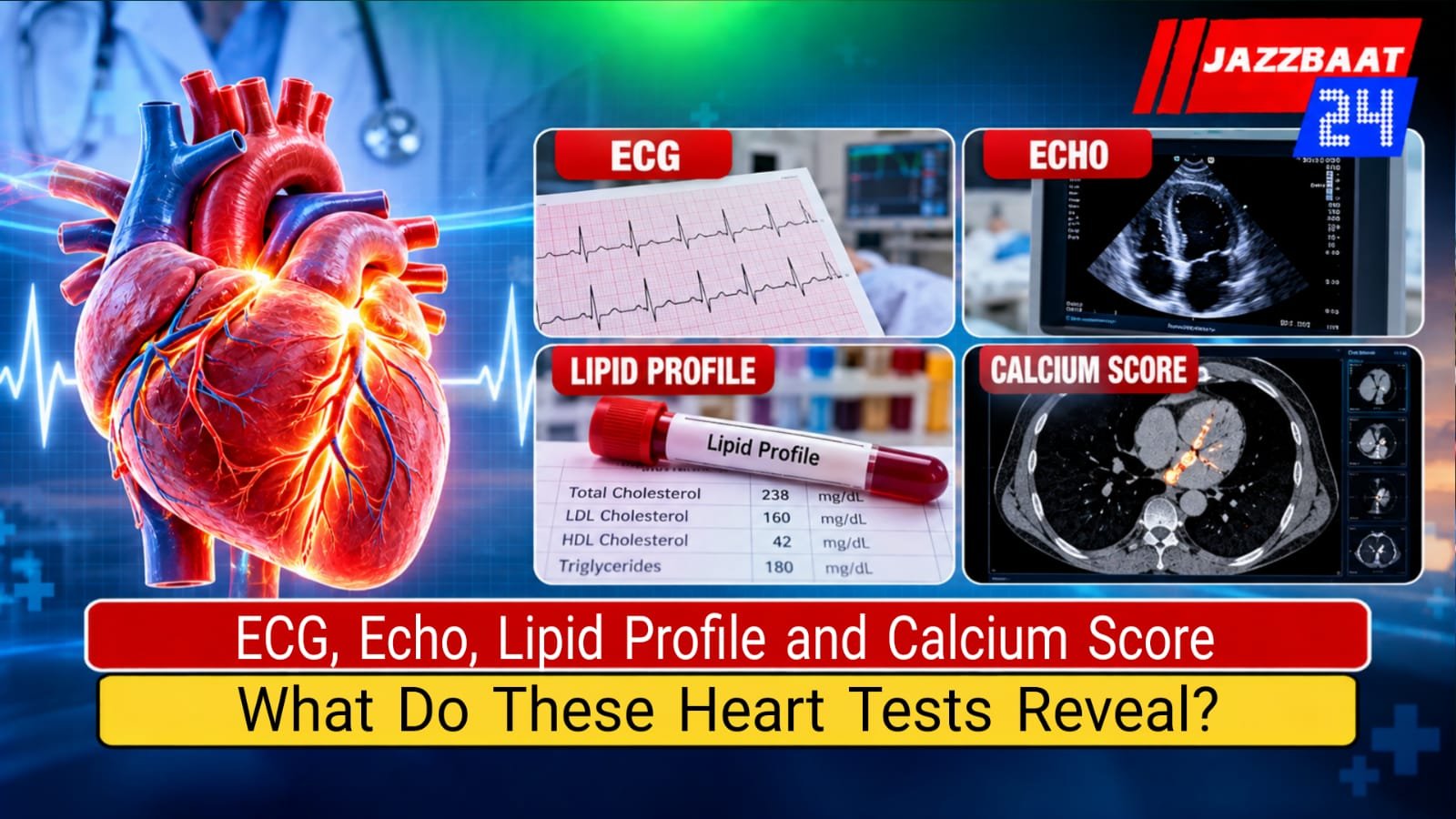
On World Heart Day, September 29, understanding common heart tests can help people know why doctors recommend them and what each investigation actually measures. Cardiac surgeon Dr Ajeet Bana, chairman of Cardiac Sciences at EHCC Hospital, Jaipur, explained four commonly used assessments—ECG, echocardiogram, lipid profile and coronary artery calcium score.
Dr Bana stressed that there is no single test that can provide a complete picture of a person’s heart health. The choice of investigation depends on factors such as symptoms, age, family history and individual cardiovascular risk.
ECG checks the heart’s electrical activity
An electrocardiogram (ECG) records the electrical signals that control the heartbeat. It is a quick, painless and non-invasive test and is commonly used when doctors need to check whether the heart rhythm is normal.
According to Dr Bana, an ECG may be advised for people experiencing chest discomfort, palpitations, breathlessness, dizziness or unexplained fatigue. It can also be included in cardiac assessments before certain medical procedures.
However, an ECG represents the heart’s electrical activity at a particular point in time. Therefore, the result needs to be considered alongside the person’s symptoms, medical history and clinical examination.
Echo looks at the heart’s structure
An echocardiogram, or echo, is different from an ECG. It uses ultrasound to create moving images of the heart and allows doctors to examine the heart chambers, muscles, valves and pumping function.
An echo can be particularly useful when doctors suspect a structural heart problem, valve disorder or reduced pumping function. It may also help investigate symptoms such as breathlessness.
In simple terms, an ECG looks at the heart’s electrical activity, while an echo provides information about its structure and mechanical function.
Lipid profile measures cholesterol
A lipid profile is a blood test used to measure important blood fats, including LDL cholesterol, HDL cholesterol and triglycerides.
LDL, often referred to as “bad cholesterol”, is particularly important because persistently high levels can contribute to plaque formation in the arteries. However, cholesterol is only one component of overall cardiovascular risk.
Blood pressure, diabetes, smoking, weight, age and family history can also influence a person’s risk of heart disease.
For some people, especially those with a strong family history of premature heart disease, doctors may also recommend testing for lipoprotein(a), or Lp(a), an inherited factor associated with cardiovascular risk.
Calcium score detects calcified plaque
A coronary artery calcium score is obtained through a specialised CT scan. It measures calcium deposits in the coronary arteries. These deposits can indicate the presence of atherosclerotic plaque and provide additional information about cardiovascular risk.
Dr Bana said the test may be considered for selected individuals when a more detailed assessment of cardiovascular risk could help guide preventive decisions. It is not a routine screening test for everyone.
A calcium score of zero can be reassuring for many people, but it does not completely rule out cardiovascular disease. Age, symptoms and other risk factors still need to be considered.
Choosing the right test
The four tests answer different clinical questions, and undergoing every test is not necessarily appropriate for everyone. Doctors generally consider a person’s symptoms and overall cardiovascular risk before deciding which investigation is needed.
Dr Bana also highlighted the importance of everyday preventive measures, including controlling blood pressure, cholesterol and blood sugar, avoiding tobacco, maintaining a healthy weight and staying physically active.
The key message on World Heart Day is that heart testing should be individualised. A doctor can determine which test, if any, is appropriate based on a person’s health profile and symptoms.




Reader Comments 0