
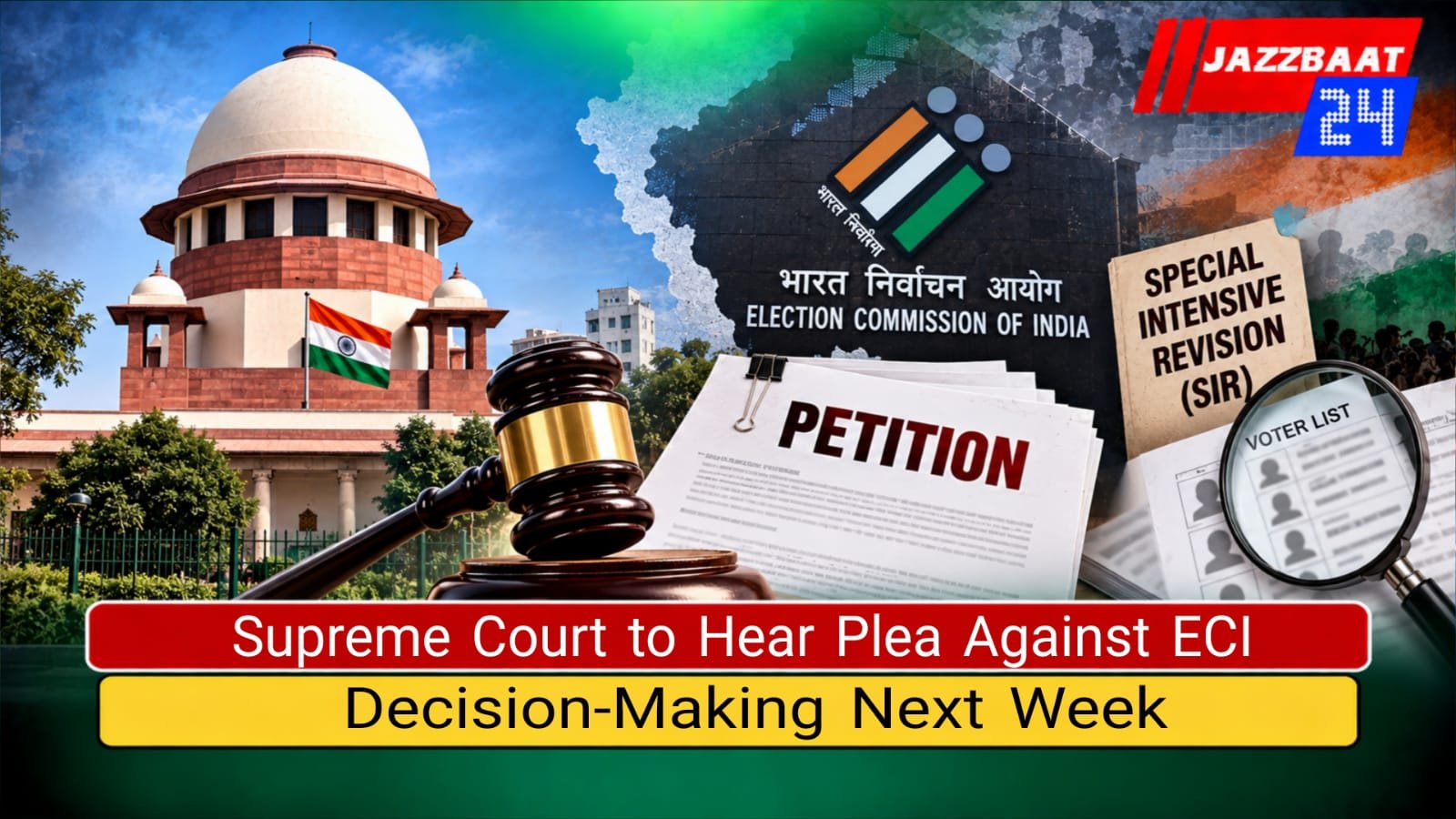
The Supreme Court has agreed to hear next week a petition questioning the manner in which decisions have allegedly been taken within the Election Commission of India (ECI) under Chief Election Commissioner Gyanesh Kumar. The matter was mentioned before a three-judge Bench headed by Chief Justice of India Surya Kant and comprising Justices Joymalya Bagchi and V. Mohana.
The petition, filed by Rakesh Kumar Singh, raises questions over whether powers constitutionally vested in the multi-member Election Commission can be exercised or represented by the Chief Election Commissioner individually. The petitioner has relied on Article 324 of the Constitution and Section 18 of the Chief Election Commissioner and Other Election Commissioners (Appointment, Conditions of Service and Term of Office) Act, 2023.
At the centre of the controversy is the Election Commission’s ongoing Special Intensive Revision (SIR) of electoral rolls. The petitioner has challenged the legality of the process and has sought a declaration that decisions, directions and related measures taken without the required participation of the full Commission should be treated as invalid. The plea also asks the court to examine the original records relating to the decisions under question.
The petition comes amid reports of differences within the poll panel over certain decisions connected with the voter-roll revision exercise. According to the Indian Express report cited in the petition, Election Commissioners Sukhbir Singh Sandhu and Vivek Joshi had recorded objections on at least 14 occasions over a period of about 10 months. The objections reportedly related to decisions and orders concerning the SIR process that the two commissioners said had been taken without their knowledge or recommendation.
The Election Commission, however, has maintained a different position. It has said that the communications cited in the controversy related to an officer on deputation and were not connected with policy or IT-division matters. In another recent statement, the Commission said differences within an institution can occur and maintained that its actions were taken according to the applicable legal framework.
The issue has gained wider attention because of the scale of the voter-roll verification exercise. The SIR process has already generated political and legal controversy, with concerns being raised over the deletion or modification of names in electoral rolls and the procedures followed for verification and appeals. The Election Commission has defended the exercise and recently announced measures including a review of voter-roll software and greater use of field verification for voters whose records require clarification.
The fresh Supreme Court petition seeks to clarify the constitutional and statutory limits of the CEC’s role in decision-making. It argues that where the law places authority in the Election Commission as a multi-member body, decisions should follow the procedure prescribed under the Constitution and the 2023 Act.
The Supreme Court’s hearing next week could therefore bring closer judicial scrutiny to the functioning of the poll panel and the decision-making process surrounding the SIR exercise. The court’s eventual observations will determine how the legal questions raised in the petition are dealt with.


Reader Comments 0