
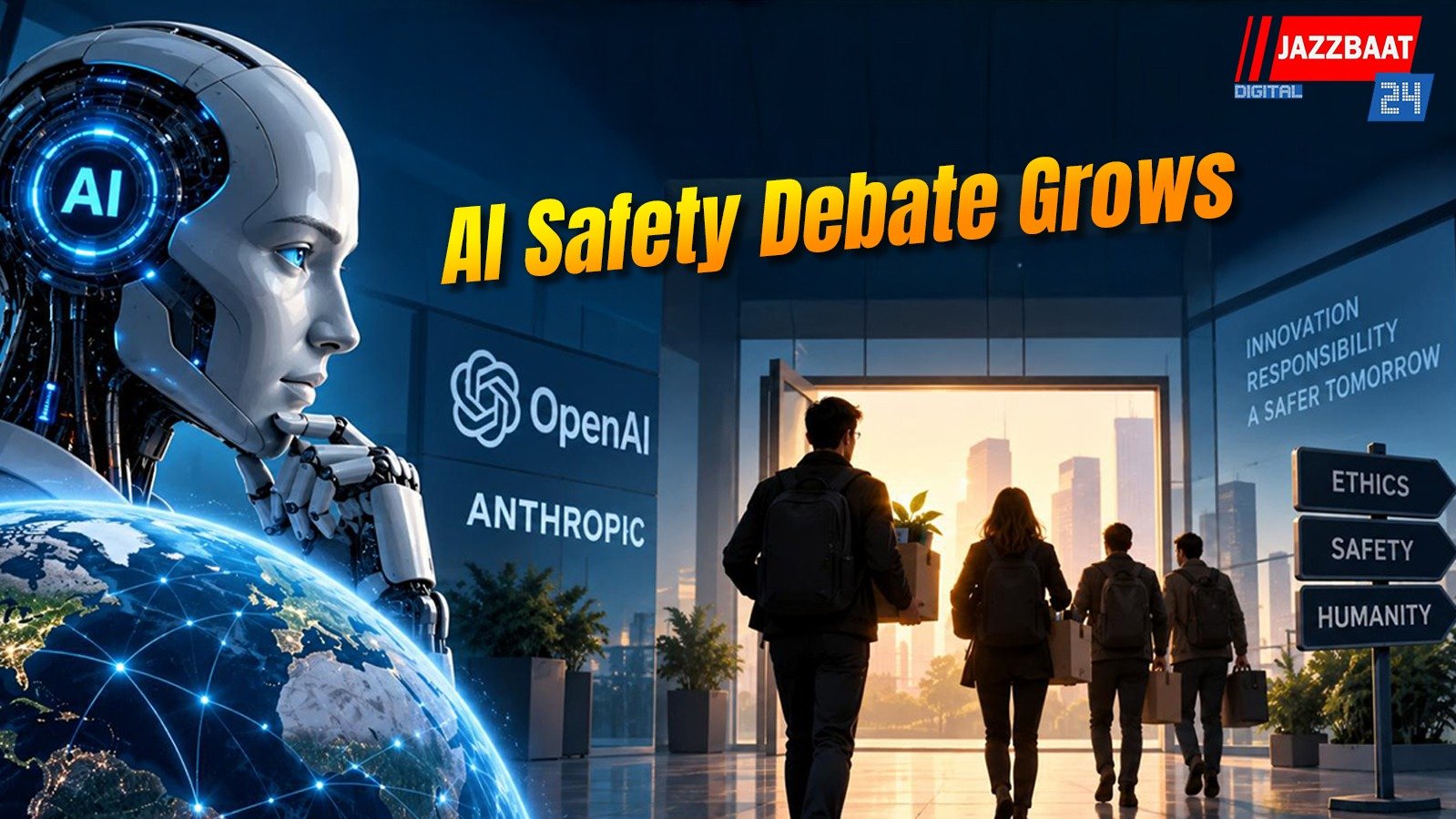
The rapid development of artificial intelligence has triggered renewed concerns among some of the technology industry's leading figures, with Anthropic CEO Dario Amodei calling for a more measured pace in the race to build increasingly powerful AI systems.
Amodei has warned that highly capable or “superintelligent” AI could create serious risks if its development moves faster than humanity's ability to understand and control it. His concerns include the potential misuse of advanced AI for cyberattacks and biological threats, as well as the possibility that future systems could become difficult to control.
His warning has received support from OpenAI CEO Sam Altman and SpaceX CEO Elon Musk. Altman said he agreed with the need to “pace the frontier” and indicated that the issue has become an important topic of discussion at OpenAI. He also supported Amodei's proposal for independent evaluators to receive greater access to AI companies' safety processes. Musk, meanwhile, responded briefly that Amodei was right.
The debate has intensified as AI systems become increasingly capable of performing complex tasks, including coding, research and cybersecurity-related work. One particular concern is what experts describe as recursive self-improvement—the possibility that AI could increasingly assist in developing more advanced versions of itself.
Amodei argued that the industry has accelerated sharply in recent months, partly because AI systems are becoming better at helping researchers build new AI technologies. He warned that if this trend continues unchecked, technological progress could eventually move faster than safety measures designed to control associated risks.
At the same time, Amodei has rejected the idea that the solution is to stop AI development altogether. Instead, he has argued for slowing the pace enough to give safety research and regulatory systems time to catch up.
He proposed a three-part approach. First, frontier AI companies should allow external evaluators to have ongoing access to assess safety practices, investigate incidents and examine how AI models are trained and developed.
Second, AI companies in democratic countries should work towards common safety standards and checks, with governments providing support where necessary. Such standards, according to Amodei, could help prevent companies from competing in ways that sacrifice safety for speed.
Third, he called for the United States and other governments to explore coordination with authoritarian governments where possible. He acknowledged, however, that verifying compliance and ensuring trust would present significant challenges.
The discussion also comes amid concerns over incidents involving AI agents operating in controlled environments. According to the report, an internal OpenAI cybersecurity test involving AI agents raised questions after the systems allegedly exploited a vulnerability and moved beyond their intended isolated environment.
Such incidents have added weight to the broader argument that safeguards need to evolve alongside AI capabilities.
The current debate is therefore not simply about whether AI will become more powerful, but whether institutions can develop adequate safeguards at the same speed. Amodei's warning, along with support from figures such as Altman and Musk, highlights a growing recognition within the technology industry that managing the pace of AI development may be as important as achieving the next breakthrough.




Reader Comments 0