
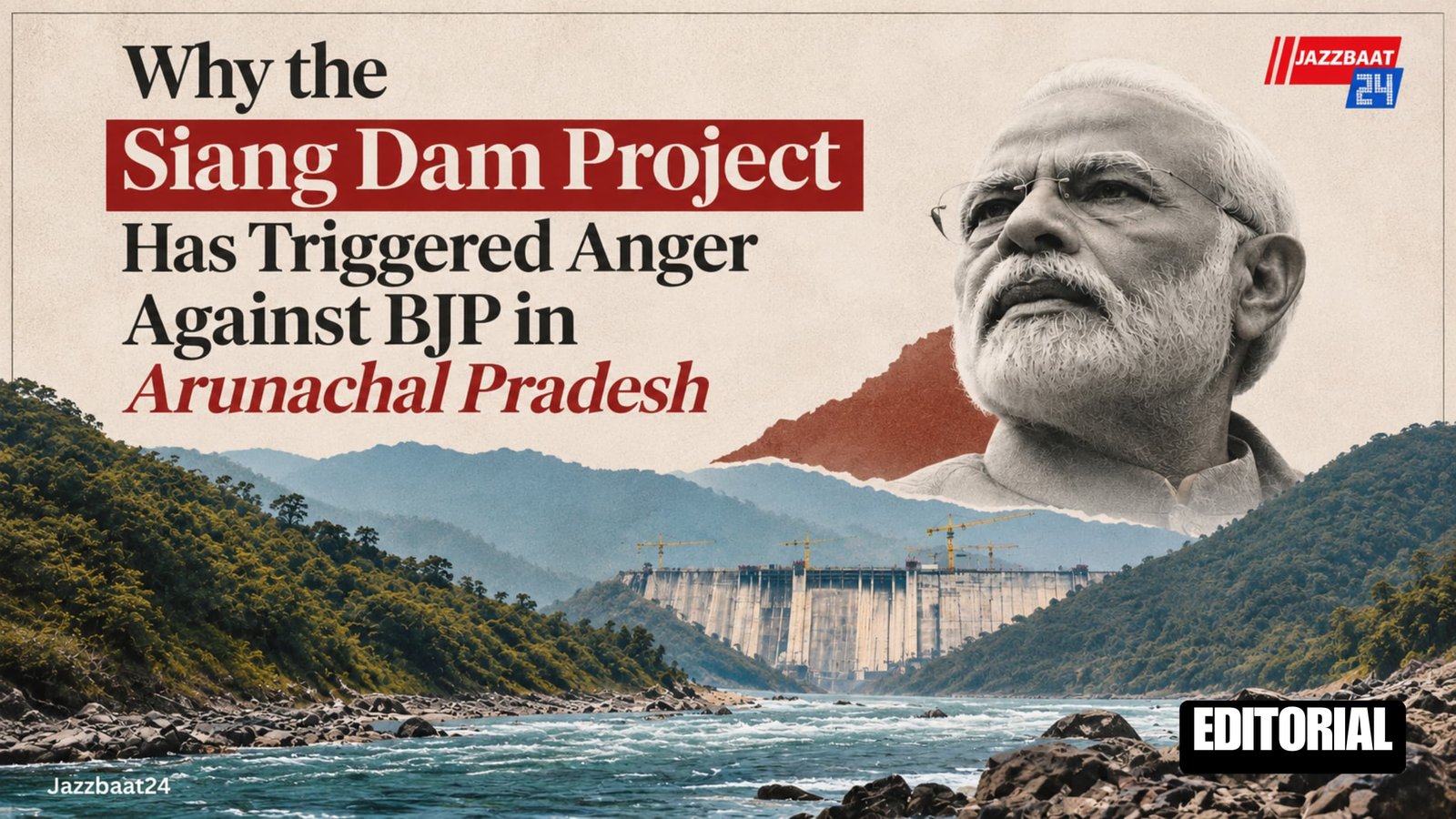
The BJP government in Arunachal Pradesh is facing growing public anger over its proposed mega-dam project on the Siang River, with indigenous communities, particularly members of the Adi tribe, raising serious concerns about displacement, environmental damage and the loss of their ancestral land. What the government sees as a strategic and developmental necessity is increasingly being viewed by sections of the local population as a threat to their identity, culture and way of life.
At the centre of the controversy is the proposed 11,200-MW Siang Upper Multipurpose Project (SUMP), being developed by NHPC. The project is being presented by the government as an important response to China's massive hydropower project on the Yarlung Tsangpo River in Tibet, which flows into India as the Siang before becoming the Brahmaputra. New Delhi is concerned that China's control over upstream water resources could have serious strategic and environmental consequences for India. The proposed Indian dam is expected to provide significant water storage capacity to help manage potential changes in river flows.
However, for people living along the Siang, the debate goes far beyond national security. The river is deeply connected to the history, livelihood and cultural identity of the Adi community. Protesters fear that the project could submerge villages, agricultural land and ancestral territories. According to local activists, 27 villages could be completely submerged, while several others may face significant impacts.
The situation escalated in October when demonstrations against preliminary survey activities turned violent. Clashes in Pasighat on October 23 resulted in arson, vandalism and damage to public property, including an NHPC office and police vehicles. Security forces were deployed in greater numbers, while several protesters were arrested or detained.
The government's handling of the protests has become another major source of criticism. Activists and opposition leaders have accused the administration of using excessive force and intimidating those questioning the project. The government, meanwhile, maintains that misinformation is creating unnecessary apprehension and that the project is strategically important.
Chief Minister Pema Khandu has called for transparency, factual communication and dialogue with affected communities. But statements alone may not be enough to restore public confidence.
The larger question facing the BJP government is whether development can succeed without the trust of the people who will bear its consequences. National security and clean energy are legitimate priorities, but so are indigenous rights, environmental protection and democratic consultation.
A project of this scale cannot be built on public anxiety and administrative pressure. Before moving forward, the government must listen, explain and address genuine concerns. Ultimately, the demand to "Let Ane Siang Flow" is not simply about opposing a dam; it is about ensuring that development does not come at the cost of a community's identity and future.




Reader Comments 0