
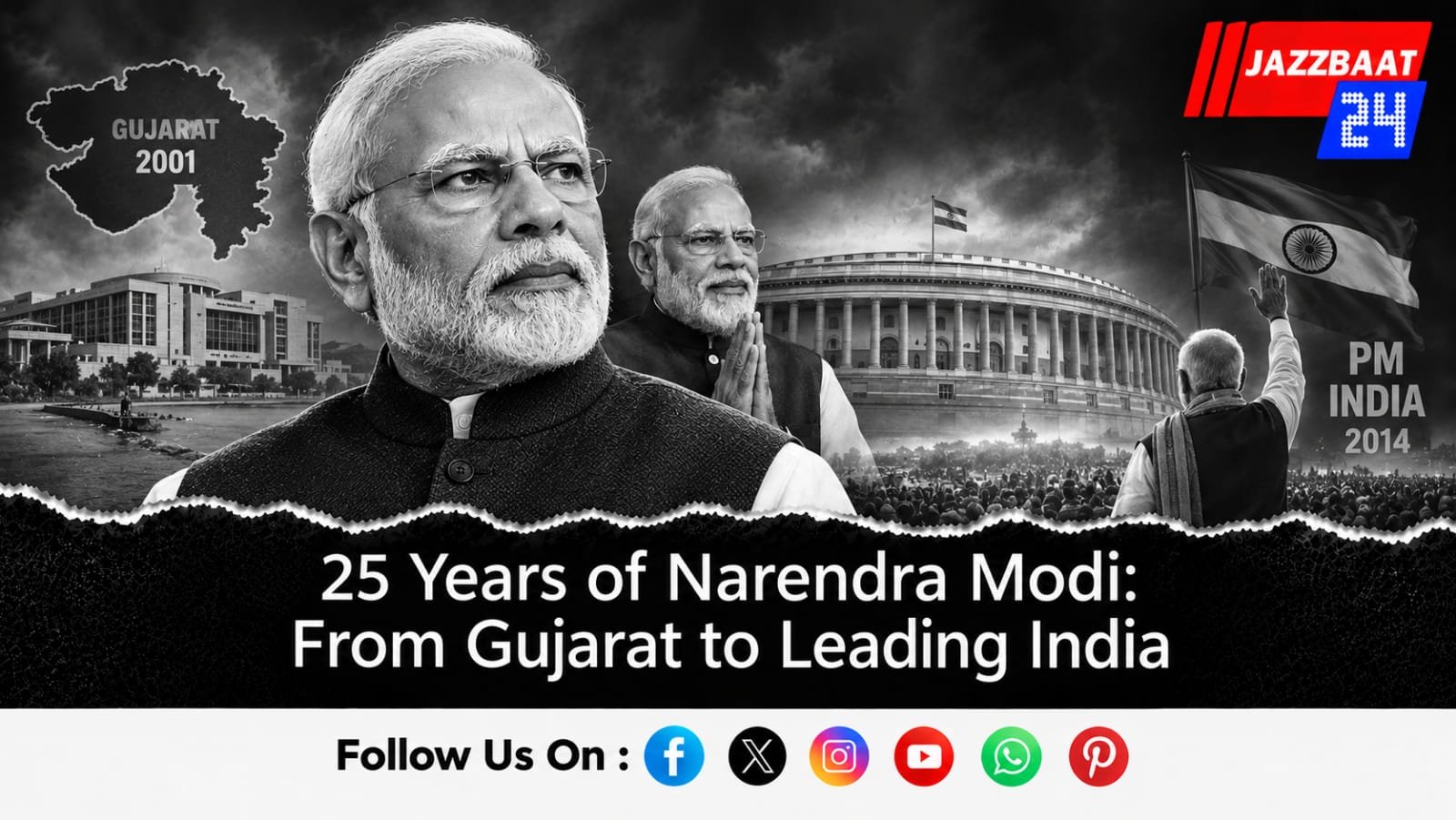
Narendra Modi’s public life in government spans 25 years, beginning with his appointment as Gujarat Chief Minister in October 2001 and continuing with his tenure as Prime Minister of India from May 2014. His journey has been closely associated with a governance approach focused on infrastructure, welfare delivery, technology and last-mile access.
Modi took charge as Gujarat Chief Minister on October 7, 2001, at a time when the state was dealing with the aftermath of the Kutch earthquake, drought and other challenges. He remained Chief Minister until May 2014, making him Gujarat’s longest-serving Chief Minister, according to the Prime Minister’s official biography.
In May 2014, Modi became Prime Minister after the BJP secured a majority in the Lok Sabha elections. He returned as Prime Minister in 2019 and continued in office after the 2024 general election.
A major feature of the period since 2014 has been the expansion of large-scale welfare programmes. Initiatives such as Pradhan Mantri Jan Dhan Yojana, Ujjwala, Swachh Bharat, housing schemes, Ayushman Bharat and Jal Jeevan Mission have focused on financial inclusion, cooking fuel, sanitation, housing, healthcare and drinking-water access.
The government has also increasingly relied on digital infrastructure to deliver public services. Direct Benefit Transfer and digital payment systems have changed how several government benefits and financial transactions reach citizens. The broader policy emphasis has been on reducing gaps between government programmes and their intended beneficiaries.
Healthcare has remained another major component of the development agenda. Ayushman Bharat was launched to expand access to health coverage for eligible families, while investments in health infrastructure and preventive care have formed part of the wider healthcare strategy. Government sources describe the programme as one of the world's largest public healthcare initiatives.
Infrastructure development has also received significant attention. Roads, railways, airports, ports and digital connectivity have expanded alongside programmes aimed at manufacturing, entrepreneurship and support for small businesses. Recent government statements have linked these efforts to the longer-term objective of building a developed India by 2047.
At the same time, the implementation and outcomes of individual government programmes remain subjects of public debate. In a democratic system, their effectiveness is assessed through data, independent analysis, parliamentary scrutiny and public experience.
The 25-year journey therefore covers two distinct phases: more than 12 years leading Gujarat and more than a decade at the national level. Modi's supporters point to welfare expansion, infrastructure development, digital governance and service delivery as important features of this period, while public discussion continues over the results and implementation of individual policies.
From Gujarat in 2001 to the Prime Minister’s Office in 2014 and beyond, Modi’s career in government has become one of the defining political and administrative stories of contemporary India. His stated governance philosophy places emphasis on development, technology and reaching citizens at the last mile.



Reader Comments 0