
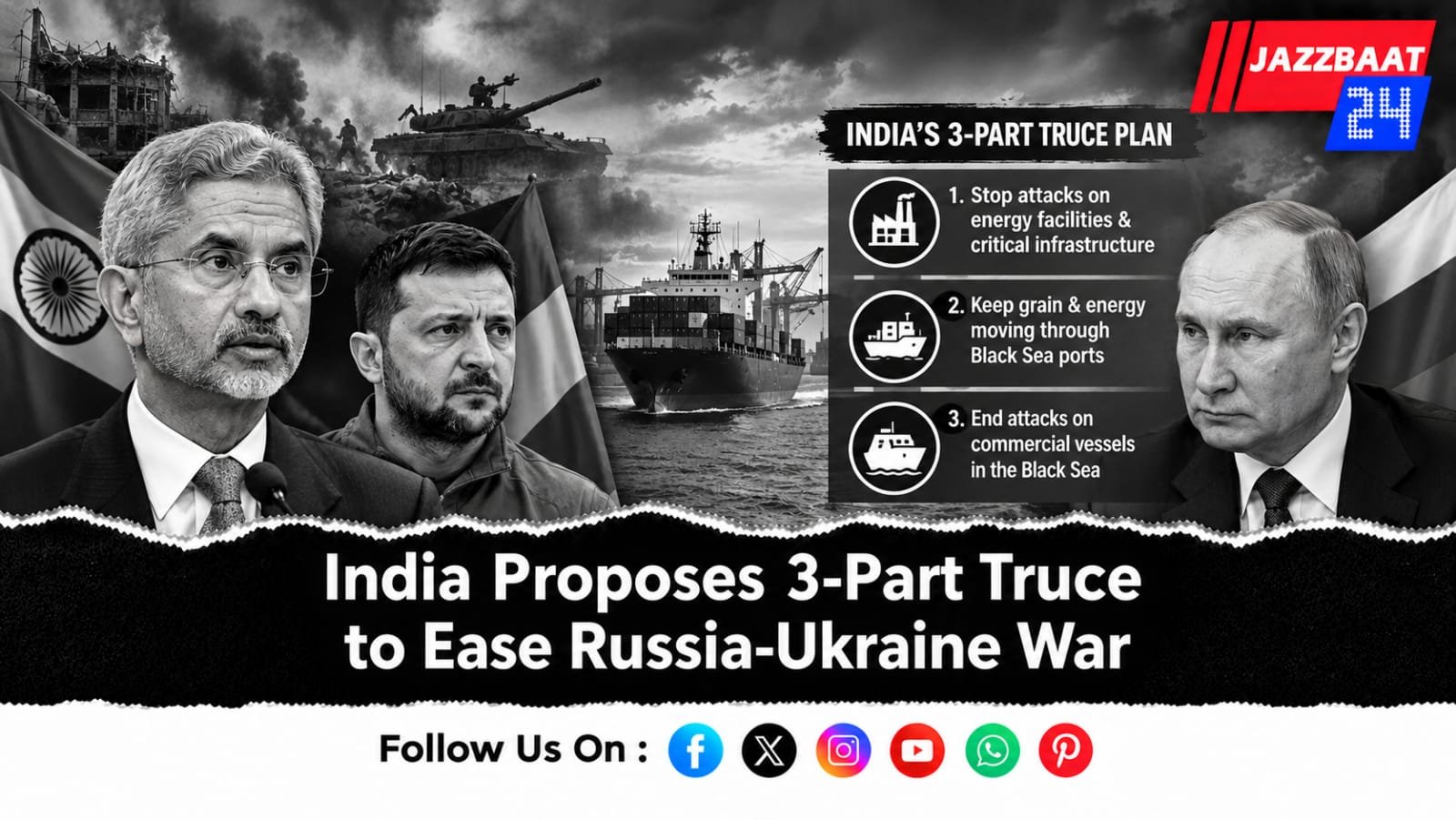
India has proposed a three-part truce framework aimed at reducing hostilities between Russia and Ukraine and keeping vital grain and energy supplies moving through the Black Sea. The proposal was conveyed to the Ukrainian leadership during External Affairs Minister S. Jaishankar’s visit to Kyiv last month.
The plan focuses on three key areas. First, India has proposed stopping attacks on energy facilities and other critical infrastructure. Second, it seeks to ensure the continued movement of grain and energy through Black Sea ports. Third, it calls for an end to attacks on commercial vessels operating in the strategic waterway.
The proposal comes as attacks on commercial shipping have increased in the Black Sea, affecting international trade and the movement of essential commodities. India has also raised concerns over the safety of Indian seafarers caught up in the conflict.
Ukrainian Foreign Minister Andrii Sybiha has described India’s proposal as the “most comprehensive” among four ceasefire initiatives received by Kyiv. Ukraine has also received proposals from Egypt, Turkey and the United States. Sybiha said Kyiv was prepared to consider different forms of a truce, provided they included energy and port infrastructure as well as the wider Black Sea situation.
The Indian proposal differs from the other initiatives in its broader scope. Egypt and Turkey have primarily focused on protecting grain shipments and commercial shipping, while the US proposal has centred on an “energy ceasefire”. India’s framework attempts to bring these elements together.
Jaishankar discussed the proposal during separate meetings with Ukrainian Foreign Minister Sybiha and President Volodymyr Zelensky during his September 3 visit to Kyiv. It was the first standalone visit to Ukraine by an Indian external affairs minister.
India has also been in communication with Moscow. Russian President Vladimir Putin recently said Prime Minister Narendra Modi had “excellent ideas” aimed at finding mutually acceptable solutions to the conflict.
Jaishankar has said India has moved beyond simply advocating dialogue and is now holding practical discussions with both Russia and Ukraine. He has highlighted the safety of Black Sea shipping, grain and energy supplies and the possibility of limited agreements to reduce hostilities.
The proposal also has an important economic dimension for India, given its dependence on Russian energy and the importance of Black Sea shipping routes. Any reduction in attacks could help stabilise commodity supplies and shipping costs.
The response from Russia to the full three-part proposal has not yet been publicly detailed. For now, India’s initiative represents another diplomatic effort to create limited areas of cooperation even while the broader Russia-Ukraine conflict continues.


Reader Comments 0