
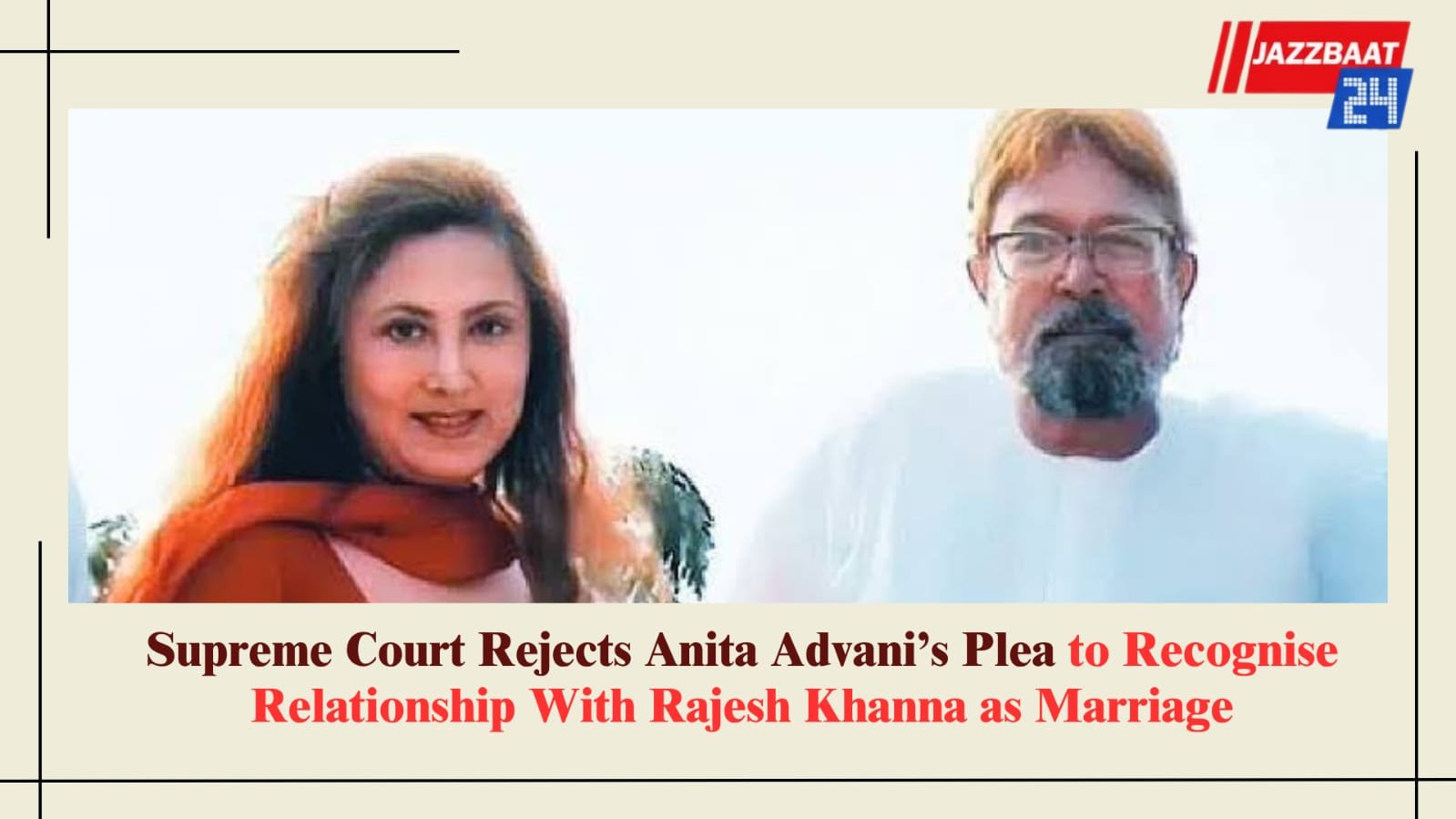
News Desk: The Supreme Court on Thursday rejected former actor Anita Advani’s plea seeking recognition of her alleged relationship with late Bollywood superstar Rajesh Khanna as a marriage. The court described the litigation as “luxury litigation” and said there were no grounds to entertain her appeal.
A bench comprising Justices M M Sundresh and Prasanna B Varale was hearing Advani’s challenge to an April 1 order of the Bombay High Court, which had dismissed her appeal against an earlier decision rejecting her civil suit.
Advani had claimed that she was in a live-in relationship with Khanna for several years. The relationship allegedly ended in 2012, when she was evicted from the actor’s Mumbai bungalow, Aashirwad, following his death in July that year.
During the hearing, Advani’s counsel argued that the case was about securing dignity for his client. He told the court that her civil suit sought a declaration recognising the nature of her relationship with the late actor.
However, the bench declined to intervene. The Supreme Court’s decision leaves the earlier court orders rejecting her plea undisturbed.
Legal battle following Rajesh Khanna’s death
Rajesh Khanna, widely regarded as one of Hindi cinema’s biggest superstars, died in July 2012. After his death, Advani approached the courts seeking legal recognition of her alleged relationship with him.
In 2013, she filed a complaint before a magistrate under the Protection of Women from Domestic Violence Act, 2005. The complaint named Khanna’s estranged wife, veteran actor Dimple Kapadia, along with their daughter and son-in-law, actor Akshay Kumar.
Advani had sought monthly maintenance and a three-bedroom flat in Mumbai’s upscale Bandra area.
In 2015, the Bombay High Court quashed the domestic violence proceedings after allowing petitions filed by Kapadia and her family. The court observed that Advani’s relationship with Khanna did not qualify as a relationship in the nature of marriage under the relevant law. It also held that the actor’s family members could not be included in the proceedings when Advani had not lived with them.
Subsequently, the Dindoshi sessions court rejected Advani’s civil suit in 2017. She challenged that decision before the Bombay High Court, but her appeal was dismissed on April 1, 2026.
Advani then approached the Supreme Court, seeking further relief. Thursday’s ruling marks another setback in her prolonged legal battle over the alleged relationship.
The case highlights the legal requirements for recognising a live-in relationship as a relationship in the nature of marriage under Indian law.



Reader Comments 0