
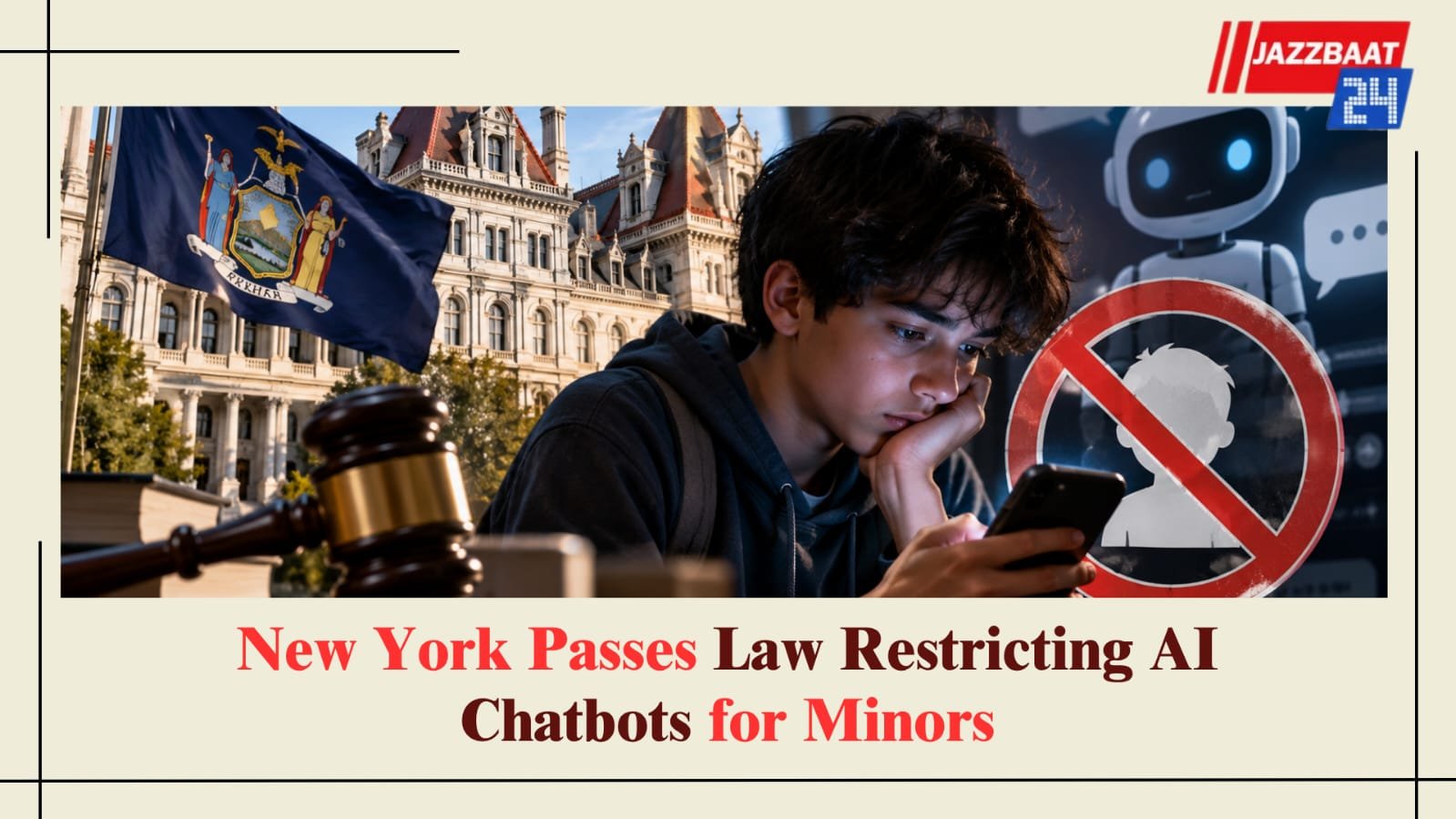
News Desk: New York has passed a new law restricting how artificial intelligence chatbots interact with users under the age of 18, marking a significant step towards regulating AI companionship services. The legislation was signed by Governor Kathy Hochul on Wednesday and aims to prevent chatbots from creating misleading emotional connections with children and teenagers.
Under the new law, chatbot operators must verify users’ ages and restrict certain features when the user is a minor. AI systems will be prohibited from generating content that could lead young users to believe that a chatbot is human, alive or capable of experiencing human emotions.
The law also restricts chatbots from presenting themselves as having a personal or professional relationship with a minor, or acting as an authority figure. They will also be barred from framing their responses as personal opinions in the manner described by the legislation.
Speaking at the signing ceremony, Hochul said minors would no longer have access to chatbots that pretend to be their friends or romantic partners. She also raised concerns about AI platforms retaining sensitive information relating to young users’ emotional and physical health.
Growing concerns over AI companionship
The legislation comes amid increasing debate over the potential risks of AI companions for children and teenagers. Critics of some chatbot services have warned that young users may develop emotional attachments to artificial systems or struggle to distinguish simulated responses from genuine human relationships.
Other US states, including California, have introduced measures to regulate chatbot interactions. However, New York’s law uses broad language to govern how consumer-facing AI systems communicate with minors.
The move has received support from child-safety advocates. Common Sense Media, a nonprofit organisation focused on children’s media and technology use, welcomed the legislation, describing it as one of the strongest measures of its kind in the country.
The organisation’s chief executive, Jim Steyer, argued that certain chatbot features could expose children and teenagers to serious risks and said the new restrictions would help address those concerns.
Technology industry raises concerns
The legislation has also drawn criticism from parts of the technology industry. Tech:NYC, an industry advocacy group, questioned the law’s broad and potentially vague language.
The group said protecting children online should not prevent them from accessing tools that support learning and career preparation.
Major AI companies OpenAI and Anthropic did not respond to requests for comment on the legislation at the time of publication.
The new law highlights the growing challenge facing policymakers as AI chatbots become more widely used for conversation, education and emotional support. Its implementation will be closely watched as governments seek to balance child protection with access to emerging technologies.




Reader Comments 0