
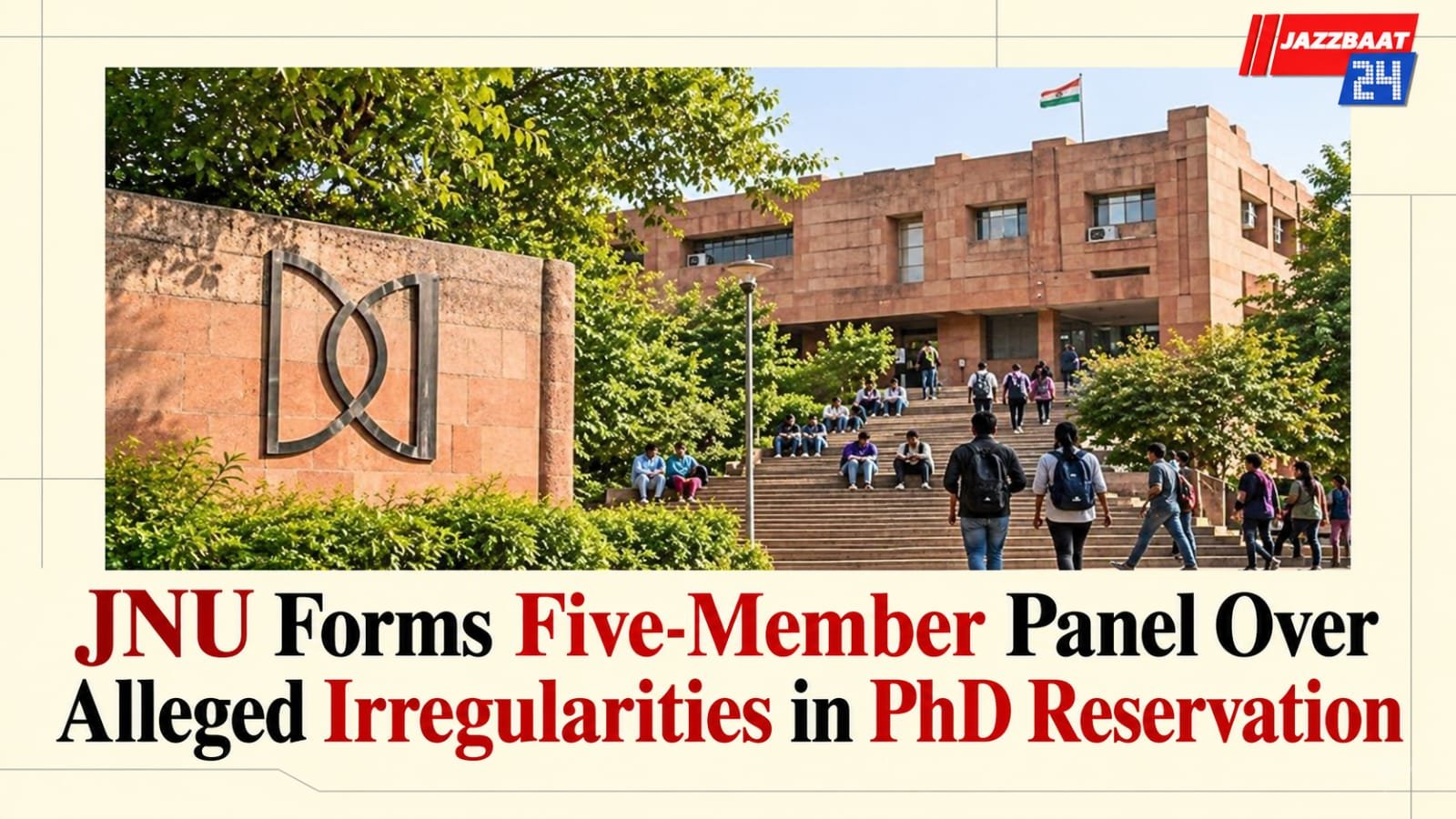
A fresh controversy has erupted at Jawaharlal Nehru University (JNU) over alleged irregularities in the allocation of reserved seats for PhD admissions for the 2026-27 academic session. The Students' Federation of India (SFI) has accused the university of failing to properly implement reservation rules, particularly for Scheduled Tribe (ST) candidates. Following the allegations, the university has constituted a five-member committee to investigate the matter.
According to a notification issued by the JNU Vice-Chancellor on October 26, the committee will be headed by Vivek Kumar, Dean of the School of Social Sciences. Other members include the university's ST Liaison Officer, the Chief Advisor of the Equal Opportunity Office, the Deputy Registrar (Legal) and the Assistant Registrar of the SC-ST-OBC Cell. The committee has also been authorised to include additional members if required.
SFI Claims 15 ST Seats Are Missing
According to SFI, JNU has announced a total of 711 seats for PhD admissions in the upcoming academic session. Under the prescribed reservation policy, 7.5 per cent of these seats should be reserved for Scheduled Tribe candidates. This would translate into approximately 53 seats. However, the university's admission prospectus reportedly mentions only 38 ST-reserved seats, leaving a shortfall of around 15 seats, according to the student organisation.
The organisation has also raised questions over the allocation of seats for Scheduled Caste (SC) and Persons with Disabilities (PwD) candidates.
SFI claims that 15 per cent reservation for SC candidates should account for approximately 107 seats out of the total 711. However, only 103 seats have reportedly been listed in the prospectus. The organisation has also alleged that the number of seats reserved for PwD candidates is lower than the prescribed requirement.
Questions Over the Reservation Calculation System
SFI has attributed the alleged discrepancies to the university's practice of calculating reservations separately for individual schools, centres and departments, a system often referred to as the 'micro-unit' method.
The organisation argues that this approach can result in smaller departments having no reserved seats for SC and ST candidates, even when the overall reservation percentages are not being adequately reflected across the university.
It has also questioned the distribution of PhD seats among candidates qualifying through three different routes: UGC-NET, UGC-NET-JRF and GATE.
According to SFI, candidates belonging to SC and ST categories have not been allocated any seats in 29 centres of the university.
Student Union Demands Representation
While welcoming the formation of the investigation committee, the JNU Students' Union (JNUSU) has demanded representation for students in the inquiry process. The union believes that student representatives should be included, as the investigation itself follows complaints raised by students.
The matter has also reached the National Commission for Scheduled Castes, which is examining a complaint filed by JNUSU Vice-President Gopika Babu. The commission has sought information from the university regarding the allocation of reserved seats and the action taken on the allegations. SFI has also stated that the National Commission for Scheduled Tribes has taken up the matter.
The investigation is now expected to establish whether reservation norms were properly followed. The committee's findings could have implications for the ongoing PhD admission process if any irregularities are confirmed.



Reader Comments 0