
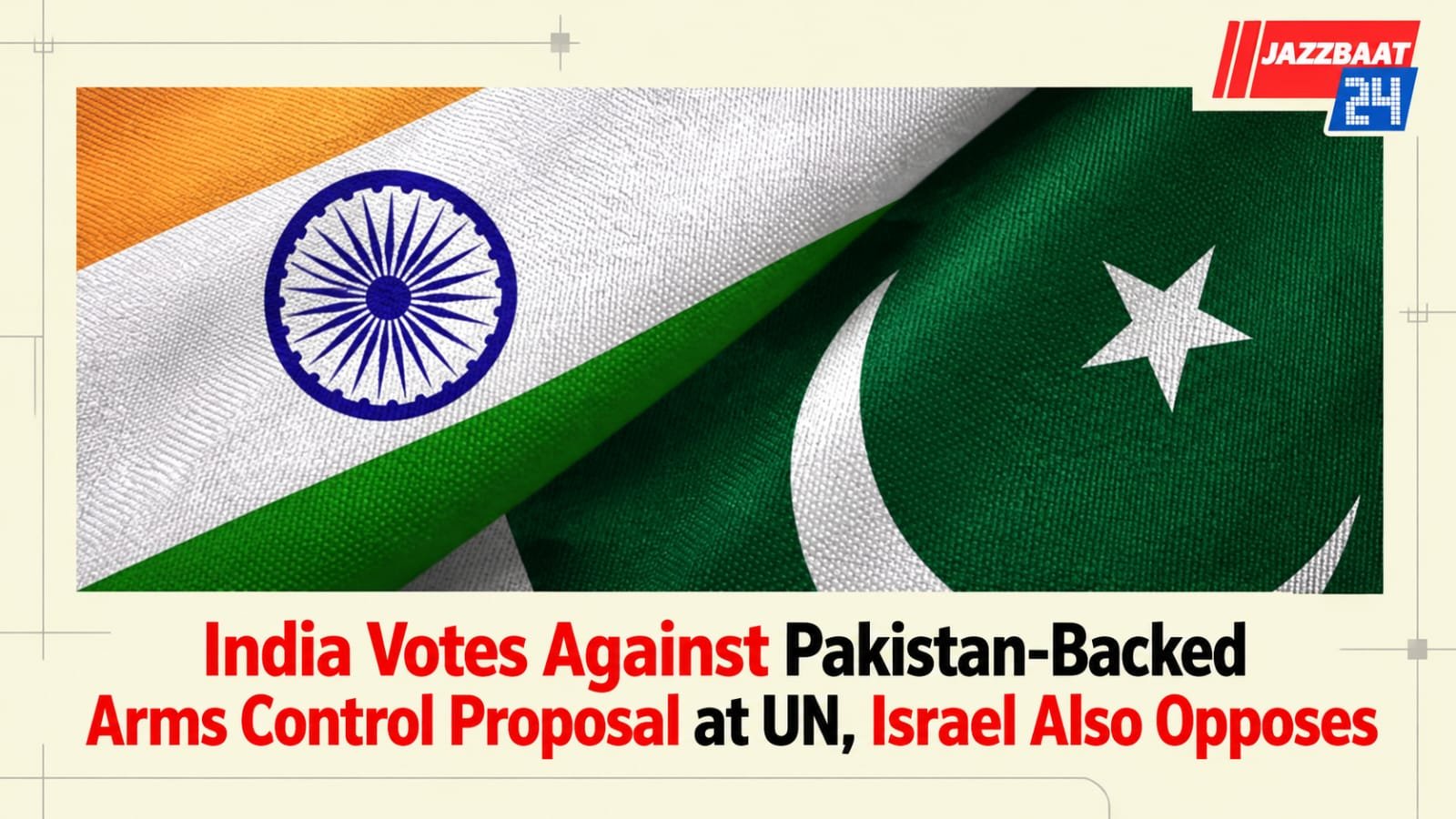
India has voted against a resolution jointly introduced by Pakistan and Belarus at the United Nations General Assembly, with Israel also opposing the proposal. The resolution, which focused on conventional arms control at regional and sub-regional levels, received support from 180 countries. India and Israel were the only two countries to vote against it, while none of the 193 UN member states abstained.
The voting took place on Monday in the First Committee of the UN General Assembly, which deals with disarmament and international security matters.
The resolution, titled General and Complete Disarmament: Regional and Sub-regional Conventional Arms Control, called for greater efforts to regulate conventional weapons through regional agreements. However, India argued that arms control is an international issue and should not be restricted primarily to regional or sub-regional frameworks.
Why Did India Oppose the Resolution?
Explaining India's vote, Anmol Sher Bedi, First Secretary at India's Permanent Mission to the United Nations, said that a country's security concerns do not necessarily remain confined within its geographical region.
According to India's position, conventional arms control requires a broader international approach. New Delhi therefore disagreed with the proposal to place the primary responsibility for such arrangements at regional and sub-regional levels.
India also questioned the need for the UN Disarmament Commission to develop additional principles and frameworks for regional conventional arms control.
Bedi pointed out that the commission had already adopted guidelines and recommendations on regional disarmament in 1993, conventional arms control in 1999 and confidence-building measures relating to conventional weapons in 2017.
He questioned why the same subject needed to be brought before the commission again when three unanimous decisions had already been adopted.
Disagreement Over Regional Military Balance
Another major point of disagreement concerned the resolution's emphasis on maintaining a balance of military capabilities within particular regions.
India argued that security challenges often extend beyond regional boundaries. Bedi said the proposal appeared to assume that countries' security concerns would remain confined within regional limits, which did not reflect the realities of international security.
The resolution, meanwhile, argued that since the end of the Cold War, many threats to peace and security had emerged between countries within the same regions. It therefore called for regional agreements aimed at strengthening security while maintaining the lowest possible levels of military capability.
India Also Objects to South Asia Reference
India separately voted against a paragraph referring to conventional arms control proposals in South Asia, alongside discussions involving several Latin American countries.
The paragraph included references to existing initiatives and proposals concerning arms control in the region.
The resolution also highlighted the responsibility of countries with greater military capabilities to take the lead in advancing regional security agreements.
India's vote against the proposal reflects its continued position that international arms control cannot be effectively addressed through regional arrangements alone.




Reader Comments 0