
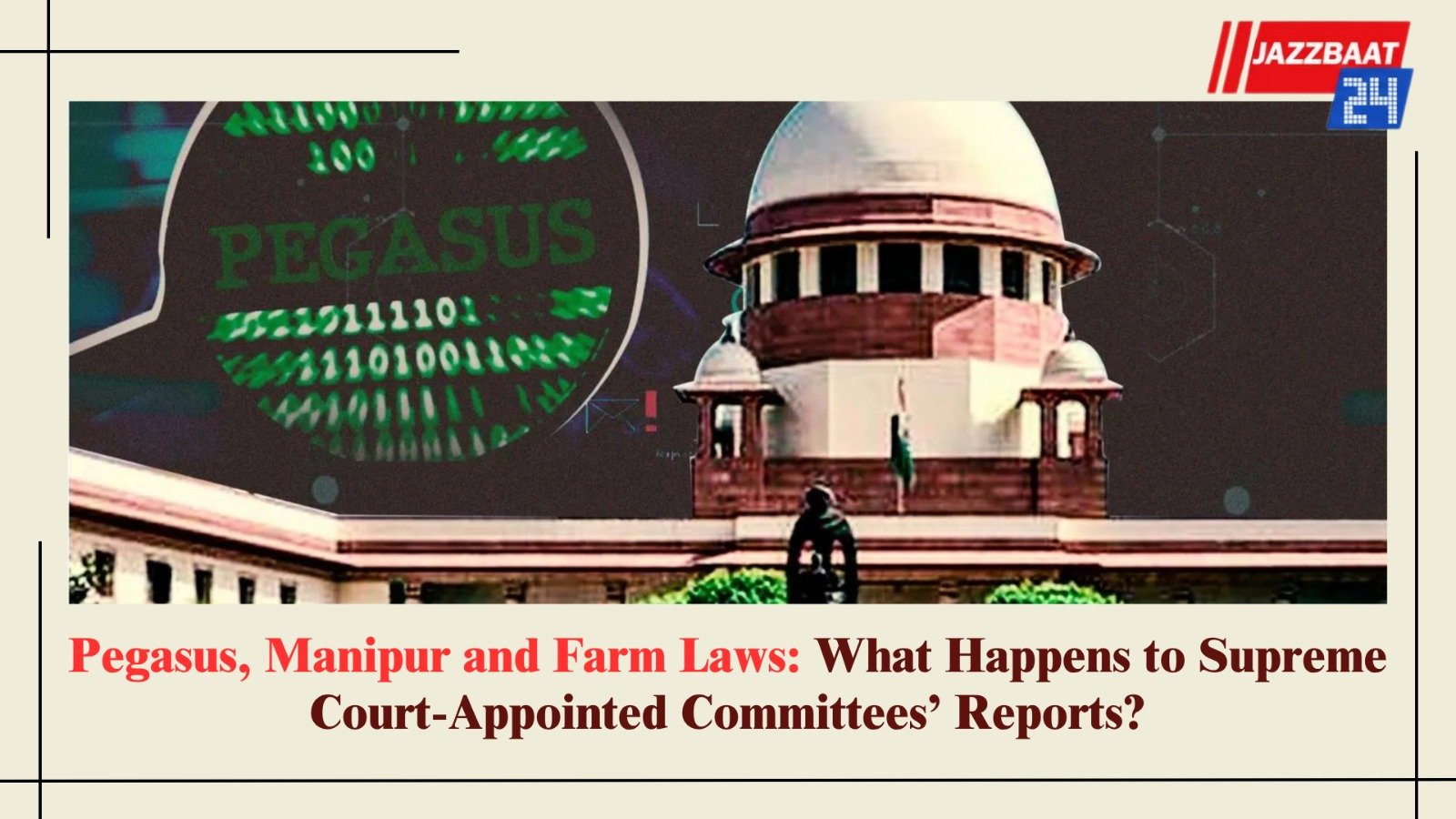
New Delhi, November 3: From the Pegasus spyware controversy to the Manipur violence and the farmers' agitation against the three farm laws, the Supreme Court of India has repeatedly appointed special committees to investigate major disputes, examine allegations and monitor the implementation of its directions. However, an important question continues to emerge: what happens to these committees' reports after they are submitted to the court?
Over the years, the Supreme Court has relied on committees headed by retired judges, experts and other specialists to examine complicated matters that require detailed investigation. While some committees have submitted extensive reports and recommendations, the subsequent action on their findings has varied considerably.
Pegasus spyware investigation
In October 2021, the Supreme Court appointed a technical committee under the supervision of retired Justice R.V. Raveendran to investigate allegations that Pegasus spyware had been used to target Indian journalists, politicians, activists and other individuals.
The committee examined 29 mobile phones. In August 2022, then Chief Justice N.V. Ramana informed the court that five devices showed signs of malware, but there was no conclusive evidence that Pegasus had been installed.
The committee also raised concerns about the Centre's lack of cooperation. Its report was submitted in a sealed cover and subsequently kept in the Supreme Court's custody. The case has seen limited progress since then, with questions about the public disclosure of the findings remaining unresolved.
Manipur violence committee
In August 2023, the Supreme Court established a committee headed by former Jammu and Kashmir High Court Chief Justice Gita Mittal to oversee humanitarian assistance and rehabilitation following the violence in Manipur.
The committee examined issues involving displaced families, relief camps, compensation, medical assistance and the restoration of damaged homes and religious places.
It has submitted 47 reports so far. Its September 2026 report highlighted concerns about unnatural deaths among displaced people in relief camps. The committee also found gaps in the registration of cases and post-mortem examinations.
Farm laws committee
In January 2021, the Supreme Court appointed a three-member committee comprising agricultural economist Ashok Gulati, farmer leader Anil Ghanwat and agricultural policy expert Pramod Kumar Joshi.
The panel was tasked with examining the three controversial farm laws and hearing the views of farmers and other stakeholders.
It submitted its report in March 2021. However, the three laws were repealed by Parliament in December that year. The report was subsequently made public independently by committee member Anil Ghanwat, but the Supreme Court did not undertake a substantive examination of its recommendations.
What happens to these reports?
The fate of these reports depends on the purpose for which a committee was constituted and the directions issued by the court.
Some committees continue monitoring implementation through periodic reports, while others complete their assignments without further judicial consideration.
A report submitted to the Supreme Court does not automatically become a binding judgment or order. The bench concerned decides whether to accept its findings, seek additional information, disclose portions of the report or use its recommendations while deciding the case.
The broader question is therefore not simply whether committees submit their reports, but whether their findings translate into meaningful judicial action and practical solutions.
These cases highlight the growing importance of Supreme Court-appointed committees in addressing complex public issues, while also raising questions about transparency, accountability and the implementation of their recommendations.




Reader Comments 0