
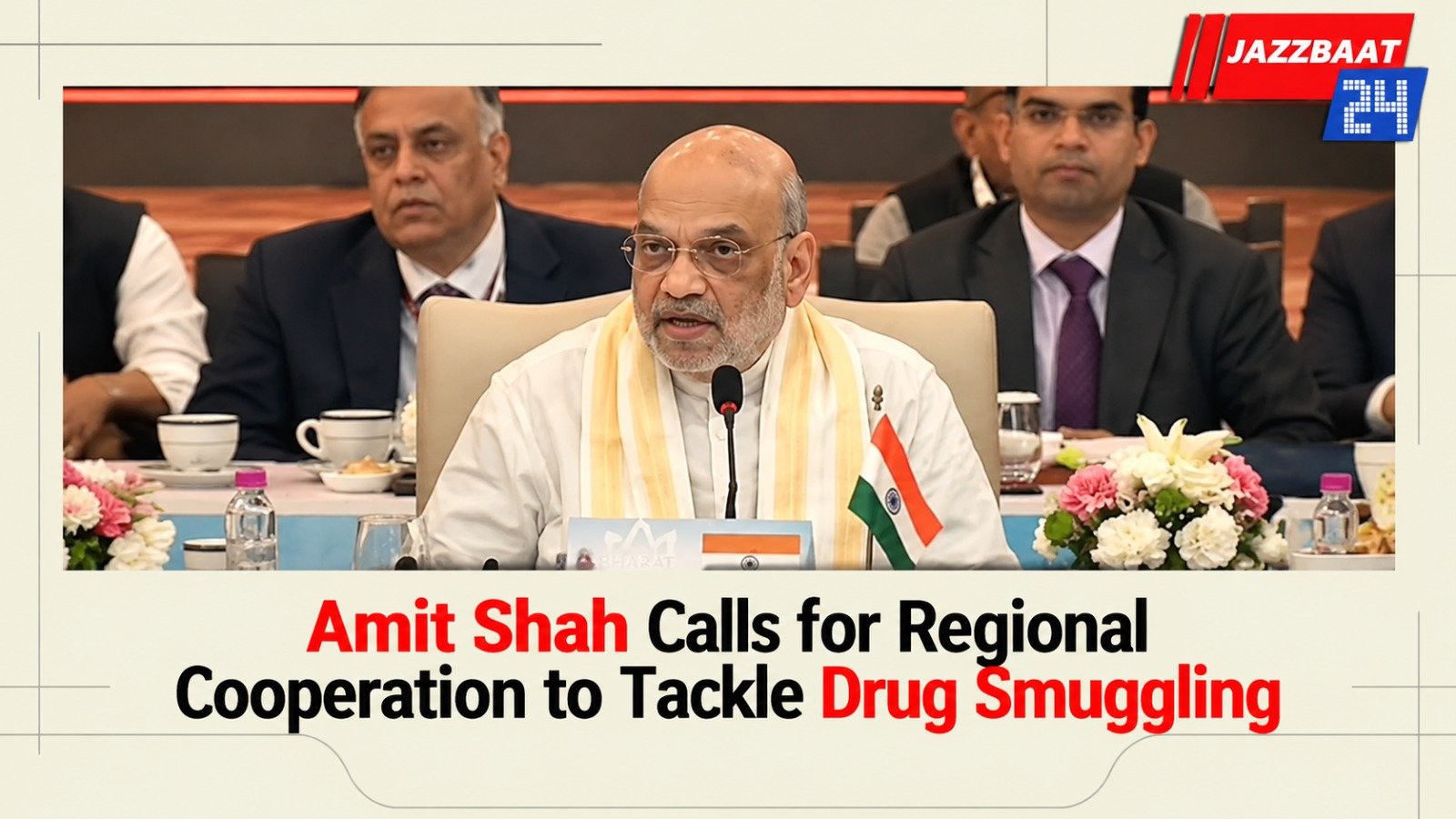
New Delhi, October 13: Union Home Minister Amit Shah on Tuesday called for stronger regional cooperation among BIMSTEC member countries to combat drug smuggling, organised crime and terrorism. Addressing the first meeting of BIMSTEC home ministers in New Delhi, Shah stressed the need for a coordinated approach to tackle cross-border criminal networks and prevent drug trafficking from threatening regional security.
Shah said the illegal proceeds generated through drug trafficking were being used to finance organised crime and terrorist activities. He urged member countries to strengthen intelligence sharing and security cooperation, emphasising that the safety of one country was closely connected to the security of its neighbours.
“India has always adopted a zero tolerance policy against terrorism,” Shah said, calling for a regional environment that would not allow terrorist groups to recruit members, obtain resources, receive training or operate against neighbouring countries.
BIMSTEC, or the Bay of Bengal Initiative for Multi-Sectoral Technical and Economic Cooperation, comprises Bangladesh, Bhutan, India, Myanmar, Nepal, Sri Lanka and Thailand. The regional grouping seeks to strengthen cooperation in areas including security, trade, technology and connectivity.
Shah also highlighted how drug traffickers were adapting to new technologies. According to him, criminal networks were increasingly using encrypted communication, social media platforms, drones, cryptocurrency and the dark web to conduct their operations and evade law enforcement agencies.
Referring to the Golden Triangle, the notorious drug-trafficking region covering parts of Myanmar, Laos and Thailand, Shah said its impact on society was deeply concerning. He described the area as a “death triangle”, arguing that the illegal drug trade was harming young people and threatening the region's social fabric and future.
The issue has particular significance for India, which shares a long border with Myanmar. According to the Narcotics Control Bureau's annual report released in June, Myanmar overtook Afghanistan as the world's largest illicit opium producer following the Taliban's 2022 ban on poppy cultivation in Afghanistan. Political instability, civil conflict and economic difficulties have contributed to increased opium production in Myanmar.
Shah further called for stronger action against the illegal diversion of precursor chemicals, which are used in the manufacture of narcotic drugs. He said financial investigations and the seizure of assets linked to drug trafficking could help disrupt criminal networks across the supply chain.
The Home Minister also identified human trafficking as a serious regional security and human rights concern. He stressed the importance of cooperation in identifying victims, rescuing them, providing rehabilitation and ensuring their safe return to their home countries.
Shah welcomed the BIMSTEC Plan of Action on Drug Control, finalised in Colombo in October 2025, and called for practical measures such as real-time information sharing, joint task forces and closer coordination among law enforcement agencies.
He reiterated that India respected the sovereignty of other countries and supported peaceful dispute resolution, while remaining committed to tackling terrorism, organised crime and narcotics trafficking through international cooperation.
The meeting underscored the shared challenges facing BIMSTEC countries and the need for a coordinated regional response to cross-border crime, illicit financial flows, radicalisation and emerging cyber threats.


Reader Comments 0