
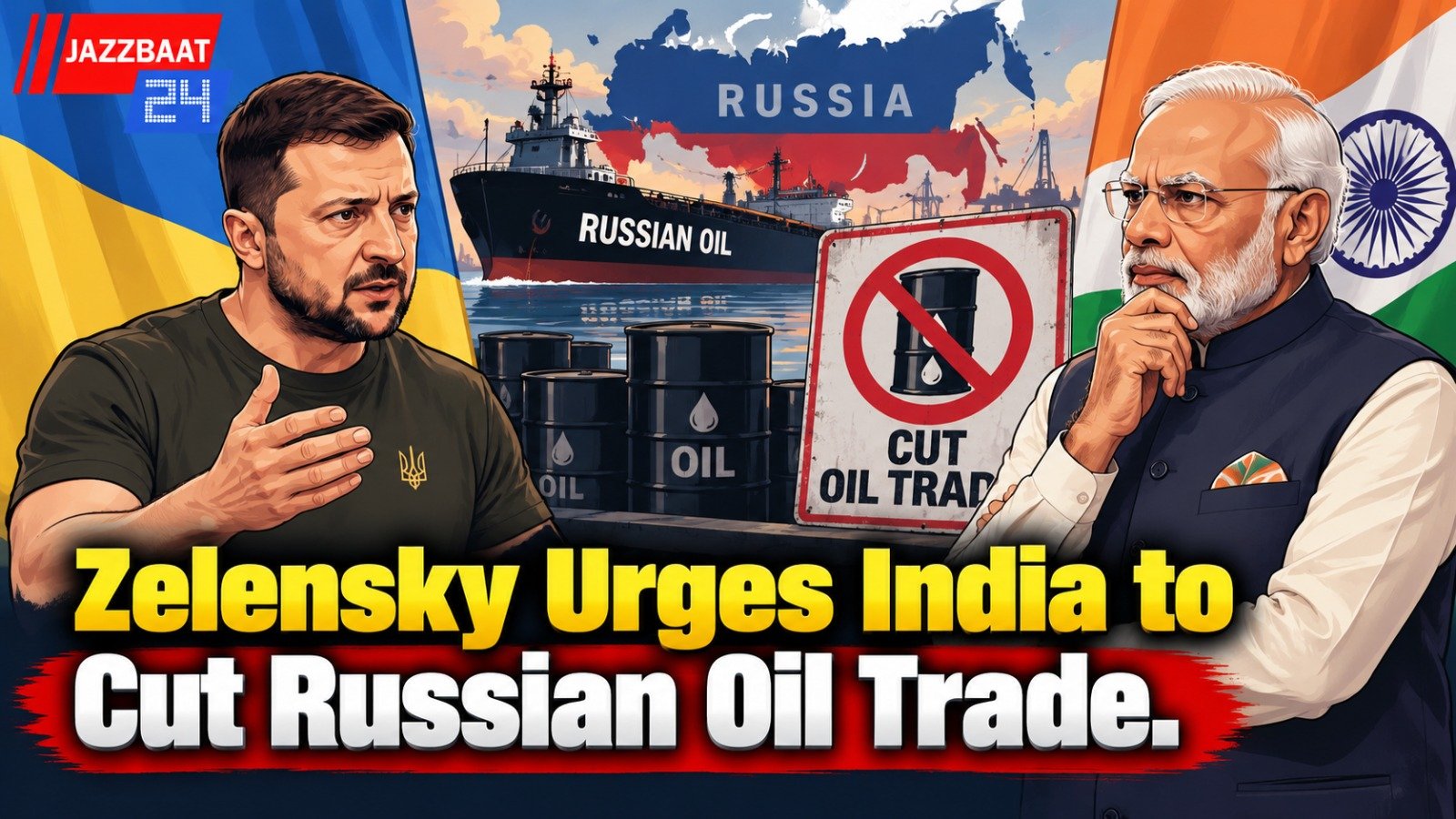
Ukrainian President Volodymyr Zelensky has called for an end to the energy trade between Russia and major buyers such as India, China and Turkey, arguing that reduced revenues from oil exports could put greater economic pressure on Moscow and contribute to ending the Russia-Ukraine war.
In an interview with the Wall Street Journal, Zelensky said Russia's economy depends heavily on energy sales to countries including India, China and Turkey. He argued that if these countries reduced or stopped purchases of Russian energy, Moscow would face greater pressure to reconsider its military campaign.
His comments came shortly after US President Donald Trump signed the Lindsey O. Graham Sanctioning Russia and Iran Act of 2026 into law on September 18. The legislation expands US sanctions and gives the president authority to impose tariffs of up to 100% on certain major purchasers of Russian oil and natural gas. India is among the countries that could potentially be affected by the new tariff powers.
Zelensky said he hoped Trump would use the new powers if Russian President Vladimir Putin did not agree to reduce hostilities. Speaking on the sidelines of the United Nations General Assembly in New York, he also said he wanted the war to end as soon as possible, preferably before winter.
India has remained one of the largest buyers of Russian crude since the beginning of the Ukraine conflict. However, recent data indicates that India's imports of Russian oil have declined. Reuters reported that Indian purchases fell by 16.5% in August to around 2.1 million barrels per day, while preliminary September figures suggested a further decline. Russia nevertheless remained India's largest oil supplier during that period.
New Delhi has repeatedly maintained that its energy-import decisions are based on market conditions and the country's energy-security requirements. Russian officials have also defended the oil trade with India, saying Moscow remains committed to supplying India's energy needs.
The new US legislation has added another dimension to the issue. While it does not automatically impose a 100% tariff on India, it provides the US president with authority to impose such tariffs under specified circumstances.
The developments come as diplomatic efforts to end the Russia-Ukraine war continue alongside renewed pressure on countries purchasing Russian energy. India's future oil-import strategy is therefore being watched closely as New Delhi balances energy requirements, international relations and changing sanctions policies.

Reader Comments 0