
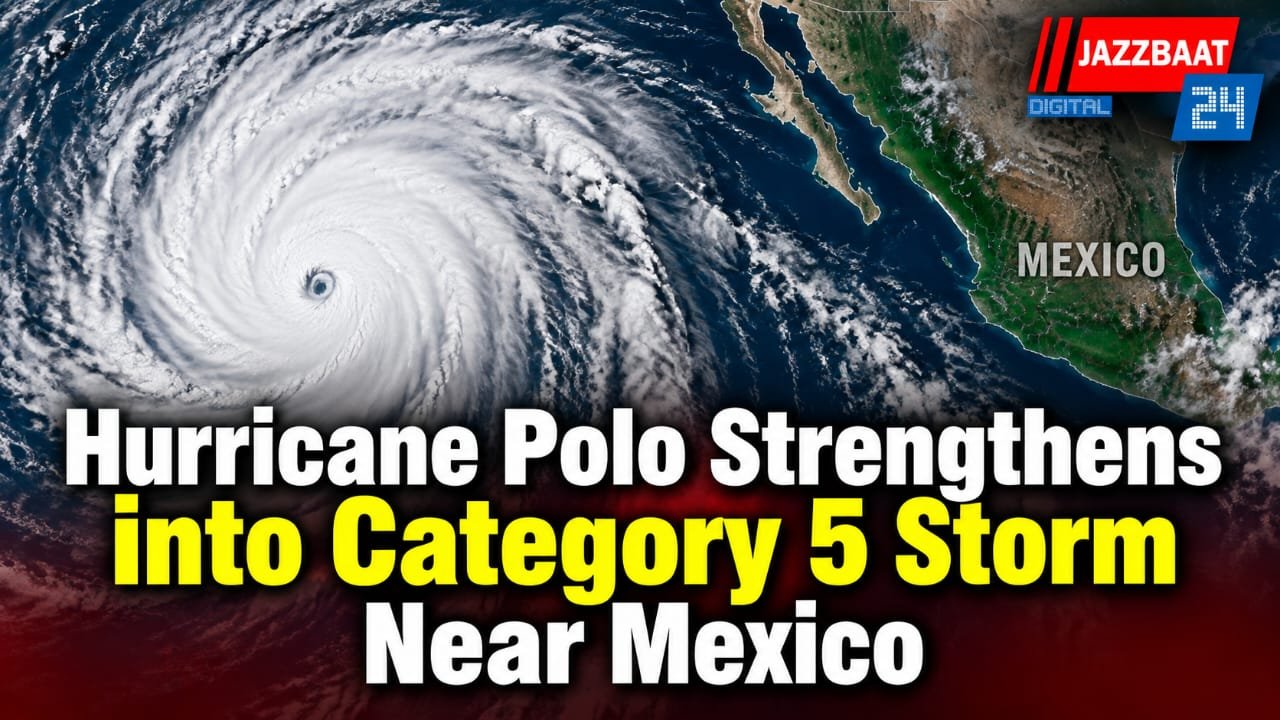
Hurricane Polo has rapidly intensified into a Category 5 storm over the Pacific Ocean, with sustained winds reaching nearly 180 mph (285 km/h), according to the US National Oceanic and Atmospheric Administration (NOAA).
The powerful hurricane is currently moving offshore near Mexico and is not expected to make a direct landfall. However, authorities have warned that the storm could still bring heavy rainfall, dangerous surf, flooding and mudslides along parts of Mexico’s southwestern coast.
Mexico’s President Claudia Sheinbaum said there was currently no indication that Polo would make direct landfall but urged people along the Pacific coast to remain alert. The states of Jalisco, Colima and Michoacán are among the areas that could experience effects from the storm.
NOAA has forecast rainfall of up to 6 inches (15 cm) in some areas, with isolated locations potentially receiving as much as 8 inches. The rainfall could cause flash flooding and mudslides, particularly in vulnerable areas. Large ocean swells and life-threatening surf conditions are also expected along parts of the coast.
Polo’s rapid strengthening has been linked to exceptionally warm ocean waters in the Pacific. According to NOAA, conditions around the storm remain highly favourable for further intensification.
Polo has become the third Category 5 hurricane of the season. A Category 5 storm is the highest classification on the Saffir-Simpson Hurricane Wind Scale and is associated with sustained winds of at least 157 mph.
Scientists are also closely watching the broader climate conditions in the Pacific. The current El Niño phenomenon has contributed to unusually warm sea-surface temperatures in parts of the central and eastern Pacific, providing additional energy for tropical systems.
Data cited in the report showed that sea-surface temperatures in a key region of the Pacific reached 3.05°C above average on September 19. This surpassed the previous record of 3.02°C recorded during the 2015 El Niño event.
El Niño is a naturally occurring climate pattern that typically develops every two to seven years and can influence weather patterns across different parts of the world.
For Mexico, the immediate concern remains the impact of Polo’s heavy rainfall, powerful waves and possible flooding despite the storm remaining offshore. Authorities are continuing to monitor the hurricane’s movement and are urging residents in potentially affected coastal areas to follow official weather advisories.



Reader Comments 0