
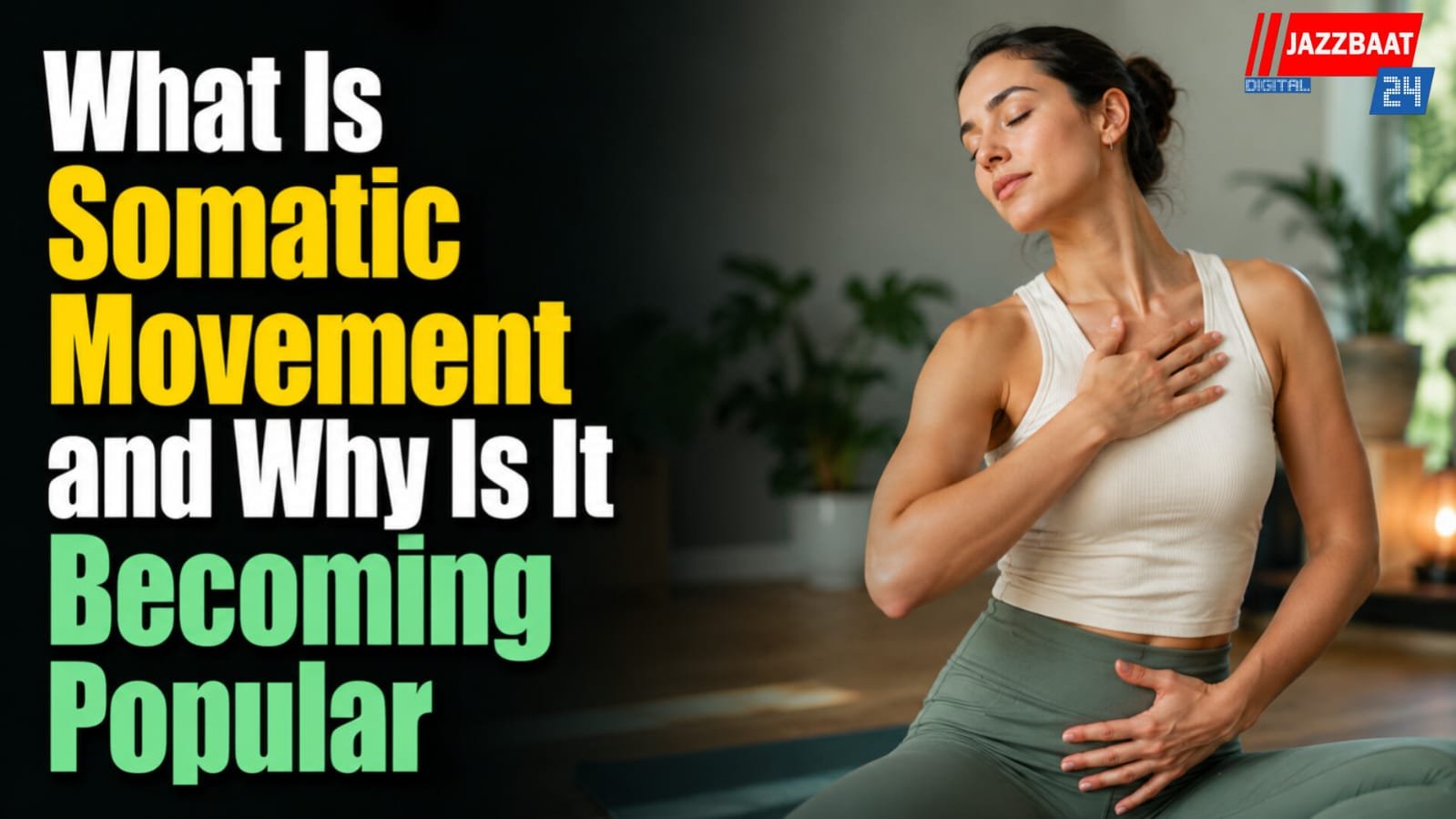
Somatic movement is a form of mindful physical activity that focuses less on performance and more on how the body actually feels while moving. Instead of trying to move faster, lift heavier or achieve a perfect pose, the practice encourages people to slow down, notice their breathing and become aware of sensations such as muscle tension, balance and posture. Harvard Health describes somatic workouts as movements that pay attention to the body's internal sensations and responses.
The idea is simple: feel the movement rather than simply perform it. A session may involve gentle stretches, body scans, breathing exercises or very small movements. Yoga, tai chi, Pilates, walking meditation and practices such as Feldenkrais can all include somatic elements.
This approach is attracting growing interest among people seeking calmer forms of exercise and spiritual wellbeing. For spiritual seekers, slow movement can become a moving form of meditation. Instead of sitting still with closed eyes, a person can focus on every step while walking, observe the movement of the body during a stretch or simply notice how breathing changes during gentle exercise.
The attraction may also come from its emphasis on presence. Modern fitness culture often focuses on calories, repetitions, speed and measurable results. Somatic movement takes a different approach by encouraging people to listen to their bodies without judging what they feel. That shift can make an ordinary workout feel more reflective and contemplative.
There is some scientific interest in the mind-body connection, although research specifically on somatic workouts remains limited. Cleveland Clinic notes that potential benefits may include improved body awareness, flexibility, mobility and relaxation, while also stressing that more research is needed on somatic exercise itself.
Recent research has also explored mindful movement and body awareness. A 2025 systematic review found a small positive association between mindfulness and interoceptive accuracy, although researchers noted considerable uncertainty and the need for higher-quality studies.
For beginners, somatic movement does not require special equipment. A person can start with a few minutes of slow stretching, conscious breathing or walking while paying close attention to physical sensations.
Ultimately, the growing appeal of somatic movement reflects a broader shift in wellness: exercise does not always have to be about pushing the body to its limits. For many people, moving slowly, breathing consciously and paying attention to the body can offer a simple way to reconnect with the present moment.




Reader Comments 0