
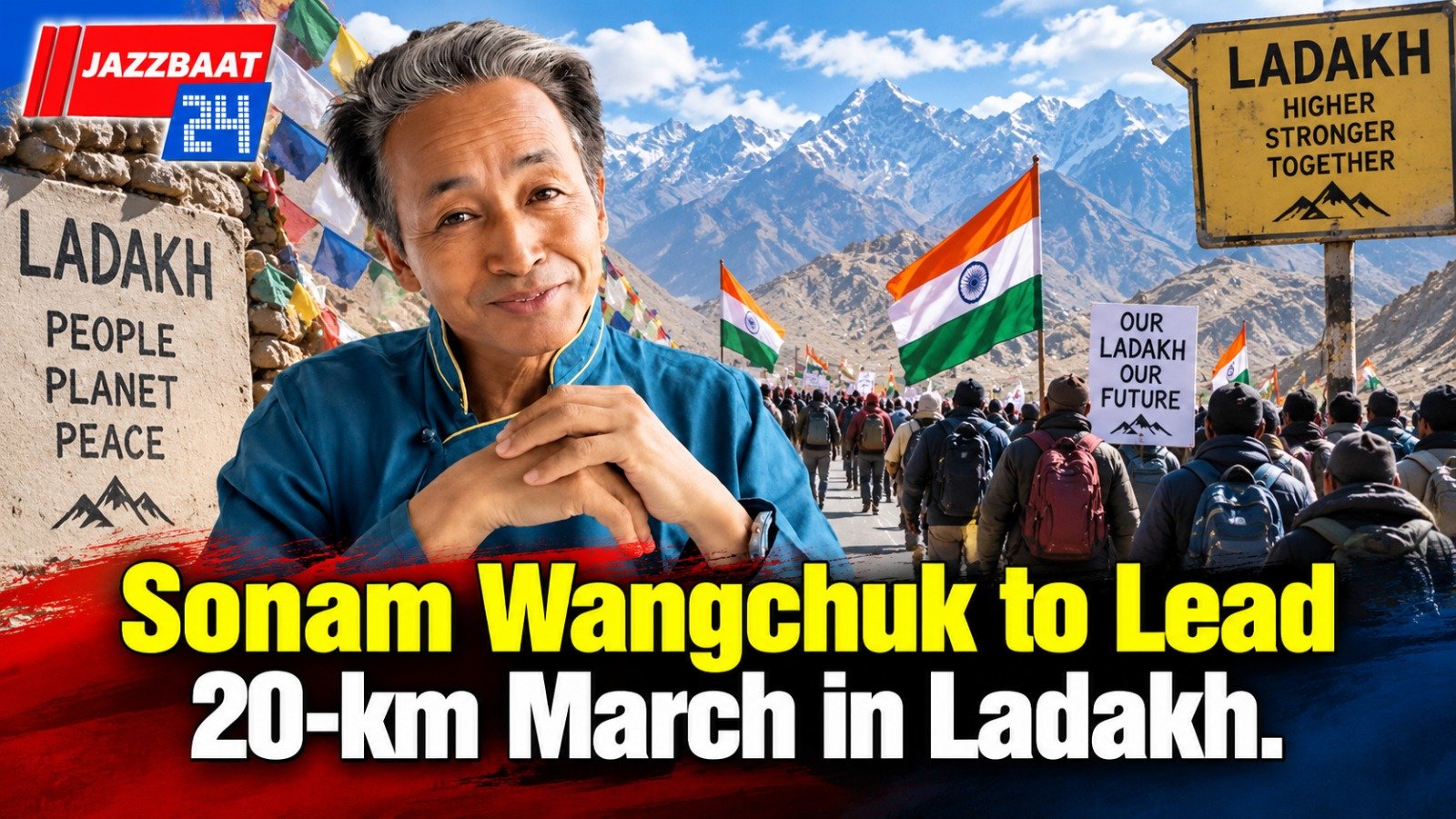
Climate activist Sonam Wangchuk is set to lead a symbolic 20-km march in Ladakh on September 23, a year after four people were killed during protests over demands for statehood and constitutional safeguards for the Union Territory.
Wangchuk's office said the march will reiterate demands for greater constitutional protection for Ladakh, including the region's inclusion under the Sixth Schedule of the Constitution. The provision provides special protections for tribal areas and allows for forms of autonomous administration.
A “martyr's day” programme is also planned for September 24, marking one year since the deaths during the protests. Ladakh leaders have been demanding compensation for the families of those killed and the withdrawal of cases registered in connection with the agitation.
The latest programme comes after Wangchuk and other Ladakh leaders had threatened fresh protests between September 19 and 24. The proposed agitation was later called off, with the organisers citing weather conditions.
The issue has remained unresolved despite several rounds of discussions between Ladakh representatives and the Union home ministry. Leaders from the region have been seeking statehood, constitutional safeguards and a governance structure that provides greater representation to local communities.
The Ladakh administration has announced compensation of ₹15 lakh each for the families of the four people who died during last year's violence. Those injured were announced to receive ₹3 lakh each. Wangchuk, however, has publicly expressed dissatisfaction with the compensation announced by the administration.
The activist's renewed campaign follows a period of detention and negotiations with the central government. Wangchuk was detained under the National Security Act (NSA) in September 2025 after protests in Ladakh turned violent. He remained in detention for around six months before the government revoked the detention order in March 2026.
The government had alleged that Wangchuk's statements and actions contributed to unrest during the protests. His detention was later revoked with the stated aim of facilitating dialogue with stakeholders.
The protests in Ladakh have their roots in demands that emerged after the region was made a Union Territory without a legislative assembly in August 2019, following the changes to Jammu and Kashmir's constitutional status.
Since then, various groups in Ladakh have demanded statehood and stronger constitutional protections for the region's environment, culture, language and tribal communities.
In 2023, the Union home ministry formed a committee under Minister of State for Home Nityanand Rai to discuss measures relating to Ladakh's culture, language, environment and strategic interests.
Ladakh representatives have since held several rounds of discussions with the Union government. However, leaders said earlier this month that they were still waiting for a draft proposal covering constitutional safeguards and an elected governance model.
Separately, Ladakh Lieutenant Governor VK Saxena approved a notification creating Ladakh Autonomous Hill Development Councils across all seven districts, according to the report.
The Union government has indicated that a draft proposal on the issues raised by Ladakh leaders could be ready by October.
The September 23 march and the following day's memorial programme are therefore expected to renew public attention on the long-running demands. Organisers are expected to use the events to reiterate their call for constitutional safeguards and greater political representation for the people of Ladakh.




Reader Comments 0