
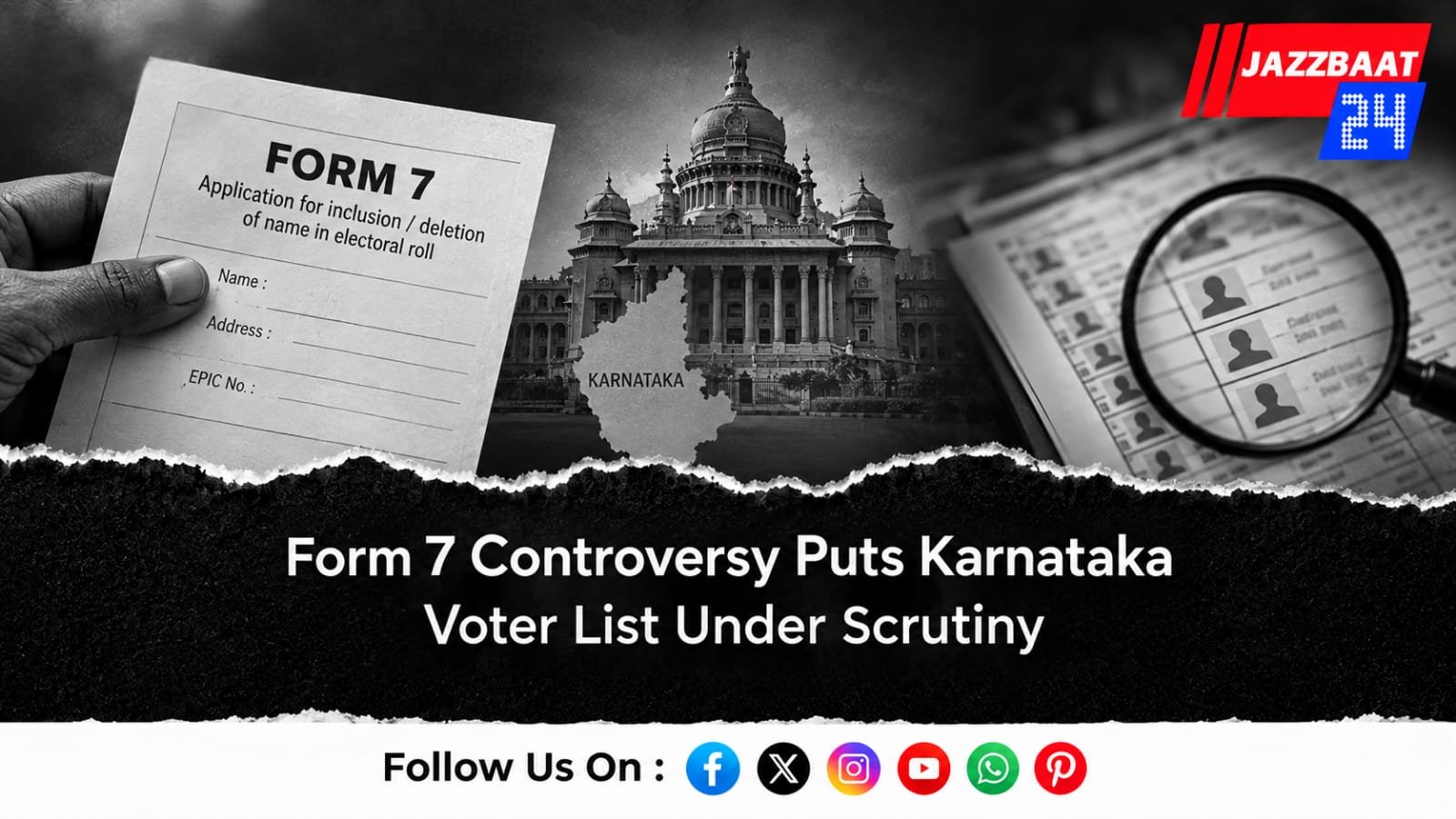
A fresh controversy over the revision of electoral rolls has emerged in Karnataka, with Form 7 at the centre of allegations surrounding the bulk filing of objections against voters. The issue has prompted Chief Minister D K Shivakumar to demand an investigation, while the BJP has rejected the allegations.
Form 7 is the official application used to object to the inclusion of a person's name in the electoral roll or to seek deletion of a voter’s name on specified grounds, including death, being underage, permanent shifting, duplicate registration or non-citizenship. Under the Registration of Electors Rules, 1960, a registered elector of the constituency can file the form.
The controversy intensified after Shivakumar and several cabinet colleagues met Karnataka Chief Electoral Officer V Anbukkumar in Bengaluru. Shivakumar alleged that pre-printed Form 7 applications containing voters’ names, addresses and EPIC numbers were being circulated and demanded a criminal investigation into what he described as fraudulent bulk objections. The BJP has denied the allegations and said it would respond to the Election Commission or a court.
The Karnataka CEO has meanwhile directed Electoral Registration Officers across all 224 Assembly constituencies to take action against anyone found to have knowingly submitted false declarations or objections. Such action is to follow an inquiry under Rule 20 of the Registration of Electors Rules, 1960. The CEO's circular does not attribute the alleged bulk filing to any particular political party.
Importantly, submitting a Form 7 does not automatically delete a voter's name. The objection has to go through the prescribed verification process. The Booth Level Officer conducts field verification, and the affected voter is generally given notice and an opportunity to be heard before an Electoral Registration Officer decides the matter. Appeals can also be filed against decisions under the rules.
The current dispute has historical relevance as well. In Karnataka's Aland constituency, 6,018 Form 7 applications were submitted online in December 2022. According to the Karnataka CEO's office, only 24 were found genuine, while 5,994 were rejected and no voter names were deleted on their basis. An FIR was subsequently registered by the Aland Electoral Registration Officer, according to the report.
Recent complaints have also emerged from areas including Bhalki, Belagavi and Vijayapura. In Bhalki, residents alleged that large numbers of applications described voters as absent or permanently shifted even though they continued to live at their registered addresses. Police complaints have been filed in some cases, although allegations of a coordinated political operation have not been established.
The Election Commission's position is that false declarations can attract legal action. Under Section 31 of the Representation of the People Act, 1950, knowingly making a false declaration in connection with electoral-roll matters can lead to imprisonment of up to one year, a fine, or both.
The Karnataka controversy has therefore brought renewed attention to the balance between allowing voters to challenge potentially incorrect entries and protecting genuine electors from wrongful deletion. The ongoing inquiries and verification process will determine which of the disputed objections are genuine and whether any criminal wrongdoing took place.




Reader Comments 0