
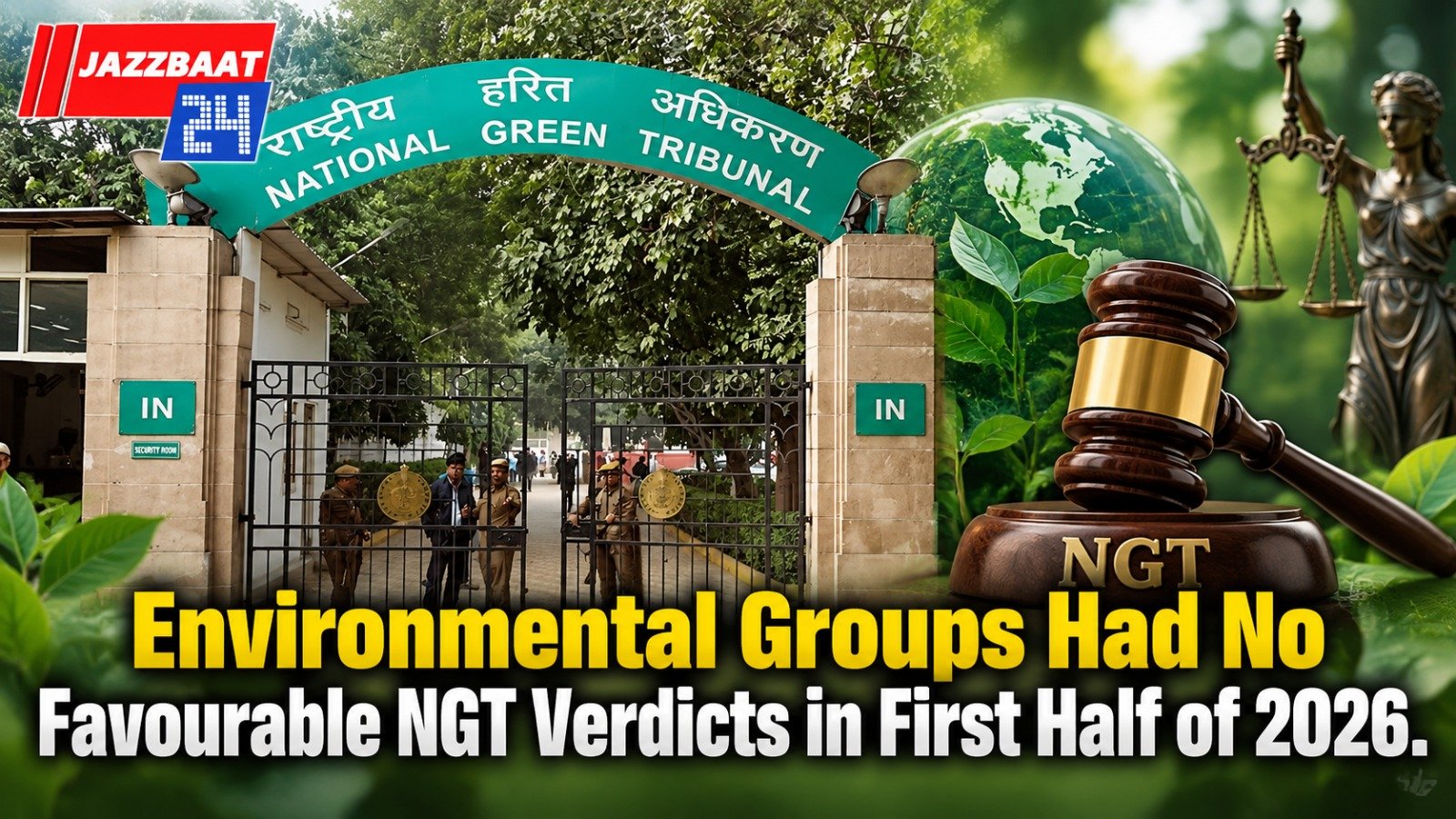
Environmental and public-interest groups did not secure a favourable judgment on the merits in any of the National Green Tribunal (NGT) appeals they filed between January and June 2026, according to an assessment by the South Asian Reporter on Environment Law (SAREL).
The assessment examined 119 appeals decided by five NGT benches during the six-month period. Of these, 67 cases were decided on their merits, while 52 were disposed of on procedural grounds such as limitation, jurisdiction, maintainability or withdrawal.
Among the 67 matters that reached the merits stage, 16 appeals were filed by environmental or public-interest parties. All 16 were unsuccessful, resulting in a zero per cent success rate for that group during the period covered by the assessment.
By comparison, industry, project proponents and property owners secured favourable outcomes in 30 of their 51 appeals decided on merits. This amounted to a 58.8 per cent success rate, according to the assessment.
The pattern was reported across the different NGT benches. In the Western Zone Bench, nine environmental or public-interest appeals were decided on merits and all were dismissed. Industry, project proponents and property owners, meanwhile, received favourable orders in 15 of 24 cases.
The Central Zone Bench decided three environmental or public-interest appeals on merits, with none resulting in a favourable outcome. Of five appeals involving industry or project proponents, one received a favourable order.
At the NGT's Principal Bench in Delhi, both environmental appeals were dismissed. Of the 10 appeals involving industry or project proponents, five resulted in favourable orders, while three matters ended with the status quo being maintained.
The Southern Zone Bench dealt with one environmental appeal, which was dismissed. Industry, project proponents and property owners received favourable orders in nine of the 12 merits appeals considered there.
The assessment also noted that a considerable number of cases did not reach the stage of examining the underlying environmental issues. Around 44 per cent of all 119 appeals were disposed of on procedural grounds, meaning there was no ruling on the merits of those cases.
Several favourable orders for project proponents involved rejected environmental clearances being set aside and cases being sent back for fresh consideration. According to the assessment, many of the Western Bench decisions followed this pattern, with authorities directed to reconsider applications after correcting deficiencies.
Congress leader Jairam Ramesh referred to the findings and highlighted the difference between the outcomes for industry and project proponents and those for environmental or public-interest parties. He argued that the NGT should reconsider its approach, noting that the tribunal was established in 2010 to provide effective and speedy environmental justice.
The assessment was released around the time of the NGT's two-day international conference, titled “The Future of Environment and Climate Dynamics”, held on September 19 and 20.
NGT Chairperson Justice Prakash Shrivastava said the conference focused on the need to move beyond simply identifying environmental challenges and work towards stronger laws, institutions and partnerships. He also stressed the importance of technology, innovation, sustainable finance and a just transition in keeping environmental law responsive to emerging challenges.
The six-month assessment provides a snapshot of NGT appeals decided during the period and does not by itself establish a broader long-term trend in environmental litigation.




Reader Comments 0