
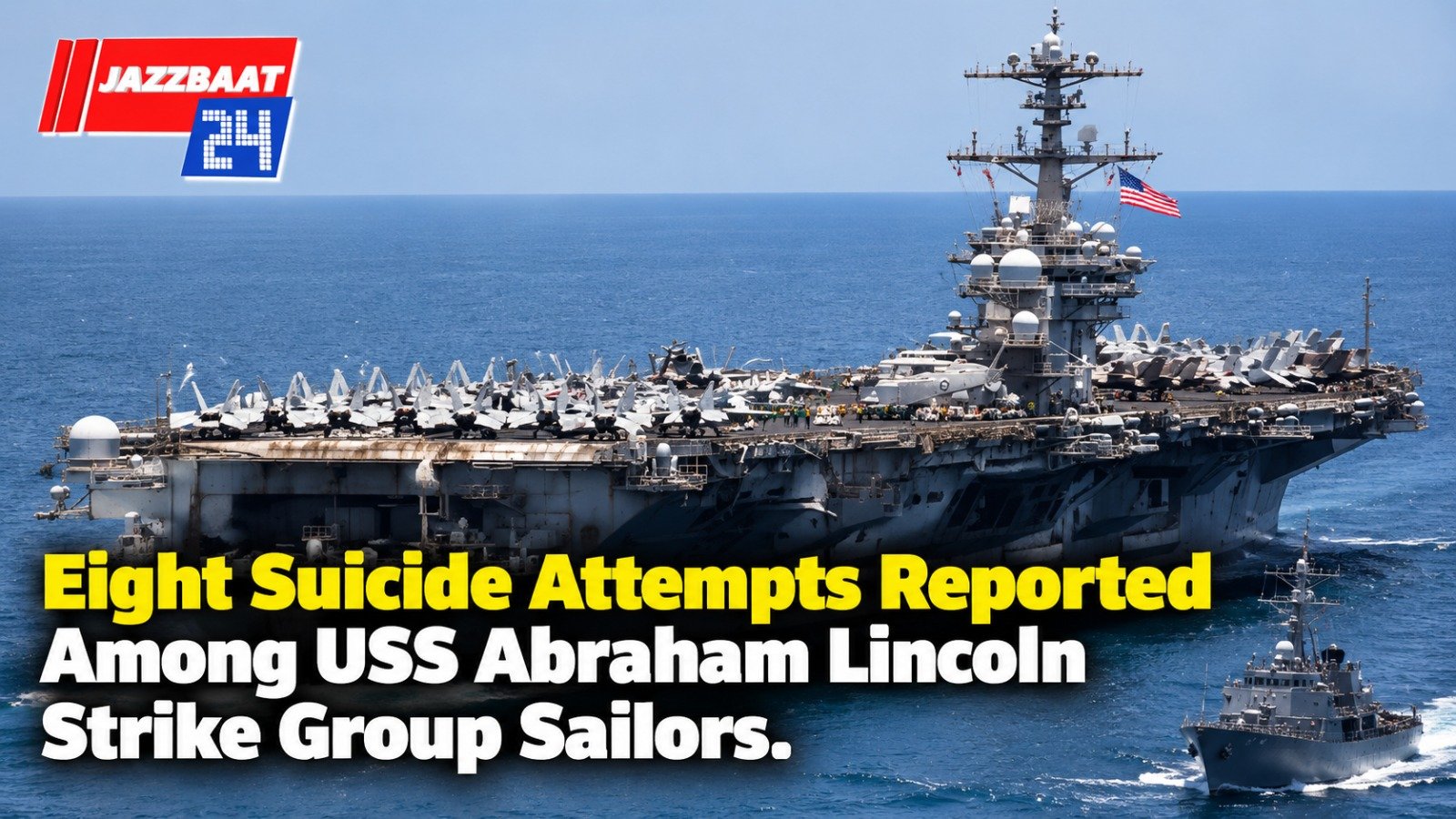
Eight sailors from the USS Abraham Lincoln carrier strike group attempted suicide during a lengthy deployment in the Middle East, according to information released by Acting US Navy Secretary Hung Cao. The disclosure comes amid growing scrutiny over the mental health and living conditions of sailors serving aboard the carrier.
Cao revealed the figures in a written response to questions from US Senator Kirsten Gillibrand about the morale and wellbeing of personnel assigned to the USS Abraham Lincoln strike group. He said there had been eight suicide attempts since the beginning of the deployment but confirmed that no sailor had died by suicide while serving aboard the ship during the deployment.
The USS Abraham Lincoln has spent more than 260 days deployed in the Middle East while supporting US combat operations against Iran. The carrier has reportedly spent an unusually long period continuously at sea without a port visit. Between 6,000 and 7,000 sailors were deployed as part of the carrier strike group.
The Navy secretary's letter provided details about some of the reported incidents. In one case, a sailor assigned to an air wing went overboard from the ship in early August. The sailor was quickly recovered by a search-and-rescue helicopter and was subsequently taken off the ship for further care.
In another incident, a sailor attempted to go overboard in March but was stopped by fellow crew members. The sailor was later returned to the ship's homeport.
The revelations come after military families and lawmakers raised concerns about conditions aboard the carrier. Reports have included allegations of food shortages, poor hygiene, deteriorating living conditions and mental health problems among sailors during the extended deployment.
The Navy has acknowledged supply-related difficulties but has disputed claims that the USS Abraham Lincoln was facing a broader mental health crisis. In an earlier response, the service said it had not observed an increase in suicidal thoughts or attempts aboard the ship and stressed that medical, mental health and religious professionals were available to assist service members.
US Central Command Commander Admiral Brad Cooper also addressed concerns about the crew's mental health. After visiting the carrier, Cooper said the Lincoln had one of the lower numbers of reported mental health-related cases among the Navy's 11 active aircraft carriers. At the same time, he acknowledged that conditions were not perfect and noted that prolonged periods at sea could be difficult for some personnel.
The carrier eventually made a port visit to Thailand in early September after an extended period at sea. The stop provided sailors with an opportunity to rest and take a break from the demanding deployment.
The USS Abraham Lincoln's deployment has attracted additional attention because of its role in US military operations involving Iran and the unusually long time many sailors have spent away from home.
President Donald Trump has previously dismissed suggestions that the deployment was excessively long, saying it was “not nearly long enough.”
The newly disclosed figures have renewed questions about the pressures faced by sailors during prolonged deployments. While the Navy says it has support systems in place, the reported suicide attempts have intensified scrutiny of the conditions and mental health challenges experienced by personnel serving aboard the carrier strike group.




Reader Comments 0