
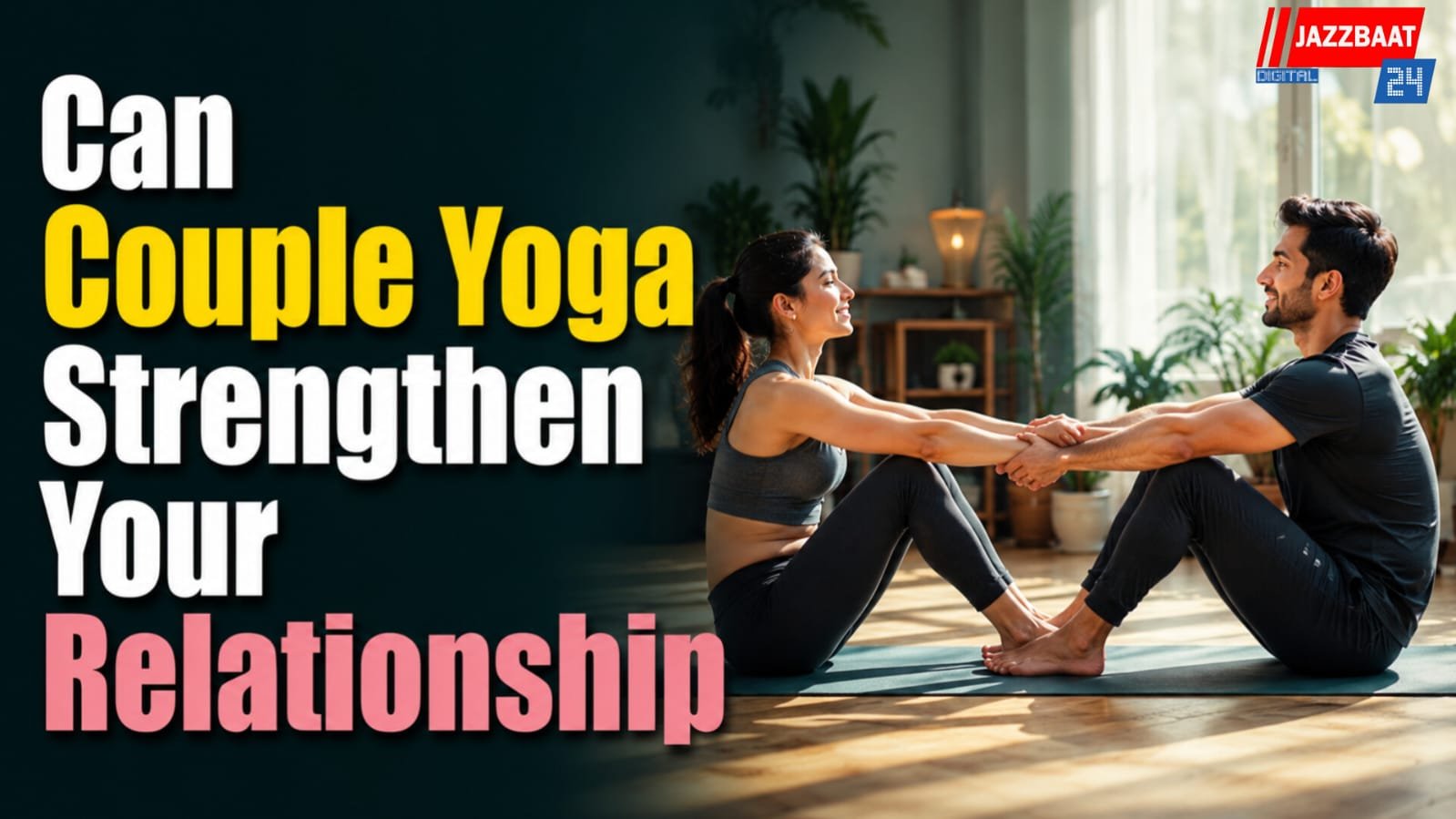
Yoga is often seen as an individual practice, but practising it with a partner can turn it into a shared experience built around trust, communication and coordination. Couple yoga involves two people performing poses together, often relying on each other for balance, support and movement.
The idea is not simply to perform difficult poses. The real focus is on learning how to listen, adjust and work together. In a partner tree pose, for example, both people need to maintain balance while providing gentle support to one another. That physical dependence can become a reminder of how relationships also require cooperation and trust.
Learning to communicate without words
One of the biggest lessons from couple yoga is communication. Partners have to tell each other when a stretch feels uncomfortable, when more support is needed or when they need to slow down.
At the same time, body language becomes important. A small change in pressure, posture or breathing can communicate comfort or discomfort without words. This can encourage partners to become more attentive to each other's physical and emotional cues.
Research into mindfulness-based interventions for couples has found promising evidence that mindfulness practices can improve relationship quality, although researchers also caution that the studies are varied and more research is needed.
Trust becomes part of the exercise
Balancing together requires a certain degree of vulnerability. When one partner leans back or depends on the other for stability, both have to trust that the other person will provide appropriate support.
That does not mean every couple will automatically become closer after one yoga session. Rather, the practice creates opportunities to experience cooperation in a different setting. Partner yoga has also been explored as a way of working with boundaries, communication and emotional connection in relationships.
Breathing and slowing down
Another simple practice is back-to-back breathing. Partners sit comfortably with their backs touching and pay attention to their breathing. The exercise encourages both people to remain present rather than focusing on phones, work or everyday distractions.
Recent research on “mindful partnering” has also found that greater interpersonal mindfulness is associated with better relationship health and fewer mental-health symptoms.
What couples can take away
The deeper lesson of couple yoga may have little to do with flexibility. It is about patience, respecting boundaries, listening carefully and understanding that balance is sometimes easier when both people cooperate.
For couples interested in trying it, simple poses and breathing exercises are a better starting point than attempting advanced acrobatic positions. Movements should remain comfortable, consensual and within each person's physical ability.
Ultimately, couple yoga cannot solve serious relationship problems on its own. But as a shared mindfulness practice, it can create a few quiet moments where partners slow down, pay attention to each other and learn to move in the same direction.




Reader Comments 0