
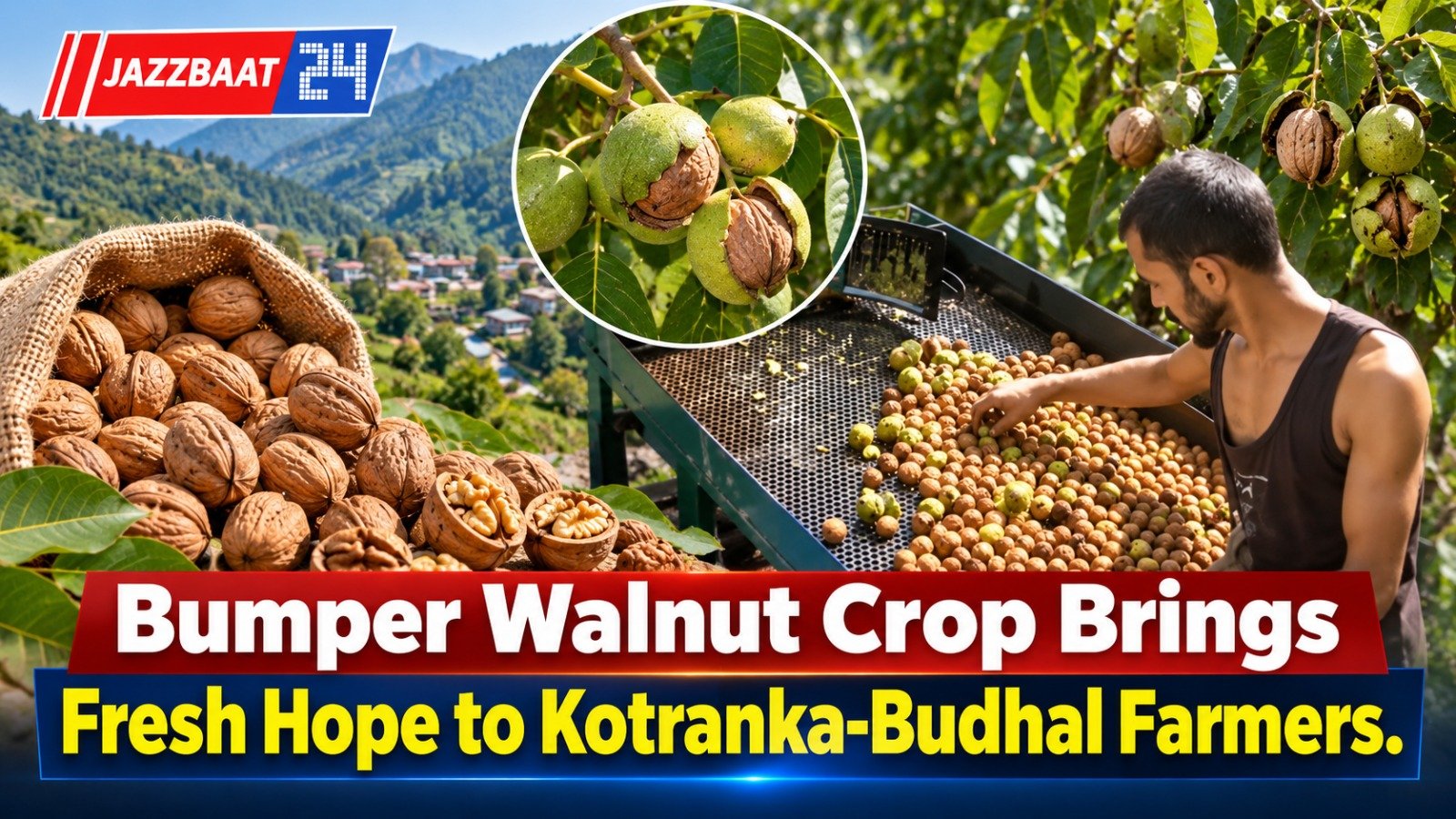
Kotranka-Budhal: A bumper walnut crop has brought fresh optimism to farmers in the Kotranka-Budhal area of Jammu and Kashmir, with growers looking forward to better earnings from one of the region's important horticultural products.
Walnut cultivation is an important source of livelihood for farming families in the hilly areas of Jammu and Kashmir. The favourable crop this season has provided farmers with an opportunity to increase their income while strengthening the local agricultural economy.
For many growers, walnut trees are more than just a seasonal source of produce. Orchards are often maintained by families for years, with farming knowledge and cultivation practices passed down from one generation to another. A good harvest can therefore have a direct impact on household incomes and provide greater financial stability to rural communities.
The latest crop has also generated interest because walnuts continue to command significant prices in Jammu and Kashmir's agricultural markets. Recent mandi data shows that walnut prices in the Union Territory have been strong, although rates vary depending on quality, grade and market conditions. At Bumhama Kupwara, for example, reported prices on September 10 ranged from Rs 55,000 to Rs 90,000 per quintal for different grades.
Farmers in Kotranka-Budhal are hopeful that strong demand and a healthy harvest will help them secure better returns. The increased availability of walnuts also creates opportunities for traders and other people involved in sorting, packaging, transportation and marketing.
The walnut sector has wider economic significance for Jammu and Kashmir. Apart from providing direct income to growers, horticulture supports a network of activities linked to agricultural labour, transportation, wholesale markets and retail trade. Better production can therefore benefit several sections of rural communities.
The region's geography and climate provide suitable conditions for horticulture, and walnut cultivation has traditionally been associated with the mountainous parts of Jammu and Kashmir. However, farmers continue to face challenges such as changing weather conditions, transportation difficulties, market fluctuations and the need for better post-harvest handling.
Improved processing and marketing could help growers receive better value for their produce. Proper drying, grading, packaging and access to larger markets can reduce losses and improve the final price received by farmers. Greater awareness about modern horticultural practices can also help improve productivity and quality over the long term.
The strong market situation has added to the positive sentiment surrounding this year's crop. On September 7, walnut prices at Bumhama Kupwara were reported between Rs 70,000 and Rs 90,000 per quintal, again reflecting differences based on grade and quality.
For farmers in Kotranka-Budhal, the bumper harvest is therefore more than a good agricultural season. It represents the possibility of stronger household earnings, greater economic activity and renewed confidence in traditional horticulture.
As the crop moves from orchards to markets, farmers will now be watching prices and demand closely. If favourable market conditions continue, the walnut harvest could provide an important boost to rural incomes in the region and further underline the economic importance of horticulture in Jammu and Kashmir.




Reader Comments 0