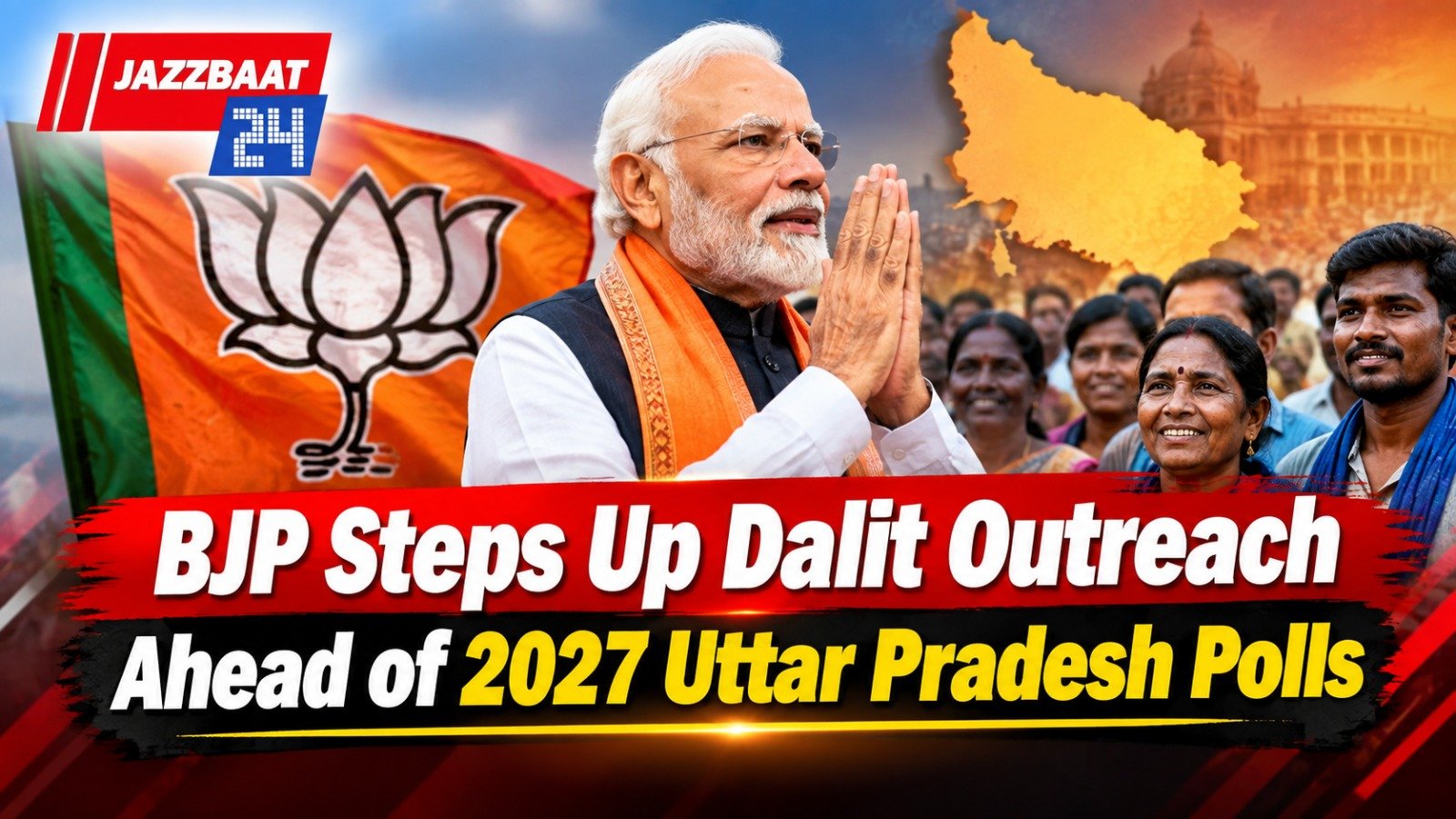
The Bharatiya Janata Party (BJP) is stepping up its outreach among Dalit communities in Uttar Pradesh ahead of the 2027 Assembly elections, with a particular focus on non-Jatav Scheduled Caste groups such as Pasis, Khatiks, Dhobis and Valmikis. The party is seeking to strengthen its organisational network and address concerns among these communities well before the state goes to the polls.
Scheduled Castes account for around 21% of Uttar Pradesh’s population, making Dalit voters an important part of the state’s electoral landscape. The BJP’s latest efforts come after the party’s reduced performance in the 2024 Lok Sabha elections in Uttar Pradesh, where its seat tally fell from 62 in 2019 to 33.
According to party leaders cited in recent reports, the BJP plans to organise meetings with different Dalit communities in the coming weeks. These interactions are expected to focus on local concerns, feedback and awareness about government welfare programmes. Party teams will also work across the state to highlight schemes and measures that the BJP says have benefited Scheduled Caste households.
The party has also placed cultural outreach at the centre of its engagement strategy. In July, the BJP launched the Shri Guru Ravidas Maharaj Samrasta Sankalp Abhiyan, a seven-month campaign linked to the 650th birth anniversary of Sant Ravidas. The programme began in Varanasi and includes temple events, community gatherings, processions and other activities. A large number of ceremonial urns carrying soil from Seer Govardhanpur, the birthplace of Sant Ravidas, are being taken to villages and communities across Uttar Pradesh and other states.
The BJP's approach also includes political representation. The Uttar Pradesh cabinet expansion earlier this year brought in leaders representing different social groups, including Scheduled Caste communities. Among them were Pasi leader Krishna Paswan and Valmiki leader Surendra Diler, reflecting the party's effort to maintain representation across caste groups.
The BJP is not the only party focusing on Dalit voters. The Samajwadi Party has been expanding its PDA — Pichhda, Dalit, Alpsankhyak — framework and increasing Dalit representation within its organisation. The Congress has also appointed Dalit leader R.P. Gautam as its Uttar Pradesh in-charge. Meanwhile, the Bahujan Samaj Party, traditionally associated with a strong Dalit support base, is working to rebuild its organisation following its poor performance in the 2024 Lok Sabha election.
Within the Dalit community, political preferences have historically differed among various sub-groups. The Jatav/Chamar community has been closely associated with the BSP, while the BJP has sought greater support among non-Jatav groups. The party’s current outreach therefore combines welfare messaging, political representation, grassroots meetings and cultural programmes.
The BJP’s renewed engagement comes months before the expected 2027 Assembly election and forms part of a broader effort by political parties to strengthen their social coalitions across Uttar Pradesh. As campaigning gradually takes shape, Dalit representation, welfare, caste-based outreach and competing political alliances are likely to remain prominent issues in the state’s electoral discourse.

Reader Comments 0