
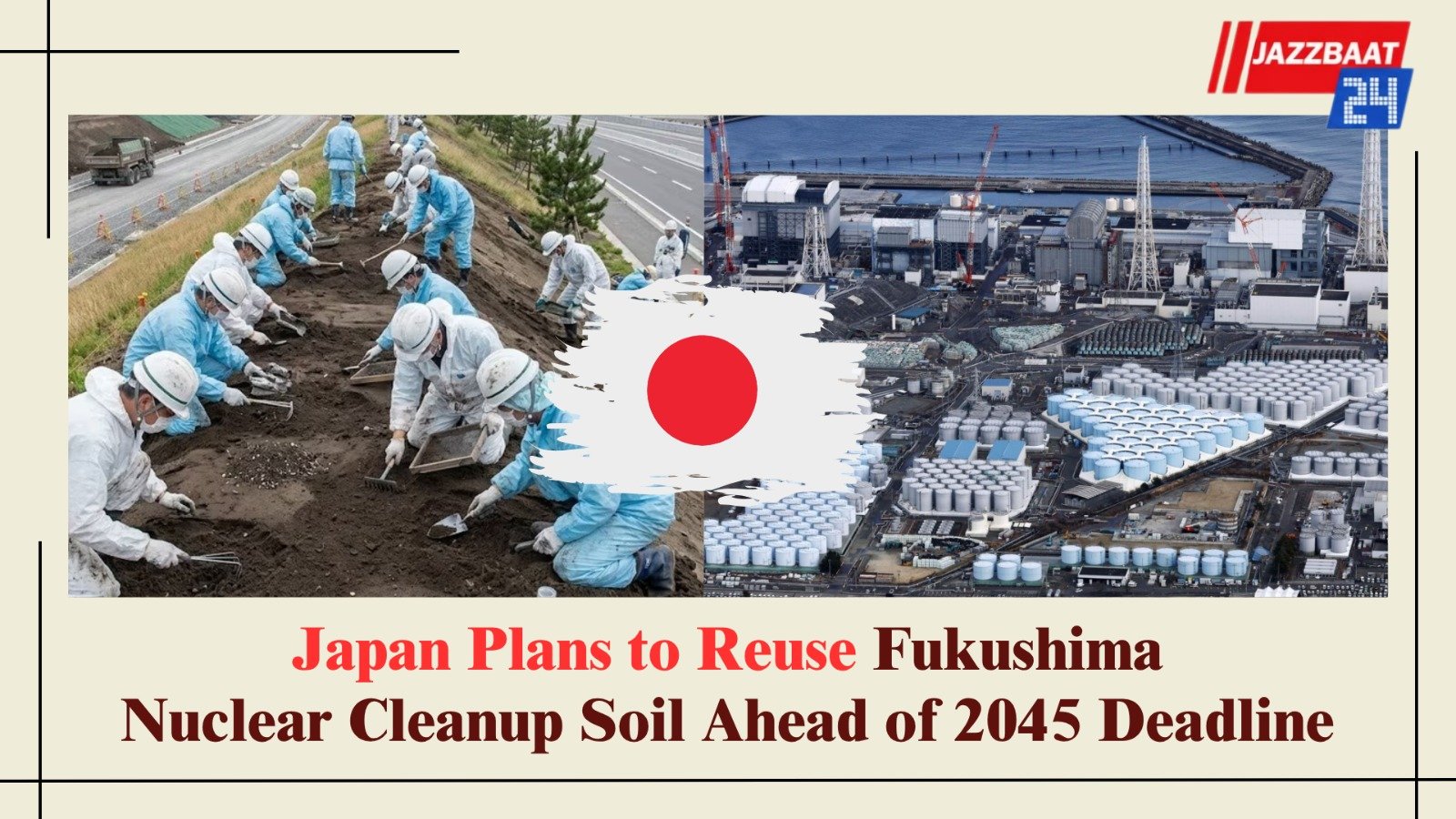
News Desk: Japan is exploring ways to reuse soil collected during the cleanup of the Fukushima nuclear disaster in public infrastructure projects, aiming to reduce the amount of material that must be permanently disposed of outside the prefecture by March 2045.
The soil was removed during extensive decontamination operations following the 2011 Fukushima Daiichi nuclear power plant accident. For years, millions of cubic metres of excavated material have been stored at a large interim storage facility near the affected areas.
According to Japan’s Environment Ministry, around 14.08 million cubic metres of removed soil and waste had been transported to the facility by the end of March 2025. The storage site covers approximately 1,600 hectares across the towns of Okuma and Futaba.
Under Japanese law, the government must complete the final disposal of the removed soil and other relevant waste outside Fukushima within 30 years of the start of transportation to the facility. This places the deadline at March 2045.
However, relocating all the material to permanent disposal sites would require significant land and resources. To address this challenge, the government is working to identify soil with sufficiently low levels of radioactive contamination that could be reused safely in construction and public works.
The process, known as managed recycling, involves strict conditions rather than unrestricted use of the excavated material. In March 2025, Japan’s Environment Ministry established formal standards for the practice.
Under these standards, recycled soil must contain radioactive cesium at concentrations of 8,000 becquerels per kilogram or less. The ministry says the limit corresponds to an additional effective radiation dose of no more than one millisievert per year under the relevant exposure scenario.
The material must also be managed to prevent it from spreading or washing away. Radiation levels are monitored during construction, operation and maintenance, while records are maintained detailing the location, quantity and radioactivity of the reused soil. In certain projects, the material must be covered with uncontaminated soil to reduce exposure.
Japan has already conducted demonstration projects to assess the feasibility of the approach. These include an agricultural land project in the Nagadoro area of Iitate Village and a road embankment project within the interim storage facility.
Researchers are also studying technologies such as soil sorting and heat treatment to separate materials and reduce the volume requiring permanent disposal.
Despite these efforts, public acceptance remains a major challenge. Residents outside Fukushima may be reluctant to accept construction projects using soil associated with the nuclear disaster, even when it meets the prescribed safety standards.
Japan’s managed recycling programme is an attempt to balance environmental safety, waste reduction and the long-term recovery of Fukushima. Whether the approach can be expanded successfully and gain wider public support will be crucial to meeting the 2045 disposal deadline.



Reader Comments 0