
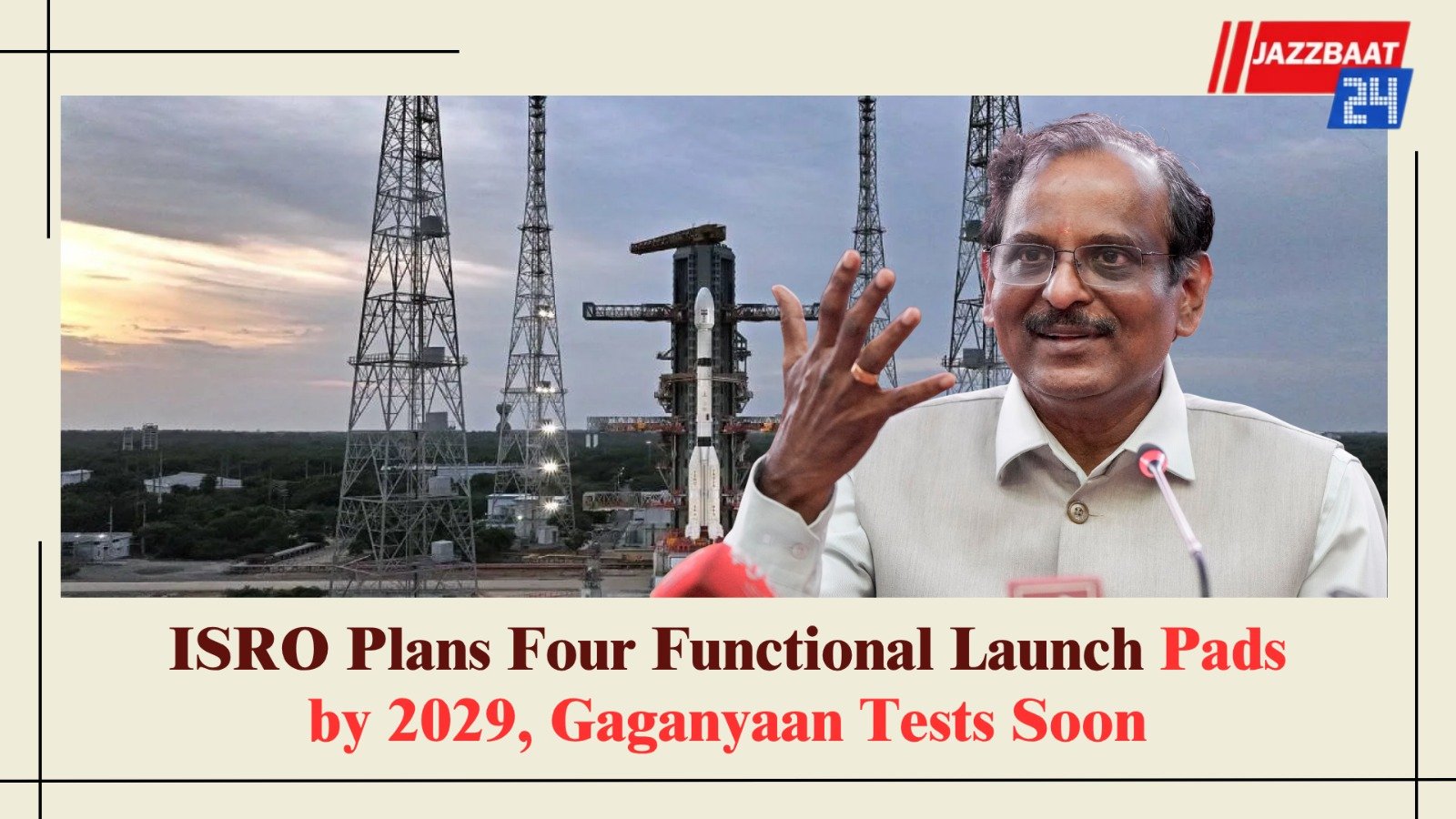
News Desk: India is preparing for a major expansion of its space programme, with the Indian Space Research Organisation (ISRO) aiming to have four functional launch pads by 2029. ISRO chairman V Narayanan has outlined the organisation’s future plans, including a dedicated launch complex for small satellites, upcoming Gaganyaan tests and a joint lunar mission with Japan.
Speaking at a graduation ceremony at a private university on Saturday, Narayanan said that collaboration with private companies would play an important role in meeting the growing demand for satellite launches in India and across the world. He clarified that ISRO would not be privatised, but would work more closely with startups and private enterprises to expand the country’s space capabilities.
According to Narayanan, the organisation plans to support private companies by sharing technological expertise and helping them develop their capabilities. The initiative is expected to encourage economic growth and create thousands of high-skilled jobs in the space sector.
A key part of the expansion plan is a dedicated 2,000-acre Small Satellite Launch Vehicle (SSLV) complex at Kulasekarapattinam in Tamil Nadu’s Tuticorin district. The facility is intended to support the growing demand for small satellite deployment and strengthen India’s position in the global commercial launch market.
The proposed spaceport will include essential infrastructure such as integration buildings, launch pads, rail-track systems and telemetry, tracking and command facilities. However, Narayanan did not provide further details about the locations or development plans for the other three launch pads.
ISRO is also moving ahead with its ambitious Gaganyaan human spaceflight programme. Narayanan said the first uncrewed test flight was planned within the next two months, followed by two additional uncrewed tests before the crewed mission.
These missions will assess critical systems, including environmental controls, crew escape mechanisms and safety equipment. Engineers will also evaluate the spacecraft’s interior and its performance under different pressure, temperature and humidity conditions.
Narayanan said ISRO had already completed approximately 8,000 ground-based experiments for the mission. Meanwhile, the four astronaut-designates selected for the programme are undergoing specialised training in preparation for the planned human spaceflight.
Looking beyond Gaganyaan, the ISRO chief also highlighted plans for Chandrayaan-5, a collaborative lunar mission with Japan’s space agency. The mission is expected to feature a 350-kilogram rover designed to conduct scientific experiments on the lunar surface over a period of 100 days.
The latest roadmap highlights India's broader ambitions to strengthen its space infrastructure, expand commercial launch services and undertake more complex scientific missions. With greater private-sector participation and major projects in development, ISRO is seeking to increase launch capacity while advancing human spaceflight and lunar exploration.




Reader Comments 0