
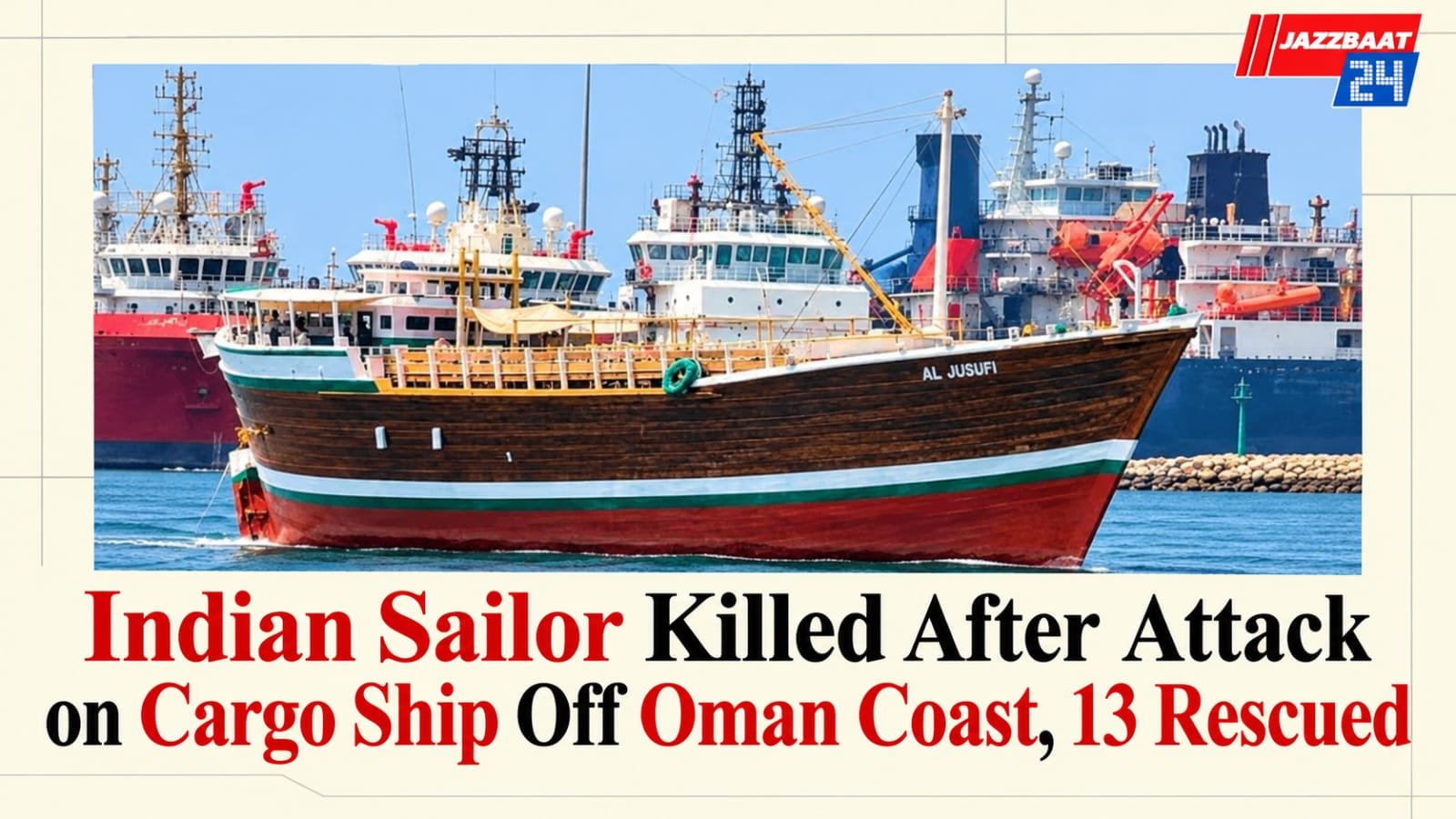
A deadly attack on an Indian-flagged cargo vessel off the coast of Oman has claimed the life of an Indian sailor, raising fresh concerns over maritime security in the Gulf region. Thirteen other crew members were rescued by the Omani Coast Guard following the incident on Monday.
The vessel, identified as MSV Al Jousufi, was reportedly struck by an unidentified aerial object while sailing near the Omani coast on November 2. According to Union Minister for Ports, Shipping and Waterways Sarbananda Sonowal, all 14 crew members on board were Indian nationals. While 13 sailors managed to escape safely, one crew member succumbed to his injuries.
The deceased sailor has been identified as Gandhar Nahim Aziz, a resident of Gujarat. He reportedly sustained critical injuries during the attack and later died. The incident has prompted concern within India's maritime and shipping sectors, particularly over the safety of Indian seafarers working in conflict-affected waters.
Rescue Operations and India's Response
Following the attack, the Omani Coast Guard launched a rescue operation and successfully evacuated the 13 surviving crew members. The Indian Embassy in Oman has been coordinating with local authorities to ensure necessary assistance for the rescued sailors.
The Union Shipping Ministry is also closely monitoring the situation. Arrangements are being made to facilitate the return of the rescued crew members to India. Efforts are also underway to bring the mortal remains of the deceased sailor back to the country.
Sonowal expressed his condolences to the family of the deceased and assured that the Indian authorities were extending all possible assistance.
However, several important questions remain unanswered. The exact nature of the aerial object that struck the vessel, the type of weapon used and the identity of those responsible have not yet been established. No group has claimed responsibility for the attack so far.
Growing Security Concerns Around the Strait of Hormuz
The incident comes amid rising military tensions in West Asia, particularly involving the United States, Israel and Iran. The security situation around the Strait of Hormuz and the Gulf of Oman has become a major concern for international shipping.
The Strait of Hormuz is one of the world's most important maritime routes, carrying a substantial share of global oil supplies. Any disruption in this region can have serious consequences for international trade, energy supplies and global markets.
There have also been previous attacks on commercial vessels near Oman's coastline. In September, a foreign-flagged vessel, MV Cape Dao, was reportedly damaged in a missile attack, resulting in the death of an Indian sailor. Another incident involving the oil tanker MT Setebello in June also raised concerns over the safety of Indian crew members.
Indian Seafarers in the Line of Fire
The latest death has once again highlighted the risks faced by Indian sailors working in international waters. Previous figures from the Ministry of External Affairs indicated that at least 22 Indians had died since the conflict began, including 14 seafarers. With the latest casualty, the reported toll has risen to at least 23.
While the connection between the attack on Al Jousufi and the wider regional conflict remains unconfirmed, the incident has intensified concerns about the safety of Indian commercial vessels.
Ensuring the security of Indian sailors and maintaining safe passage through international shipping routes are likely to remain key challenges as tensions continue in West Asia.




Reader Comments 0