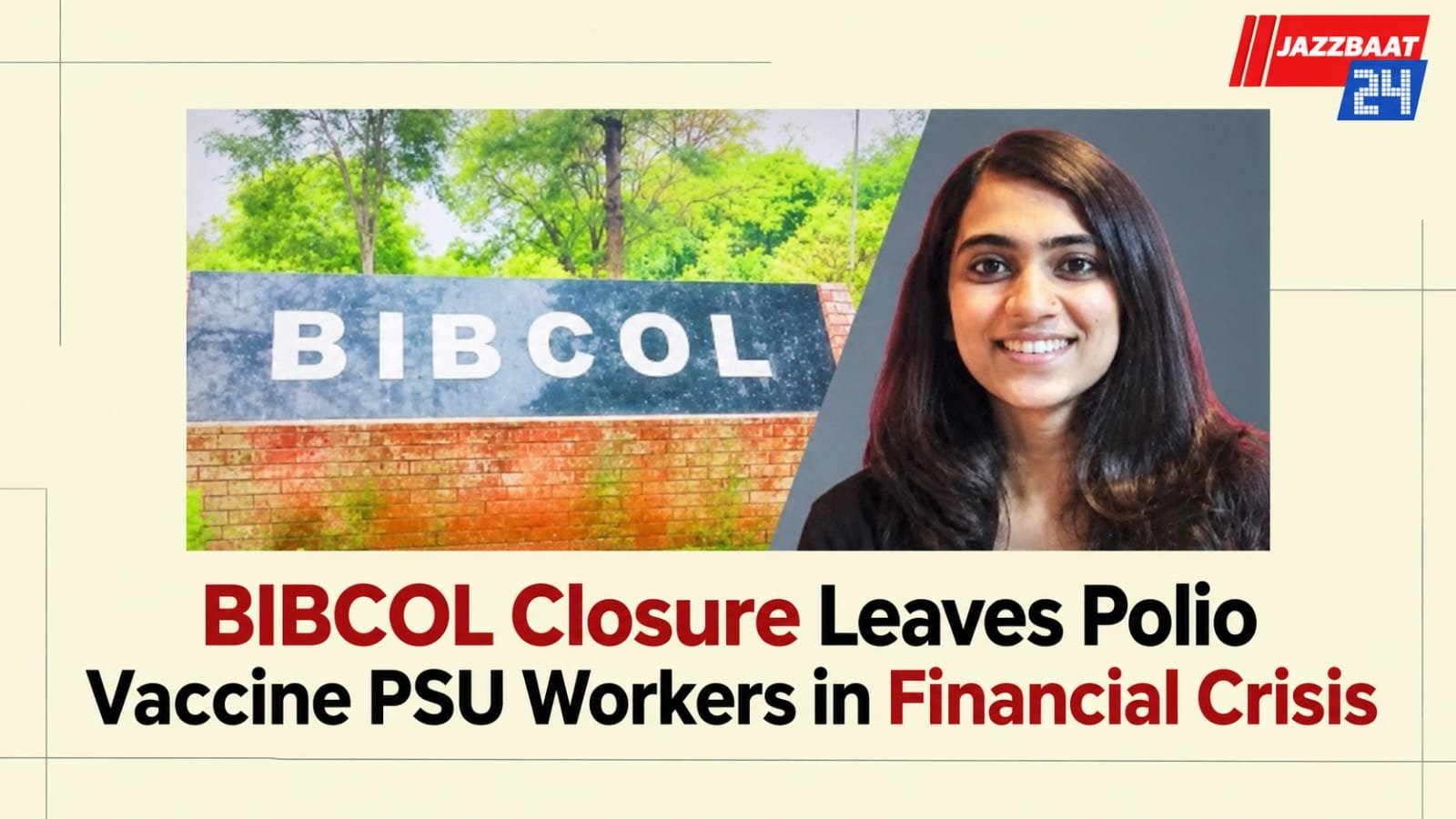
The Centre's decision to shut down Bharat Immunologicals and Biologicals Corporation Limited (BIBCOL), a public sector vaccine manufacturer that played an important role in India's fight against polio, has left its employees facing an uncertain future. Several former workers are struggling to meet basic household expenses after going months without regular salaries, with some families reportedly selling jewellery, including mangalsutras, to survive.
Located in Bulandshahr district of Uttar Pradesh, BIBCOL was established in March 1989 under the Department of Biotechnology during the tenure of former Prime Minister Rajiv Gandhi. Its primary objective was to strengthen India's domestic vaccine manufacturing capacity and reduce dependence on imported oral polio vaccines.
The company began commercial production in 1996 and eventually became a major supplier of oral polio vaccines for India's immunisation programme. At its peak, the factory reportedly supplied around 60 per cent of the country's polio vaccine requirements.
However, the organisation's financial position deteriorated over the years. Its main production operations came to a halt in December 2022, leaving employees without regular salaries. Around 100 workers reportedly continued waiting for their outstanding payments while repeatedly approaching government authorities for intervention.
On September 17, 2026, the Union government formally approved the closure of BIBCOL. The decision effectively ended employees' hopes of reviving the factory, although questions remain over their pending salaries, compensation and future employment.
The financial hardship has been particularly severe for several families. Rekha Pant, whose husband Dinesh Chandra Pant worked at the factory for nearly three decades, reportedly sold her wedding jewellery, including her mangalsutra, to manage household expenses and medical costs. She now wears an artificial mangalsutra.
Other former employees have also described difficulties paying rent, school fees and loan instalments. Some families have reportedly postponed medical treatment because they cannot afford the expenses.
Employees claim that repeated appeals to government departments failed to produce a permanent solution. They also allege that despite years of service, they have received little clarity about their outstanding dues or possible rehabilitation in other public sector undertakings.
In February 2026, some employees reportedly received three months of backdated salary covering September to November 2023. However, payments for subsequent months remain outstanding.
The closure has also triggered a political controversy. Congress leaders Jairam Ramesh and Rahul Gandhi have criticised the government's decision, questioning why a public sector company that contributed to India's polio eradication programme was not revived.
The government had previously explored revival and diversification options, including a proposed arrangement to manufacture Covaxin during the COVID-19 pandemic. However, the proposed production never materialised.
BIBCOL's financial difficulties, declining production and management-related concerns have raised questions about the future of public sector vaccine manufacturing in India.
For its former employees, however, the immediate concern is straightforward: receiving their unpaid salaries, securing compensation and finding a way to rebuild their lives after losing their jobs.



Reader Comments 0