
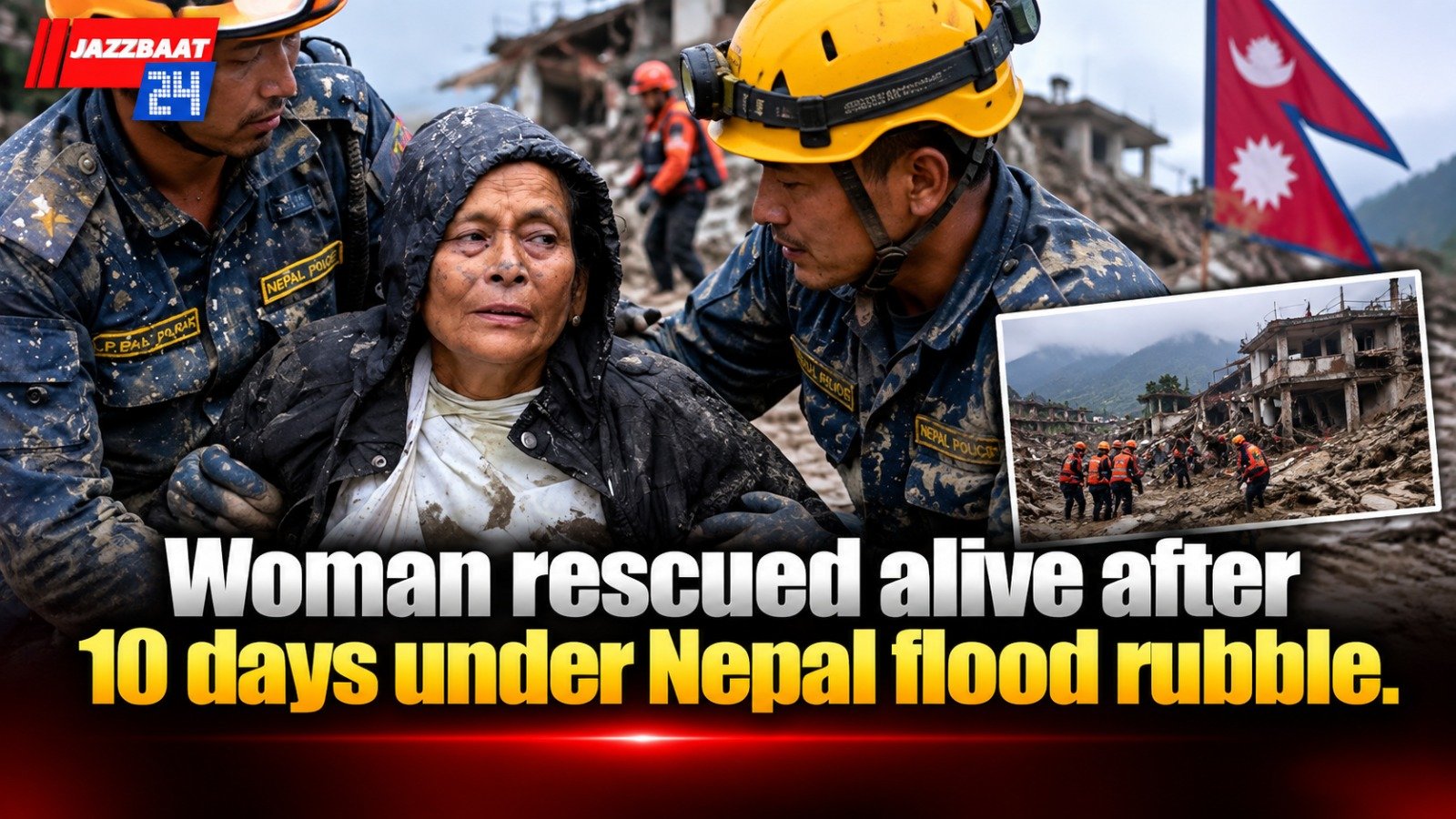
A 64-year-old woman who was presumed dead after devastating floods and mudslides in Nepal was rescued alive from the remains of her home nearly 10 days later, in a remarkable survival story.
Chandika Kumari Shrestha was trapped inside her four-storey house in Betrawati after a massive surge of water, mud, rocks and debris swept through the area on August 26. Her family had already begun observing the traditional mourning period, believing she had died in the disaster.
The breakthrough came when rescuers searching the damaged building heard a faint voice calling for help. Police officer Mahendra Darnal and his team were moving around the remains of the house when they heard someone say, “Save me.”
The building had been swept away by the flood and was surrounded by unstable, waterlogged ground. Rescuers took around 45 minutes to locate Shrestha, who was trapped in a small space inside the collapsed structure.
She was eventually pulled out and taken to an army hospital for treatment. Nepal’s Armed Police Force said she was found unconscious on an upper floor that had been buried beneath debris. She was rescued on Saturday, the 11th day after the disaster.
The operation was carried out by a nine-member Armed Police Force team led by Inspector Suman Kumar BK at a house belonging to Anand Shrestha in Bidur Municipality-10.
Shrestha’s rescue was among several remarkable discoveries of survivors in the flood-hit region. Two Nepali hydropower workers were also rescued alive after spending nine days trapped inside the Upper Trishuli 3A tunnel. They were identified as mechanical foreman Sanjay Sah, 30, and mechanical supervisor Kabir Maharjan, 45.
A Chinese national was also rescued alive from deep inside another hydropower tunnel after being trapped for several days.
The disaster severely affected Betrawati and surrounding areas, destroying roads, bridges, homes and other infrastructure. Large quantities of mud and debris covered buildings and made rescue operations extremely difficult.
Rescuers continued searching collapsed structures using shovels and other equipment while listening for signs of life. Engineers, former hydropower workers and officials also assisted teams by providing tunnel maps and technical information.
A WhatsApp group involving more than 500 engineers and other experts was reportedly being used to coordinate information about the affected hydropower sites and missing workers.
Nepal’s Health Ministry has reported that the disaster’s death toll has risen to 1,344, while thousands of people across Nepal and Tibet remain missing. The continued discovery of survivors has given rescue teams hope as search operations continue in the devastated areas.



Reader Comments 0