
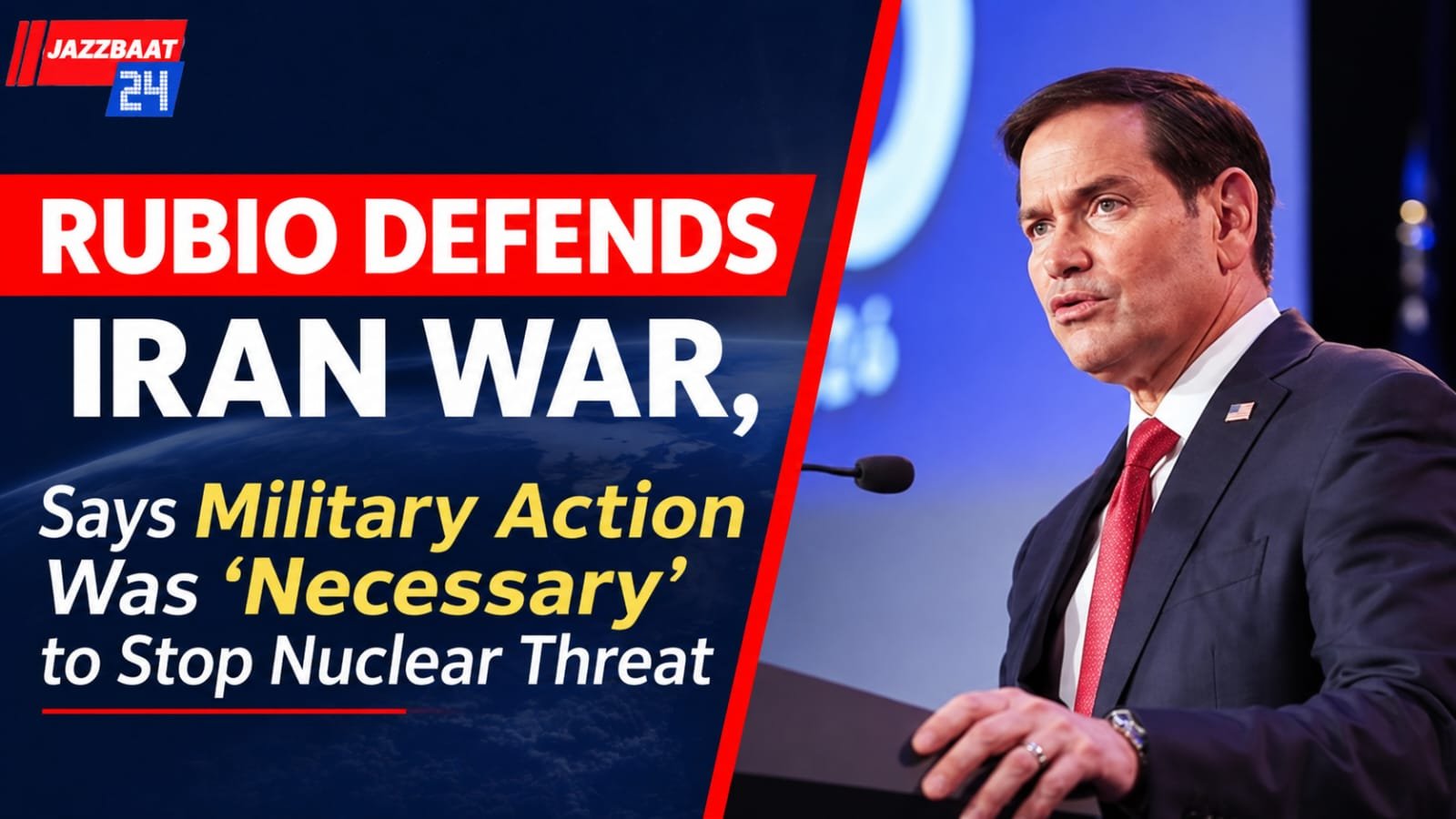
US Secretary of State Marco Rubio has defended President Donald Trump's decision to launch military action against Iran, describing the war as unpopular but necessary to prevent Tehran from developing nuclear weapons. His remarks come amid growing political criticism of the conflict following major Republican losses in the November midterm elections.
Speaking to reporters at Homestead Air Reserve Base in Florida on Sunday, November 8, Rubio said Trump had recognised what he described as a serious threat to international security and taken action to prevent Iran from pursuing a nuclear weapon.
Rubio argued that decisions involving national security are not always popular with voters. He said the president had taken on difficult challenges despite the political consequences, adding that sometimes necessary decisions do not receive public support.
His comments came after the Republican Party suffered significant setbacks in the midterm elections, with Democrats gaining control of Congress. The unpopularity of the Iran war, along with rising fuel prices and economic pressures linked to disruptions in the Strait of Hormuz, contributed to voter dissatisfaction.
The remarks also highlighted differences within the Republican leadership. Vice President JD Vance had previously suggested that the war played a major role in the party's electoral defeat. Trump acknowledged Vance's assessment of the political impact but maintained that launching the military campaign was the right decision.
Meanwhile, diplomatic efforts to end the conflict remain uncertain. Rubio admitted that negotiations with Tehran had made little progress and that a breakthrough was not imminent. He criticised Iran's demands, describing them as unacceptable and unrealistic.
Iran has reportedly sought an end to the US blockade of its ports, sanctions relief, the release of frozen assets, compensation for war damage and a wider regional ceasefire as conditions for negotiations.
Trump, however, has indicated that further military strikes could be avoided if negotiations produce a strong agreement. At the same time, he has warned that Washington has identified additional targets should fighting resume.
Iranian Foreign Minister Abbas Araghchi has urged Washington to reconsider its approach, arguing that American voters have already expressed their views through the midterm results. Tehran has also maintained that its nuclear programme is peaceful.
The conflict continues to raise concerns over regional security, international energy supplies and the future of US-Iran relations. With diplomatic negotiations facing obstacles, the coming days could prove important in determining whether the two countries move towards an agreement or renewed military confrontation.

Reader Comments 0