
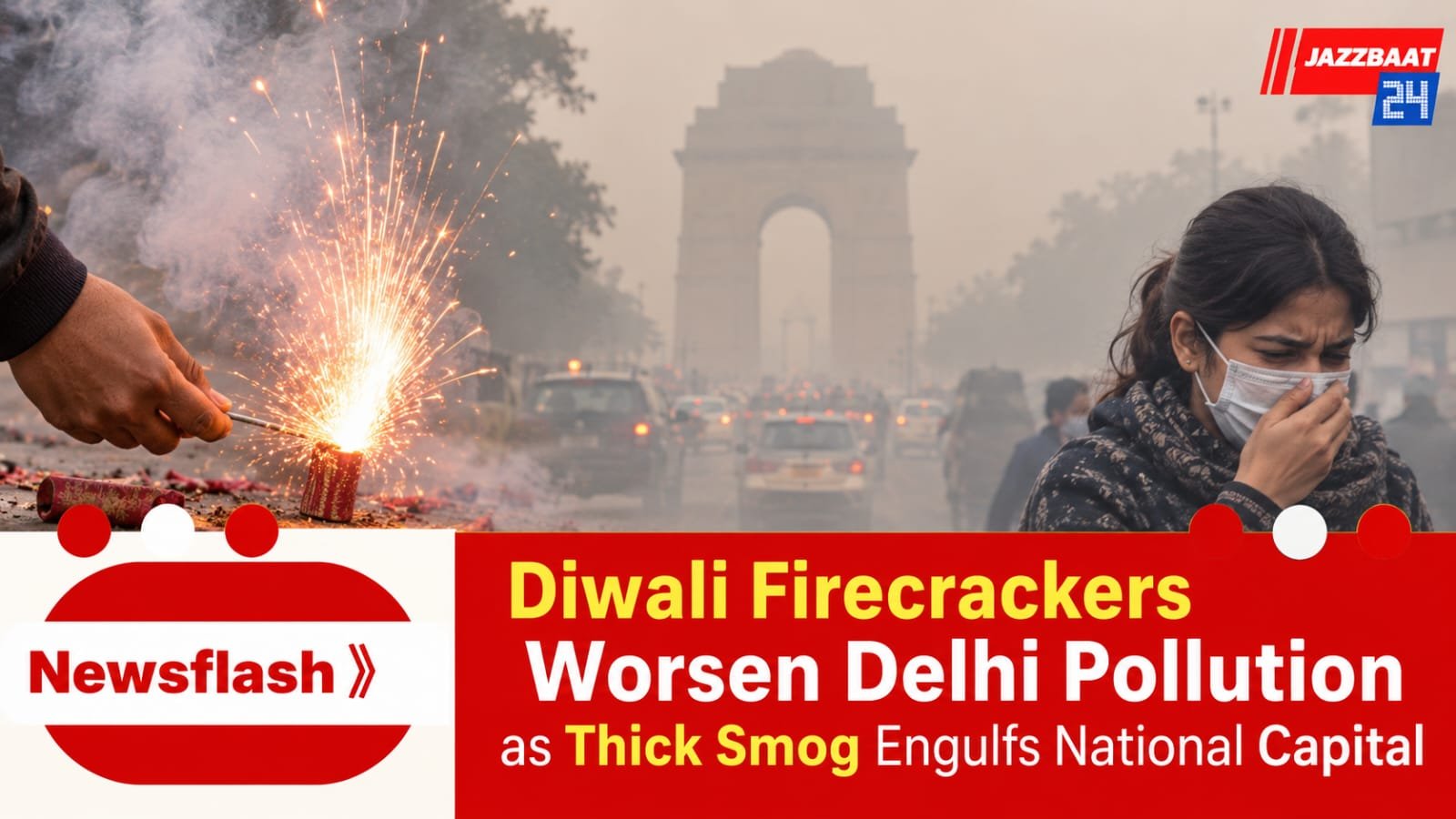
New Delhi woke up under a thick blanket of smog on Monday, November 9, as firecracker emissions during Diwali celebrations worsened the city's already deteriorating air quality. Reduced visibility, rising pollution levels and growing health concerns left millions of residents facing another difficult morning in the national capital.
Despite restrictions on fireworks, firecrackers were burst across several parts of Delhi on Sunday evening as people celebrated the festival of lights. The resulting smoke and fine particulate matter added to the existing pollution burden, pushing air quality to alarming levels. Al Jazeera +1
According to the Central Pollution Control Board (CPCB), Delhi's average Air Quality Index (AQI) stood at around 371 on Monday morning, placing it in the 'Very Poor' category. Several monitoring stations recorded readings above 400, entering the 'Severe' category. The city recorded an average AQI of 376 on Diwali, making it the most polluted Diwali in five years, according to reported data.
Firecrackers add to pollution crisis
The Supreme Court had permitted only approved green firecrackers in Delhi-NCR during specified time slots on November 7 and 8. However, residents reportedly continued bursting fireworks beyond the permitted hours in several neighbourhoods.
Green firecrackers are designed to produce fewer emissions than conventional fireworks, but they are not pollution-free. Their smoke still releases particulate matter and other pollutants into the atmosphere.
Multiple factors behind worsening air quality
Diwali celebrations are not the only reason behind Delhi's pollution crisis. Vehicle emissions, construction dust, industrial activities and crop-residue burning in neighbouring states also contribute to the problem.
During winter, low wind speeds, falling temperatures and stagnant atmospheric conditions prevent pollutants from dispersing, allowing harmful particles to accumulate closer to the ground.
The situation has been further complicated by unfavourable weather conditions across northern India.
Health concerns grow
High concentrations of fine particulate matter can aggravate respiratory illnesses, trigger asthma attacks and increase the risk of cardiovascular complications. Children, elderly people and those with existing respiratory conditions are particularly vulnerable.
Authorities have already implemented Stage III restrictions under the Graded Response Action Plan (GRAP) across Delhi-NCR.
With pollution levels remaining high, residents have been advised to limit outdoor activities, avoid strenuous exercise outside and use well-fitting protective masks when necessary.
The post-Diwali pollution spike has once again highlighted the challenges of controlling Delhi's annual winter pollution crisis. Long-term solutions will require coordinated action on transport emissions, construction dust, industrial pollution and agricultural burning, alongside stricter enforcement of firecracker restrictions.




Reader Comments 0