
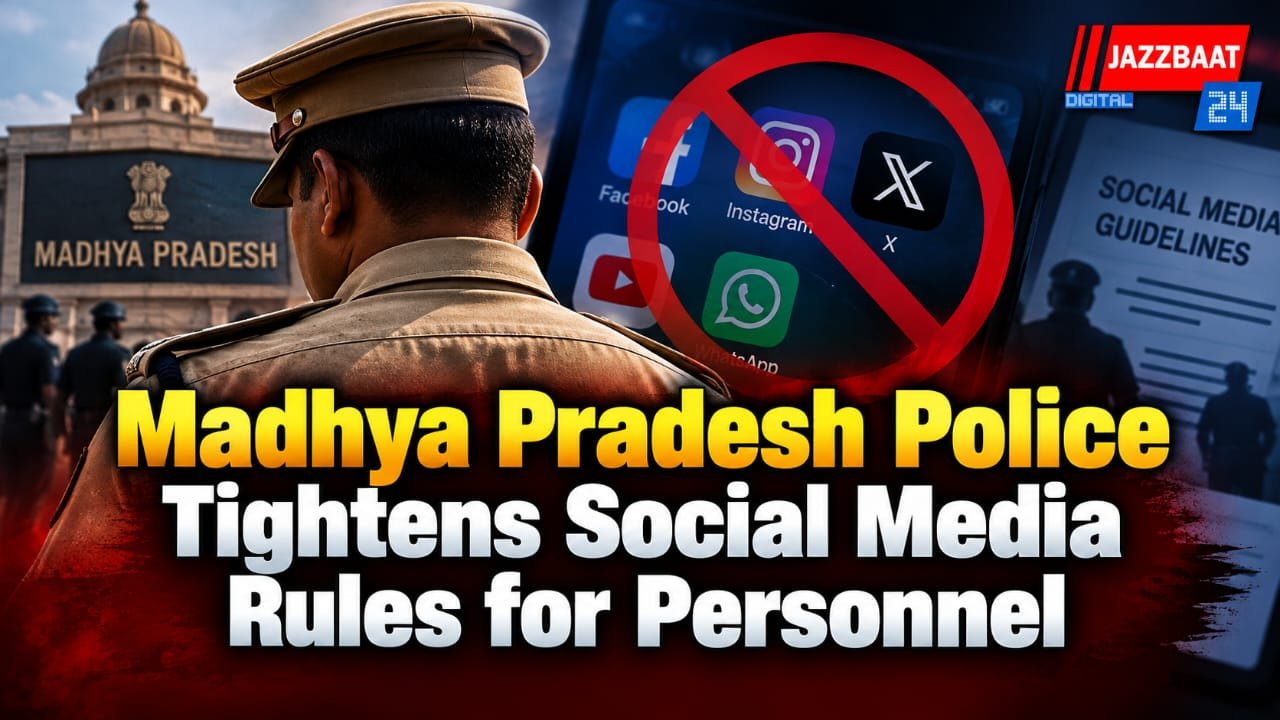
The Madhya Pradesh Police has introduced detailed guidelines restricting how its personnel can use social media, including rules on posting videos, interacting with certain accounts and sharing official information online.
The guidelines were issued by police chief Kailash Makwana following complaints over social media activity involving caste- and religion-related comments. The move comes days after Chief Minister Mohan Yadav held a meeting with senior police officers.
Under the new rules, police personnel cannot upload reels, photographs or videos in uniform or in inappropriate attire, either during or after duty. Existing content considered inappropriate has also been ordered to be removed. Posts involving uniforms, police vehicles or weapons that could compromise the dignity of personnel are restricted.
Personnel have also been barred from posting or engaging with caste-, religion- or gender-based discriminatory material, obscene content, malicious information or unverified claims in online groups.
The guidelines prohibit police personnel from following or befriending people with criminal records or suspicious backgrounds and from sharing photographs or videos with them. They also cannot use political symbols, organisational logos or protest-related imagery on social media or participate in online polls.
Police personnel have been instructed not to publicly comment on matters involving national security, governance or government policy. Self-promotion related to official achievements, paid promotions and advertising are also prohibited. If personnel earn money through social media, they must report the income within 30 days.
Social media use during duty hours has also been restricted. Personnel cannot post or livestream sensitive activities such as VIP security arrangements, raids, weapon training or police drills.
The guidelines also contain specific provisions regarding artificial intelligence. Police personnel have been prohibited from using AI tools for official purposes or uploading government and sensitive documents to platforms such as ChatGPT and Gemini.
They have also been instructed not to create personal social media accounts using Closed User Group SIM cards, government Wi-Fi or official email IDs.
During sensitive assignments, personnel must keep location services and geo-tagging active. They are also prohibited from sharing unsealed photographs or videos of seized weapons or other evidence during investigations.
The rules further prohibit disclosure of confidential police strategies, field techniques and investigative methods without approval. Information related to ongoing investigations or court proceedings that could affect cases cannot be shared online.
Photographs and videos of victims, witnesses or accused persons during investigations or public hearings are also restricted under the new guidelines.

Reader Comments 0