
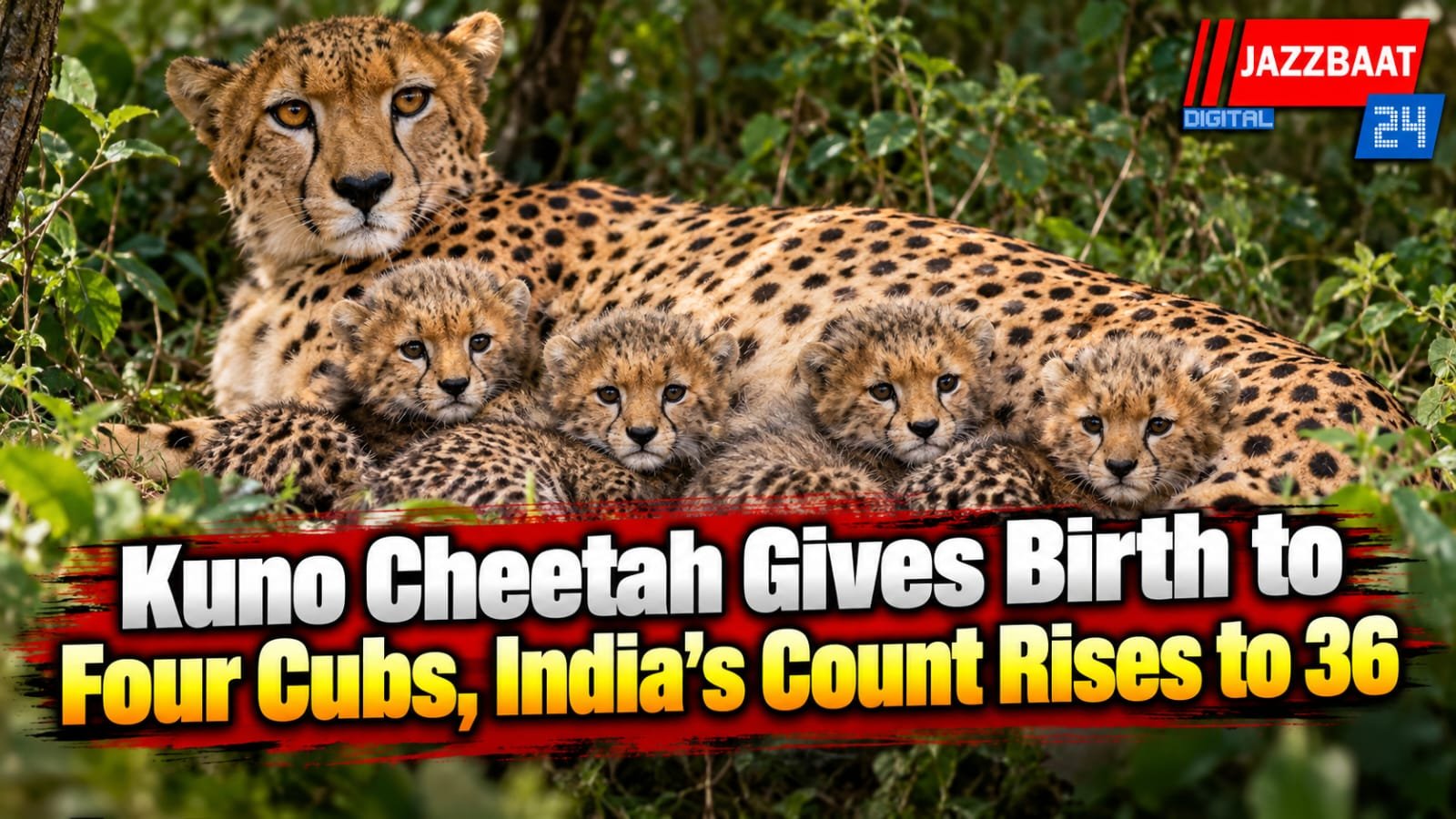
India’s cheetah conservation programme has reached another milestone with KGP12, a female cheetah born in India, giving birth to four cubs at Kuno National Park in Madhya Pradesh’s Sheopur district.
The cubs were born on Thursday, September 18, and were spotted by forest officials on Friday. Kuno National Park field director Uttam Sharma said the forest staff are monitoring the mother and her cubs from a distance to avoid disturbing them.
KGP12 is the second female cheetah born in India to give birth at Kuno, after another Indian-born female, Mukhi. The latest births have taken the number of cheetahs born and surviving in India to 36.
Kuno National Park currently houses 53 cheetahs, while three others are at Gandhi Sagar Wildlife Sanctuary. Preparations are also underway to establish another cheetah habitat at Rani Durgavati Tiger Reserve, where cheetahs are expected to be translocated in the future.
Union Environment Minister Bhupendra Yadav described the birth of the four cubs as a significant moment for Project Cheetah. He said the development reflects the progress of the conservation programme and the natural breeding of cheetahs in India.
Project Cheetah was launched at Kuno National Park on September 17, 2022, with the arrival of eight cheetahs from Namibia. Since then, additional cheetahs have been brought to India from other African countries. Twelve were brought from South Africa and nine from Botswana as part of efforts to establish a viable cheetah population in the country.
The latest births are particularly significant because the cubs have been born to a female that itself was born in India. Officials say natural breeding and the survival of subsequent generations are important indicators for the long-term development of the cheetah population.
Kuno authorities have been using several methods to monitor the animals and their habitat. These include drone surveys, habitat management and regular field monitoring. Officials say these measures are intended to track the animals while minimising human interference.
The four newborn cubs will remain under close observation, although forest staff are maintaining a safe distance from the family. Their early survival will be closely monitored because newborn cheetahs face several natural challenges in the wild.
The cheetah reintroduction programme is also expanding beyond Kuno. Gandhi Sagar Wildlife Sanctuary has already become another location for the animals, while preparations for Rani Durgavati Tiger Reserve are underway.
The government has been working to establish suitable habitats and improve monitoring systems as the cheetah population grows. The latest births add four more young animals to the programme and mark another stage in India’s efforts to establish cheetahs in the wild.
With KGP12’s four cubs, the number of cheetahs born and surviving in India has now reached 36, according to officials. Forest authorities will continue monitoring the mother and cubs as they adapt to their surroundings at Kuno National Park.



Reader Comments 0