
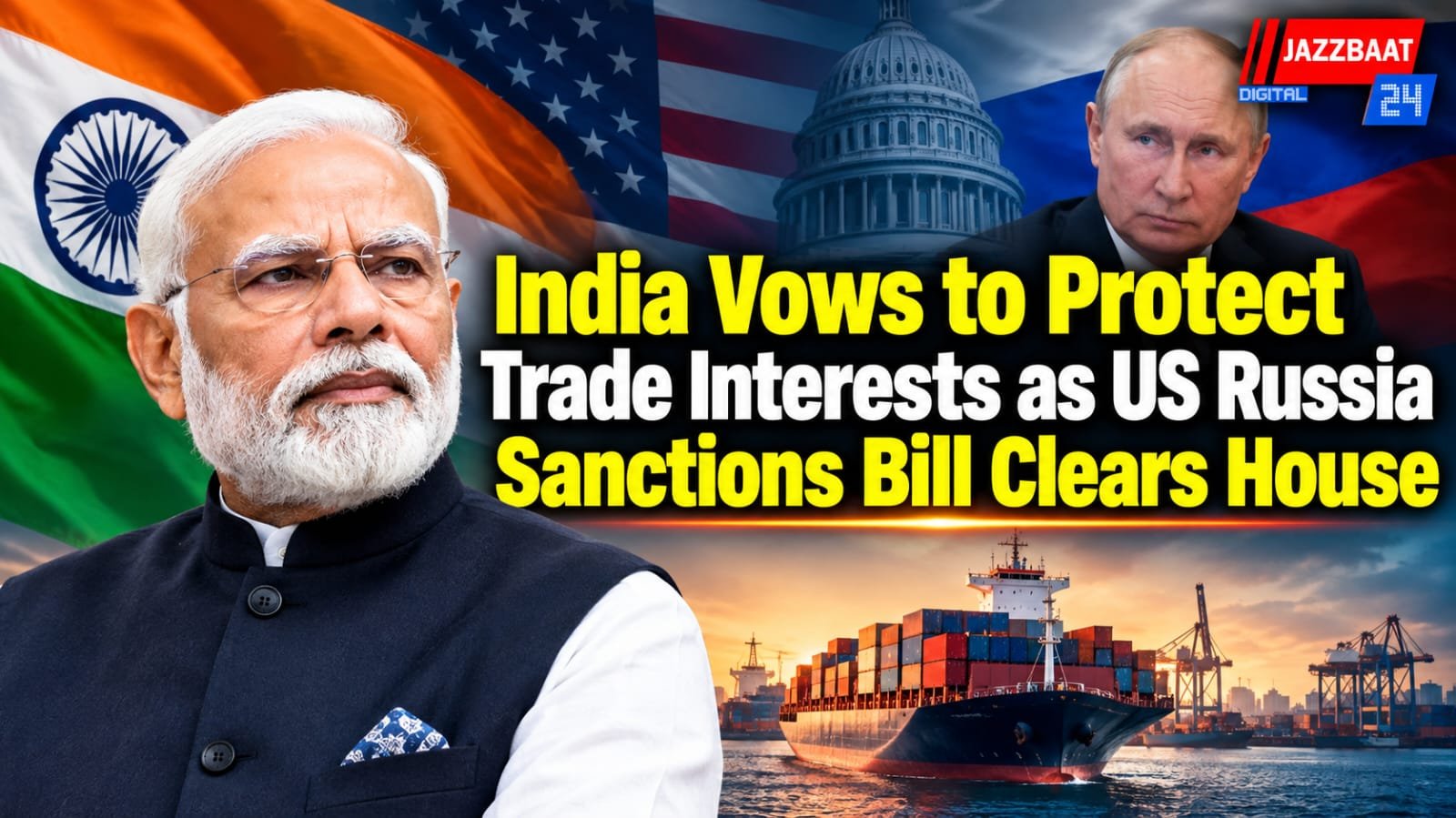
India has said it will take all necessary steps to protect its trade and economic interests after the US House of Representatives passed a major sanctions bill targeting Russia and countries that continue to purchase Russian oil.
The Lindsey O. Graham Sanctioning Russia and Iran Act of 2026 was passed by the US House with a vote of 262-159. The legislation could allow the Trump administration to impose tariffs of up to 100% on countries that continue significant trade with Russia, including Russian oil purchases.
India is among the countries that could be affected by the proposed measures. China, Slovakia, Hungary and Azerbaijan are also expected to face potential exposure under the legislation.
Responding to the development, India's Ministry of External Affairs (MEA) said on Thursday that New Delhi is closely monitoring the situation and will take appropriate measures to safeguard the country's interests.
“The Indian side has also made clear its determination to take all necessary measures to protect its trade and economic interests,” the MEA said in a statement.
The ministry added that the government would work closely with Indian trade and industry bodies to address the possible impact of the US legislation.
India also reiterated that ensuring energy security for its 1.4 billion people remains a key priority. According to the MEA, India will continue to source energy from different suppliers based on changing market conditions.
The issue has reportedly been discussed at senior levels between India and the US in recent months. The Indian government has conveyed its concerns about the possible impact of the proposed sanctions not only on bilateral relations but also on global energy markets.
Russia continues to be a major supplier of crude oil to India. At the same time, New Delhi has been trying to diversify its energy sources. In recent months, India has increased purchases of energy from countries including the United States and Venezuela.
Data cited in the report showed that Russian crude accounted for 51.1% of India's crude oil imports in July. This was higher than the combined share of several other major suppliers, including the UAE, Saudi Arabia, Venezuela, Brazil, Oman and the US.
The sanctions legislation had already cleared the US Senate on August 7 by a large majority. Following its passage in the House, the bill is expected to move to President Donald Trump for consideration and possible signing.
The proposed tariffs have raised concerns among Indian trade and energy observers because of India's significant dependence on imported crude oil. Additional tariffs could potentially increase costs for businesses and affect trade between the two countries.
Ajay Srivastava of the Global Trade Research Initiative said India could face additional US tariffs of up to 100% because of its position as one of the largest buyers of Russian oil.
For now, the Indian government has not announced any specific countermeasures. New Delhi has instead stressed that it will continue to monitor developments and take steps to protect both its economic interests and energy security.



Reader Comments 0