
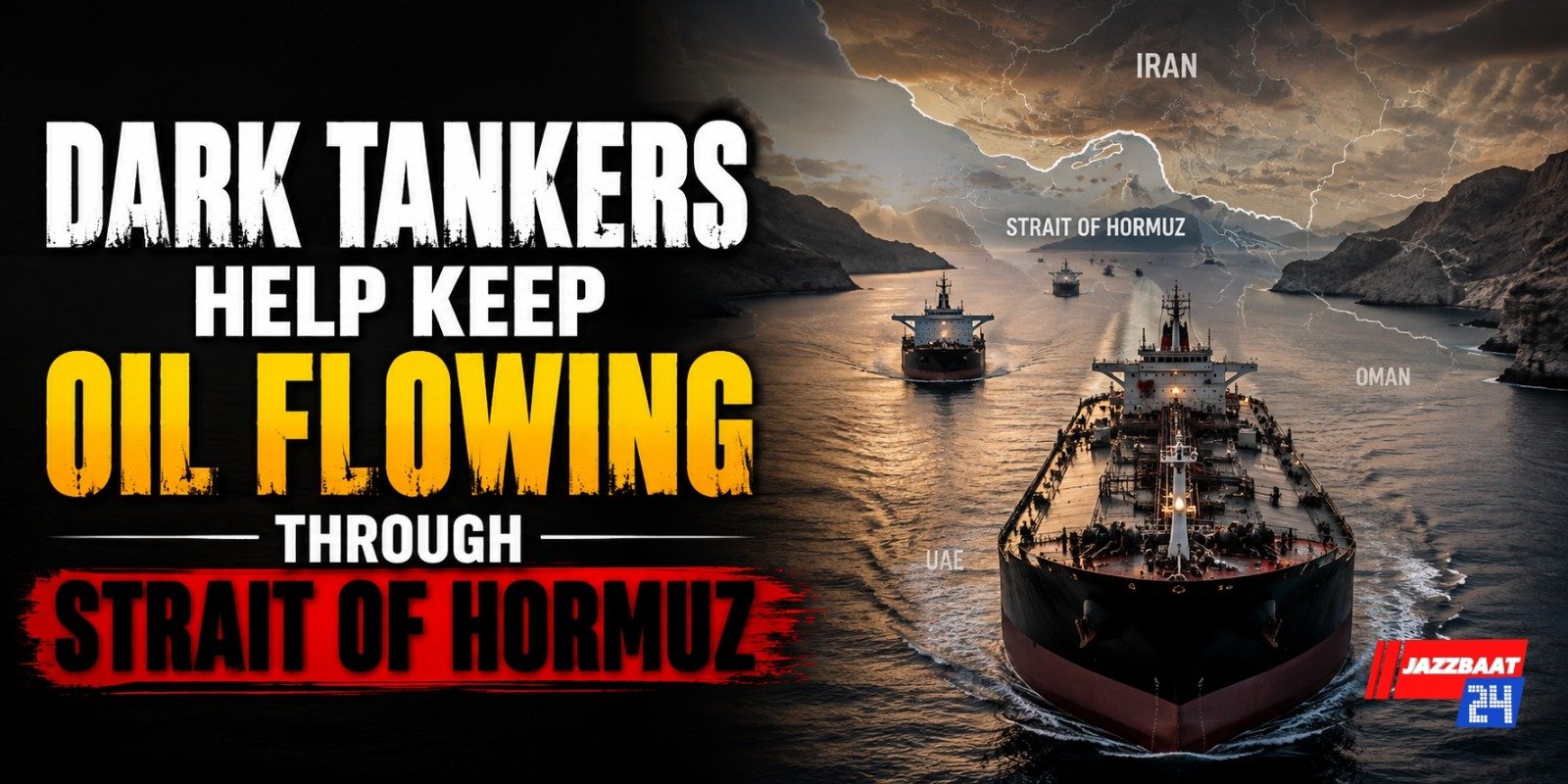
Oil prices have remained below the $100-a-barrel mark in recent months despite the ongoing conflict involving Israel, the United States and Iran, as oil producers have found alternative ways to keep crude moving through and around the Strait of Hormuz.
The conflict initially triggered a major oil shock. Sixteen days after the war began on February 28, Brent crude reached $103.90 a barrel, marking a 43 per cent increase. The Strait of Hormuz quickly became a key pressure point because a large share of global oil shipments normally passes through the narrow waterway.
However, Middle Eastern producers have adopted several measures to maintain exports. One of the most unusual strategies involves so-called “dark” tankers. According to a CNN report, oil companies from Saudi Arabia, Kuwait, Qatar and the UAE have chartered tankers that switch off their automatic identification system, or AIS, while passing through the Strait of Hormuz.
These vessels continue their journeys under US Navy protection and later transfer their cargo to other tankers in the Gulf of Oman. The original ships then return through the strait.
The strategy makes it harder for ordinary shipping trackers to follow the vessels and shifts much of the security risk away from commercial shipping companies.
Shipping data firm Kpler recorded 1,514 dark crossings into and out of the Persian Gulf since March 1. It also found that more than 80 per cent of liquid cargo movements through the strait during a recent two-week period either followed an alternative Omani route or were believed to have travelled as dark transits.
The US Department of Energy has estimated that actual oil traffic through the Strait of Hormuz has averaged between 8 million and 9 million barrels per day, roughly twice the volume suggested by transponder-based tracking.
The case of the supertanker Kiku illustrates how the system works. After loading crude in Qatar, the vessel entered the Strait of Hormuz before switching off its AIS system near Dubai. It disappeared from public tracking on July 31 and reappeared on August 1 after crossing the strait.
Oil producers have also reduced their dependence on Hormuz. Saudi Arabia has reportedly redirected around 5 million barrels per day through its East-West pipeline to Yanbu on the Red Sea. Other regional producers have rerouted another 2 million barrels per day.
Additional production from Brazil, Guyana, Venezuela and the United States has further helped support global supplies.
While switching off tracking systems cannot make tankers invisible to radar, the strategy has helped producers maintain oil flows and prevent the conflict from triggering an even larger global energy shock.

Reader Comments 0