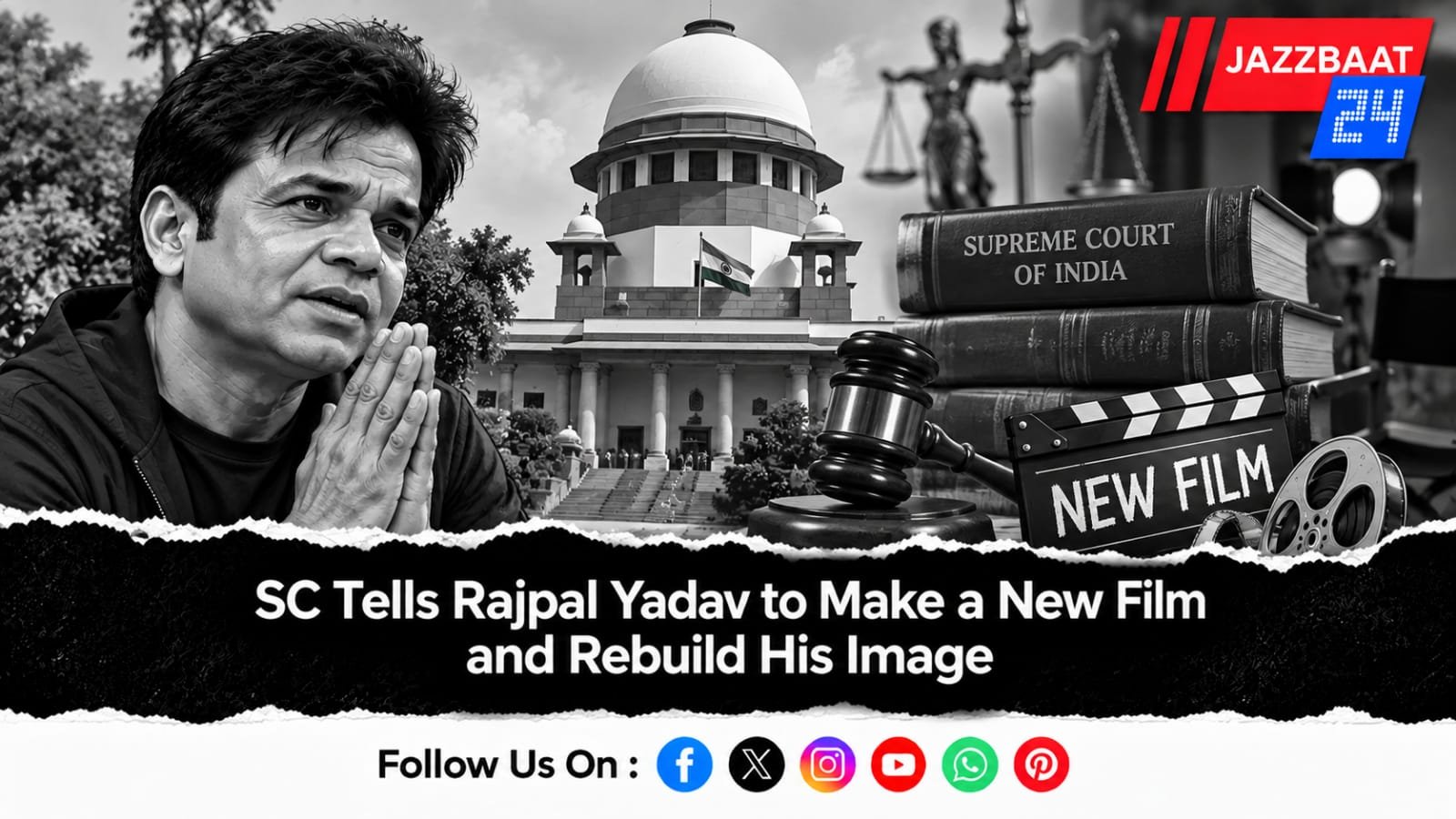
New Delhi: The Supreme Court on Tuesday told actor Rajpal Yadav to make a good film and entertain audiences again as it considered his plea in a long-running series of cheque-bounce cases.
A bench headed by Chief Justice Surya Kant, along with Justices Joymalya Bagchi and V. Mohana, took note of Yadav depositing ₹1.15 crore in accordance with the court’s previous direction. His lawyer also informed the court that a prospective buyer had been found for one of his properties and was willing to deposit another ₹85 lakh with the court registry by October 12.
The court, however, said it was not satisfied with Yadav’s conduct and was only giving him additional time. Yadav was personally present during the hearing.
The actor told the court that he had suffered substantial financial losses over the years, particularly because of his 2012 directorial film Ata Pata Laapata. He claimed that the film resulted in a loss of around ₹17 crore and said he had faced financial difficulties despite working in around 200 to 250 films.
Yadav also told the court that the film was supposed to be released in around 1,200 theatres but ultimately did not release in even a single theatre. He said a press conference had also been held against him during the controversy.
Responding to his submissions, Chief Justice Surya Kant suggested that Yadav could make another film and rebuild his public image through his work. The court even jokingly suggested that he could cast some lawyers who were good actors.
The legal dispute dates back to a 2010 financial agreement under which Yadav received ₹5 crore from Murli Projects Pvt Ltd for his directorial venture Ata Pata Laapata. According to the complainant, Yadav later issued seven cheques of ₹1.05 crore each as part of the settlement, but the cheques were dishonoured.
A subsequent agreement reportedly required Yadav, his wife and their company to repay around ₹11 crore, including interest.
The Delhi High Court had in July upheld Yadav’s conviction in multiple cheque-bounce cases and sentenced him to three months in prison. It also directed him to pay more than ₹1 crore to the complainant in each of the seven cases, while adjusting around ₹2 crore that had already been paid.
The Supreme Court had earlier granted Yadav temporary relief from surrendering, subject to the payment of ₹5 crore. The latest proceedings focused on his payments and the possibility of arranging further funds through the sale of his property.



Reader Comments 0